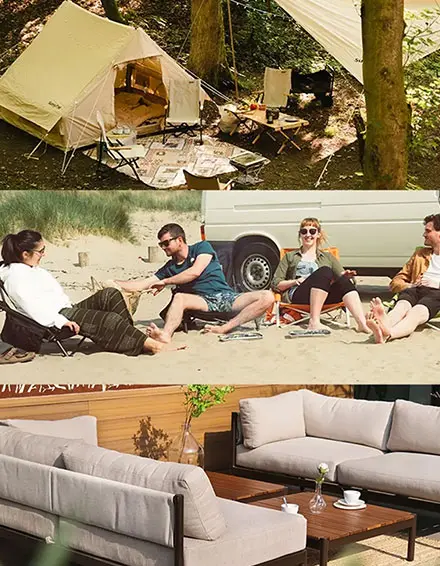
Comparison of Upright and Relaxed Seating Styles: Director’s Chair vs. Moon Chair for Camping

Jump to section
Spending hours in a camp chair really makes you notice how it holds your body. Upright chairs, like director’s chairs, keep your hips closer to a right angle and make it easier to eat, work, or just stand up when you need.
Relaxed chairs, like moon chairs, let you lean back, spread your weight, and take pressure off your lower back during long breaks. Which works best? It depends on your camping style, how long you sit, and what kind of support feels right.
This breakdown digs into how each seating style changes posture, comfort, and actual campsite use. Design choices shift support, ease of use, and long-term comfort—so picking the right chair means thinking about how you actually camp, not just how a chair looks online.
Director’s Chair: Features and Performance
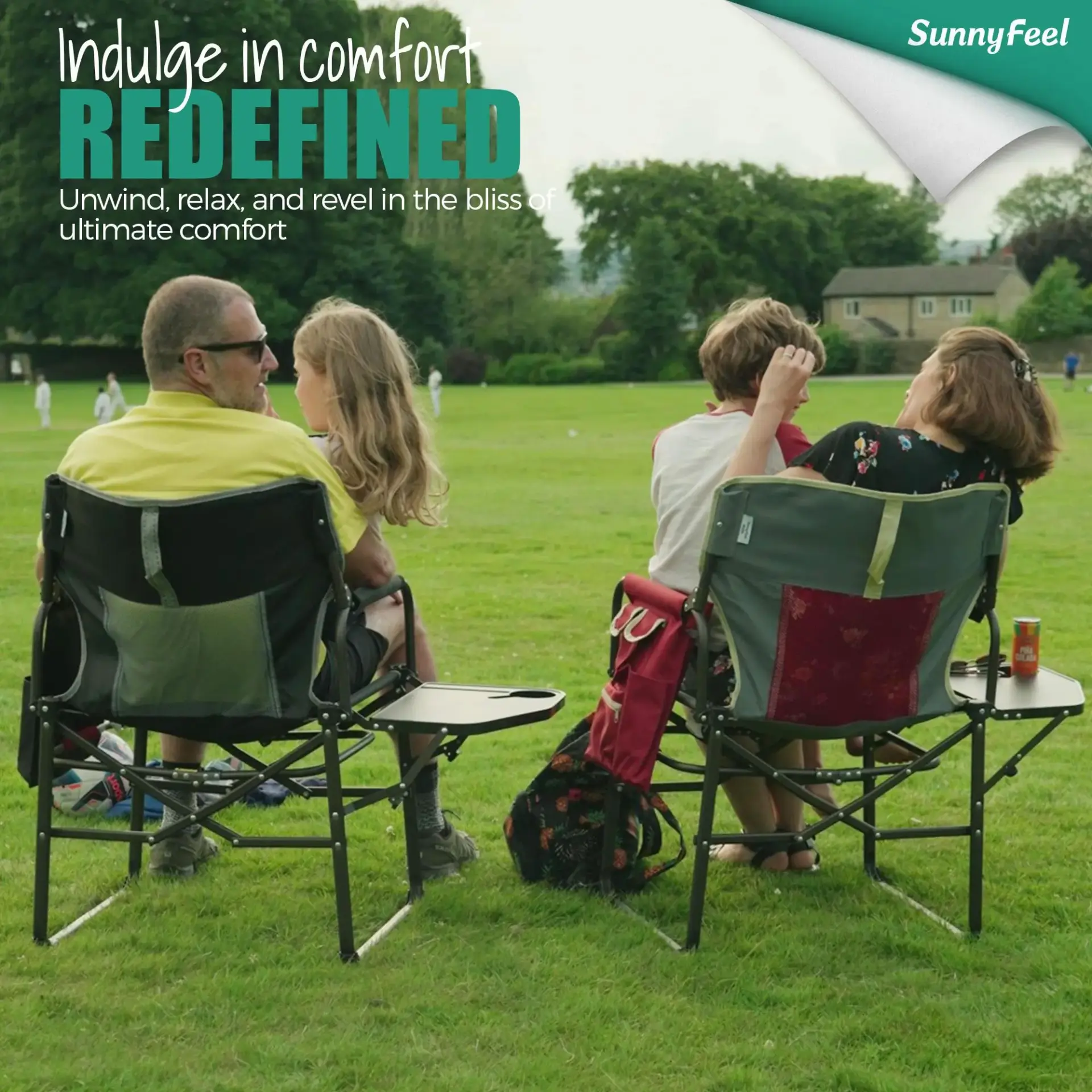
Director’s chairs keep your body upright and supported. They use a tall seat, firm frame, and built-in surfaces to help with comfort and daily camp tasks.
Construction and Materials
Director’s chairs sit higher than most camping chairs. The seat usually comes up to bar height, making it easy to sit down or stand up. That’s handy if you’re moving a lot or working at a table.
Most brands use aluminum or steel frames. Aluminum keeps things lighter, while steel adds stiffness. The seat and backrest use canvas or polyester fabric that doesn’t stretch much.
Common build features include:
- Flat armrests for steady arm support
- Fold‑out side tables for food or gear
- Cup holders sewn or molded into the table
These features give you structure instead of a relaxed, sinking feel.
Weight Capacity and Durability
Director’s chairs focus on strength. Many support 300 to 400 pounds, so they fit a wide range of people. The wide, flat seat spreads your weight and avoids pressure points.
Frames use straight legs and cross braces. This boosts balance on firm ground and cuts down on wobbles when you shift your weight.
Thicker canvas fabric stands up to wear and resists sagging over time. Reinforced seams at stress points, like the corners, help the chair keep its shape.
It’s a trade-off—less flexibility, but more stability and predictable support.
Ease of Transport and Setup
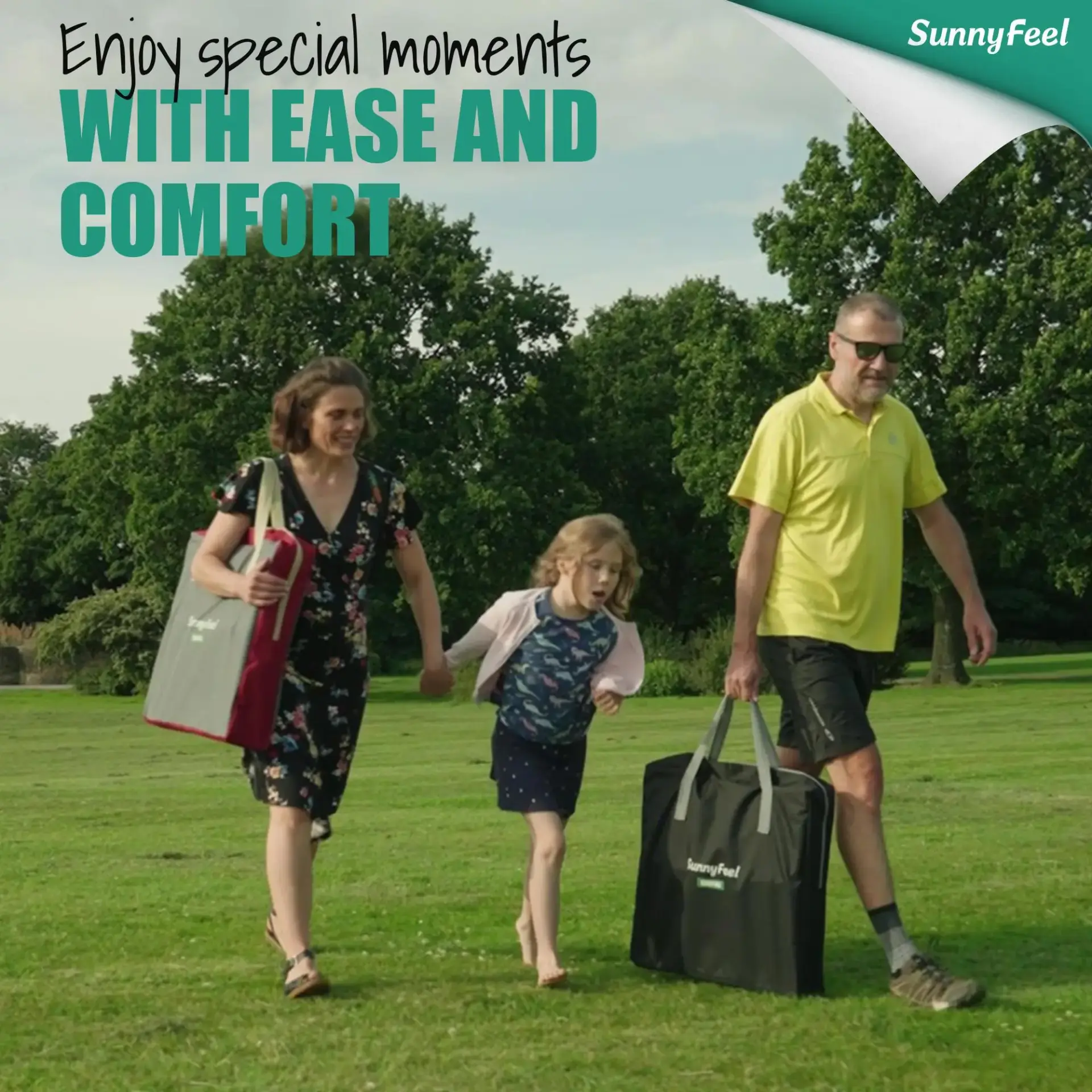
Director’s chairs fold flat in one motion. The frame locks open, so there’s no fussing with straps or clips. Setup usually takes less than a minute.
Most weigh 10 to 15 pounds. That’s manageable for short carries from the car. Some have a carry handle, but full storage bags are rare.
The side table folds up with the frame, so you don’t end up with loose parts. Storage works best in vehicles with vertical space, since the chair stays tall even when folded.
Quick access and simple use, but not as packable as smaller chairs.
Moon Chair: Features and Performance
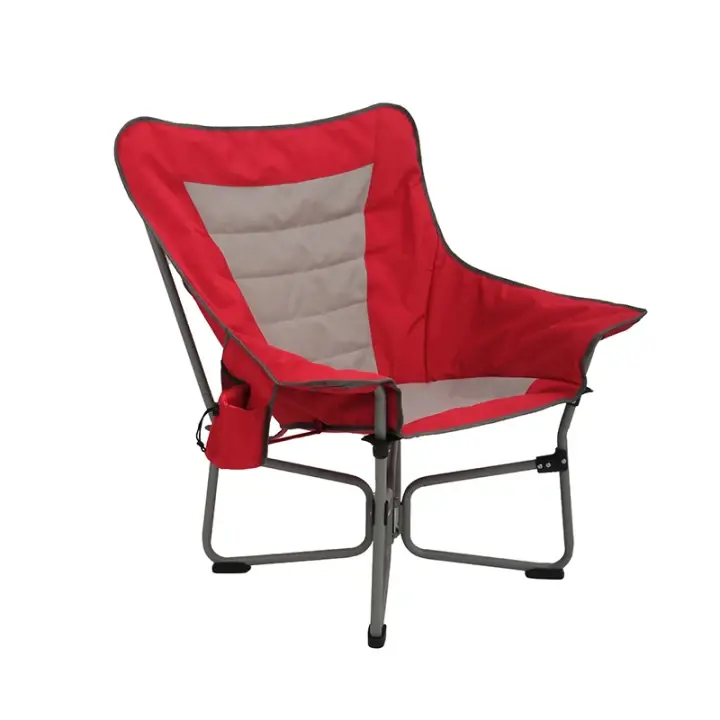
Moon chairs focus on relaxed sitting. You sit lower, lean back more, and rest in a wide, curved seat. This changes the feel, stability, and how easy it is to move the chair around.
Frame Design and Comfort
Moon chairs use a curved fabric seat stretched across a folding or tent-style frame. The seat cups your body instead of holding you upright. You’ll feel less pressure on your hips and thighs, even during long sits.
Most models use padded polyester or heavy fabric with a deep seat. Many recline a bit, which feels relaxing but doesn’t let you control your posture much. Mesh panels often show up on the sides or back for better airflow in warm weather.
Comfort highlights:
- Wide seat fits different body sizes
- Curved shape eases edge pressure
- Lower seat height encourages lounging
If the back leans too far, you might notice some neck strain, especially if there’s no headrest.
Supporting Weight and Stability
Moon chairs usually support higher weight limits than basic camping chairs. Many hold 300–400 pounds, depending on the frame and seat fabric.
Frames use steel or aluminum with cross-bracing. The wide seat spreads the weight, which keeps the fabric from sagging. Solid hubs and tight fabric help the chair feel secure when you shift around.
Stability is best on firm ground. Rounded feet can sink into soft sand or wet soil.
Leaning forward too far can throw off your balance, so that’s worth keeping in mind.
Portability and Storage
Moon chairs vary in how portable they are. Some fold flat, others use a pole-and-hub system with a carry bag. Most weigh more and pack bigger than lightweight backpacking chairs.
Standard camping models weigh between 6 and 12 pounds. Packed size usually fits in a car trunk, but might feel bulky for long walks. Many have shoulder straps or storage bags for easier carrying.
Portability trade-offs:
- A bigger seat means more packed space
- Heavier frames give comfort but add weight
- Setup takes under two minutes, usually
Moon chairs really shine when comfort matters more than travel distance.
Which Type Suits Your Camping Style?
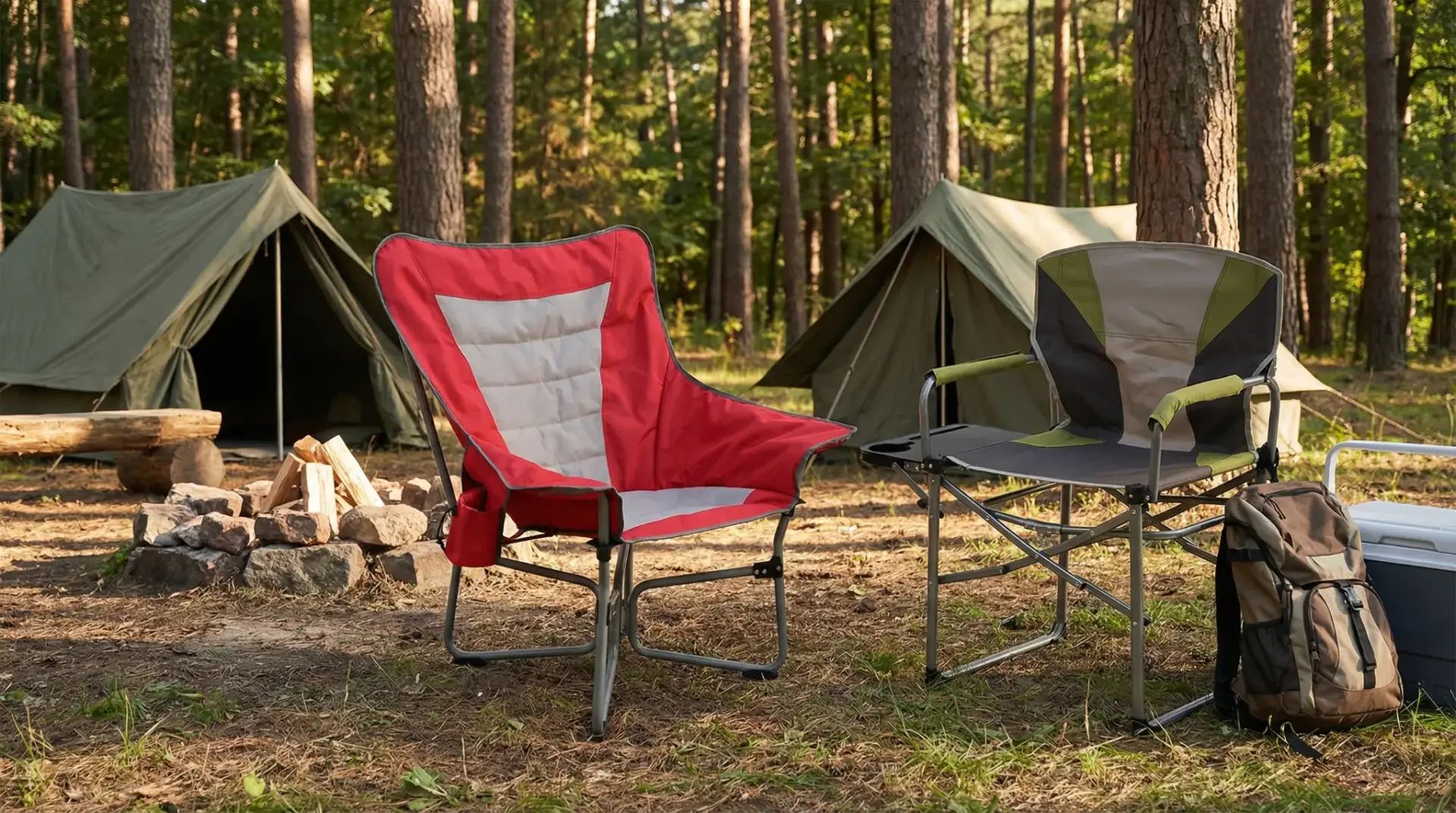
Comfort really comes down to how you sit, how long you stay put, and what you’re doing at camp. Director’s chairs keep you upright for active tasks, while moon chairs let you lean back and unwind for longer breaks.
Back and Arm Support
Director’s chairs keep your back upright. The straight back panel helps your spine and keeps you more alert. It’s a good fit when you’re cooking, eating, or playing cards at the table.
Flat armrests give steady support. You can rest your arms while getting up or sitting down, which is nice if you move around a lot.
Moon chairs support your back differently. The rounded fabric cradles your body and spreads pressure across your upper back. You recline more, so there’s less need to sit straight.
Most moon chairs don’t have firm armrests. Your arms rest against soft fabric, which feels cozy but doesn’t help much when you want to stand.
Seat Cushioning and Roominess
Director’s chairs use tighter fabric with light padding. You feel supported, not cushioned. This helps avoid sagging during short or medium sits.
The seat size feels defined. You sit “on” the chair, not in it. Shifting positions or standing up is quick.
Moon chairs focus on soft padding. Thick cushioning and loose fabric let you sink in. It’s great for reading, stargazing, or sitting by the fire.
The wide, rounded seat gives you room to curl up. It can feel stuffy in hot weather and tougher to get out of after a long sit.
What stands out most
- Director’s chair: firmer support, easier movement
- Moon chair: softer feel, more space to relax
Storage Options
Director’s chairs often have flat side tables, cup holders, and gear pockets. You can set down a plate, prep food, or stash your phone without bending to the ground. This setup helps during meals, card games, or quick camp chores.
Many director’s chairs add rear or side storage sleeves. You keep headlamps, books, or snacks close and visible, so you’re not always digging through a bag.
Moon chairs focus on comfort, not surfaces. Most offer only a cup holder or a small side pocket. You’ll probably want a camp table or cooler nearby for your stuff.
Ease of Entry and Exit
Director’s chairs support an upright sitting position with armrests. Sitting down and standing up takes little effort, which is great when cooking, wrangling kids, or just moving around a lot.
The seat height stays close to that of a normal chair. Your knees rest below your hips, so there’s less strain and better balance, even on bumpy ground.
Moon chairs sit lower and wrap around your body. Sinking into the fabric feels relaxing, but it slows you down if you need to get up quickly.
Standing up often means pushing off the ground or rocking forward. This really shows when you’re tending a fire or grabbing supplies.
How to Choose the Best Camping Seat: Director’s Chair or Moon Chair?
It really depends on how you like to sit, how long you’ll hang out, and what you do at camp. Posture, easy movement, and price all play a part in what works best.
Who Should Choose a Director’s Chair?
Director’s chairs work well for anyone who likes an upright seat with firm support. They keep your back straight, feet flat, and make it easy to cook, eat, or work at a table.
Most come with armrests, a side table, and a cup holder. These features help keep things organized.
The taller seat makes standing up easier, especially if you deal with knee or back pain. Director’s chairs feel stable on flat ground and fit in well at car camps, tailgates, or group sites.
They fold flat, but usually weigh more than laid-back chairs. If you want structure and function, this style makes sense.
Who Benefits More from a Moon Chair?
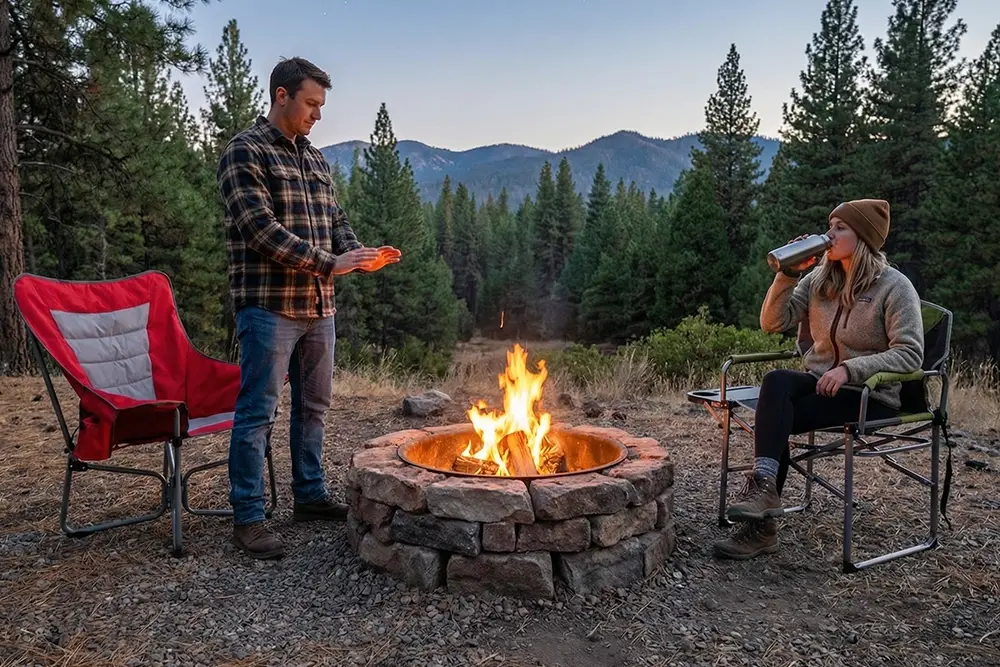
Moon chairs shine when comfort and relaxation come first. The deep, rounded seat lets you recline and sink in, supporting your body in a chill position.
They’re perfect for reading, chatting, or sitting by the fire. The wide seat gives you space to move around.
Some models add padding, which takes pressure off your hips and back if you’re sitting for a while. These chairs sit low, so getting out of them can be a hassle—especially with joint issues.
They also take up more space when packed. If you want a cozy seat for downtime, a moon chair really fits the bill.
Cost and Value Considerations
Both styles come in a wide price range. Director’s chairs often cost more because of added features and heavier frames.
That extra money goes toward durability, structure, and built-in surfaces. Moon chairs usually cost less, unless you go for padded or oversized versions.
Padded models can get pricey, but comfort’s the main focus here.
Frequently Asked Questions
What features should I look for in a comfortable camping chair?
Look for firm back support, a stable frame, and a seat height that lets your feet rest flat. Upright chairs with straight backs make sitting and standing less of a hassle.
Padding’s helpful for long sessions, but too much can trap heat. Breathable fabric and armrests also boost comfort, especially in the summer.
How do director’s chairs compare to moon chairs in terms of portability?
Director’s chairs usually fold flat, but they’re long and bulky when packed. Most weigh 8 to 15 pounds, so they’re better for car camping than long hikes.
Moon chairs often feel lighter, but fold into wider bundles. Their round frames hog trunk space and can feel awkward to carry.
What are the benefits of using a moon chair for camping over other styles?
Moon chairs cradle the body, offering a cozy spot for relaxed lounging. The curved seat eases pressure points, especially when leaning back. These chairs shine around campfires and during stargazing. They don’t offer the most upright posture, but the laid-back comfort is tough to beat.
Want to Know More About Our Products?
View All Products NowAbout Author
Spring Nee
Spring Nee is the Sales & Marketing Director at Zhejiang Sunshine Leisure Products Co., Ltd. With nearly 20 years of experience in the outdoor leisure furniture industry, she specializes in camping chairs, beach chairs, folding outdoor seating, and OEM/ODM project communication. Spring also leads the company’s marketing content direction. Most of the articles published on this website are either written by Spring herself or reviewed by her before publication, ensuring that the content is practical, accurate, and based on real industry experience.