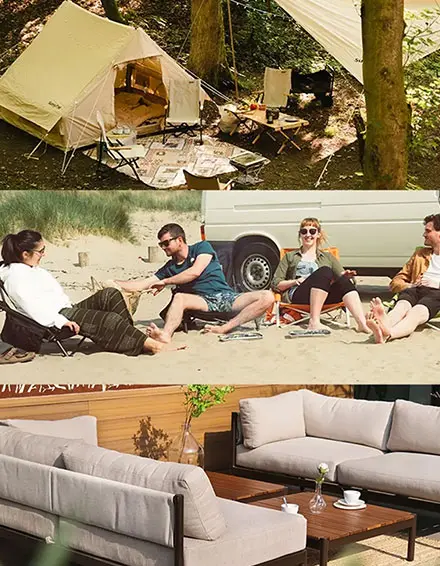
How to Set Up a Camping Kitchen with Folding Tables: Field Kitchen Guide

Jump to section
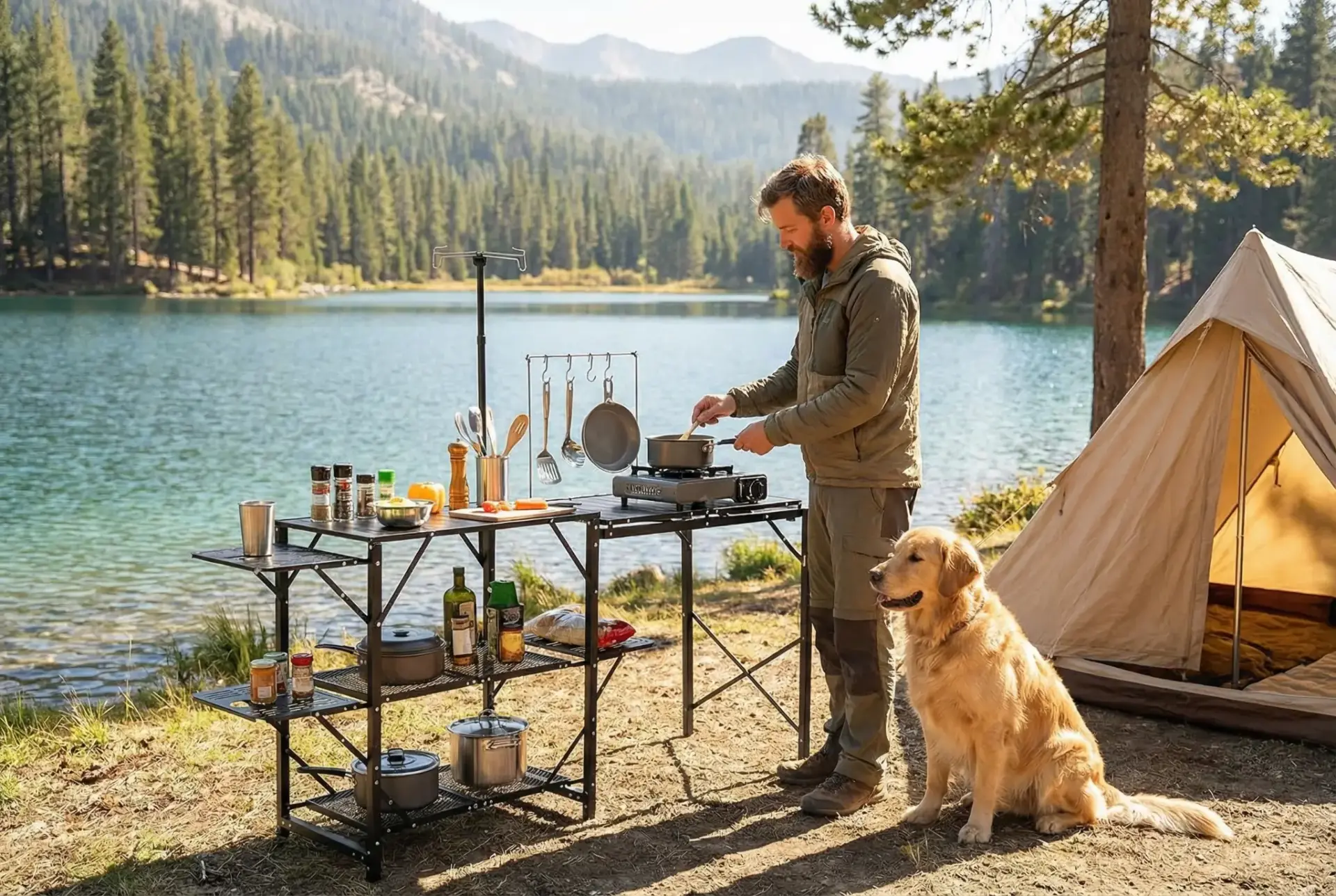
A good camping kitchen saves time, cuts stress, and keeps meals simple in the outdoors. You want a setup that feels steady, safe, and easy to use, even on uneven ground.
Folding tables play a key role because they give you a clean, raised surface for cooking, prep, and serving. Choose sturdy tables, place them on level ground, and organize clear zones for prep, cooking, and cleanup.
This keeps tools within reach and food off the ground, which helps with safety and cleanliness. Cooking gets easier when you’re not crowding or bending over all the time.
This guide helps you pick the right tables, place them with purpose, and organize gear so everything has a spot. You’ll also get tips for food safety, mess management, and fast pack-downs when it’s time to head out.
Choosing the Right Folding Tables for Your Camping Kitchen
The tables you bring really shape how smoothly you cook, clean, and eat at camp. Size, strength, materials, and purpose all matter when you’re trying to keep things simple and organized.
Assessing Table Sizes and Weight Capacity
Think about how you cook. A prep table should give you at least 36–40 inches of width so you can cut and stage food without feeling cramped.
Narrow tables work for drinks or dish bins but don’t give much room for safe knife work. Check the weight rating before packing—many folding camp tables support 50–100 pounds, which is fine for prep and light gear.
Stove tables often need 150 pounds or more to handle burners, fuel, and cookware. Height matters too—tables around 32–36 inches help your back while prepping.
Shorter tables work for dining but feel awkward for cooking. Go with what feels comfortable for you.
Comparing Materials: Aluminum, Steel, and Composite
Material changes everything—weight, strength, and how you take care of it. Aluminum frames are light and don’t rust, which is great for car camping or wet weather.
Lots of camp kitchens use aluminum tops since they clean up easily after spills. Steel frames handle more weight but can be a pain to carry.
If you use heavy stoves or love cast iron, steel might be worth it. Just watch for scratches, since they can rust after a while.
Composite or plastic tops resist water and stains. They’re handy for prep and dining, but don’t put hot pans right on them—they’ll flex or even melt.
| Material | Key Benefit | Main Tradeoff |
| Aluminum | Light, rust-resistant | Lower weight limit |
| Steel | Very strong | Heavier to carry |
| Composite | Easy to clean | Heat sensitive |
Selecting Tables for Prep, Cooking, and Dining
Different tables for different jobs makes life easier. A dedicated prep table keeps raw food away from stoves and dishes.
Look for models with side hooks or shelves for tools and towels. Cooking tables should fit your stove and allow airflow—many have wind guards or heat-safe tops for safety.
Dining tables can be simple. All you need is a flat, stable surface with enough leg room. Using your dining table for prep usually means more crumbs and more bugs, so maybe don’t.
Essential Gear and Equipment for a Field Kitchen
A reliable field kitchen depends on smart appliance choices, safe food storage, and tough cookware. Pair these with folding tables for steady work space, better flow, and cleanup that doesn’t drag on forever.
Must-Have Cooking Appliances and Utensils
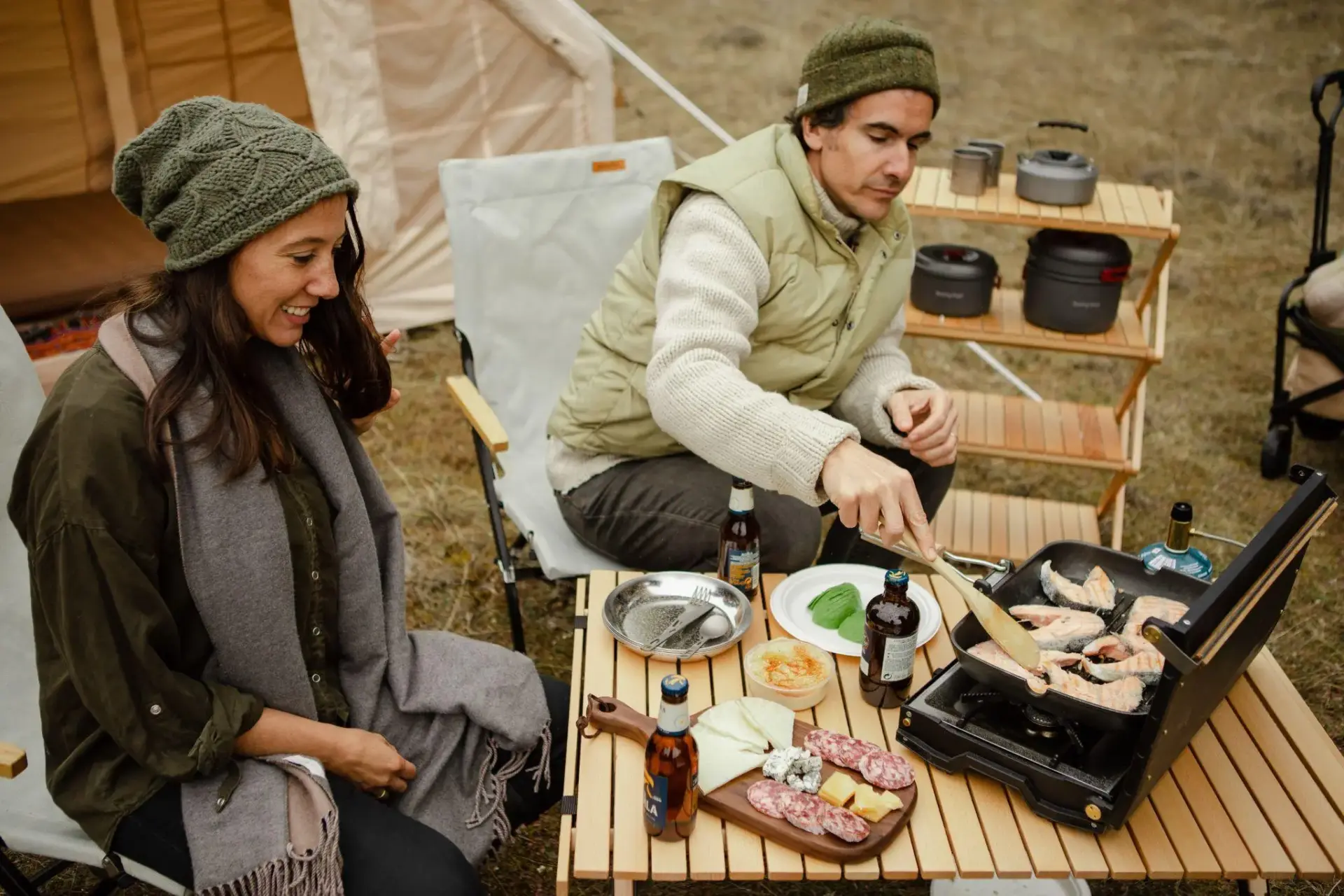
Bring tools that cook well and don’t hog space. A two-burner camp stove is usually enough for most trips—you can boil and sauté at the same time.
Add a windscreen to save fuel and keep heat steady. Place the stove on a sturdy folding table with a heat-safe top.
Keep fuel and fire tools off the ground and away from the main walking path. Only pack utensils you’ll actually use—no need to bring the whole kitchen drawer.
Core utensils to pack:
- Chef’s knife with a sheath
- Cutting board with a non-slip base
- Spatula, stirring spoon, and tongs
- Can opener and lighter or matches
That’s enough to cover most meals without cluttering your table.
Selecting Portable Food Storage Solutions
Good food storage keeps meals safe and your kitchen organized. Use hard-sided coolers for meat, dairy, and ice. Go for tight seals and internal dividers if you can.
For dry goods, stackable bins with locking lids work well. Clear sides help you spot things fast. Label each bin by meal or food type—it’ll save you time, trust me.
Small containers help with prep. Reusable boxes or silicone bags hold chopped food and spices. Keep these in a tote near your prep table.
Storage tips that matter:
- Keep raw and cooked foods separate
- Elevate food bins on folding tables
- Follow local rules for animal safety
Importance of Durable Cookware and Tableware
Camp cookware needs to handle heat, travel, and lots of washing. Go with stainless steel or cast iron for pans and pots—they cook evenly and last forever.
Bring one large pot with a lid and one wide skillet. That covers boiling, frying, and one-pot meals. Don’t forget a heat-resistant pot holder.
For eating, skip disposables. Use reusable plates, bowls, and cups—hard plastic or enamel works best. They’re easy to clean and don’t crack as easily.
| Item | Why It Works |
| Stainless pot | Resists rust and dents |
| Cast iron skillet | Handles open flame |
| Reusable tableware | Cuts waste, saves space |
Set a wash tub on a folding table for easy cleanup. That way, dirty dishes don’t end up everywhere.
Setting Up and Organizing the Field Kitchen
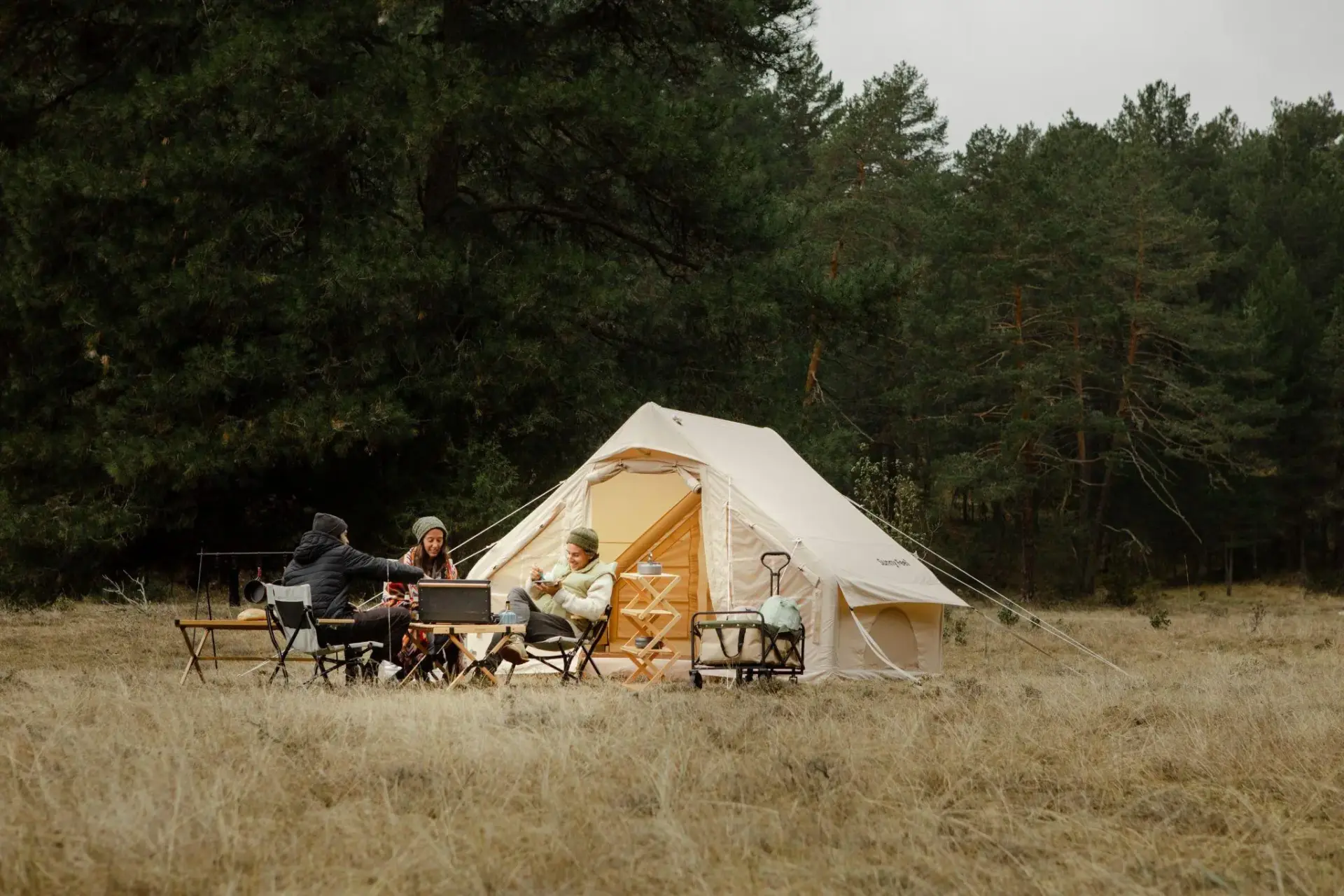
A well-planned field kitchen saves time, reduces mess, and lowers safety risks. The layout, clear work zones, and folding tables make a huge difference.
Planning the Layout for Efficiency and Safety
Find flat ground close to camp but away from sleeping areas. You want easy access but not so close that people walk through while you’re cooking.
Place the kitchen upwind from tents to keep smoke and food smells away. Keep heat sources stable and spaced out—stoves and grills need firm surfaces, never just the ground.
Leave clear walking paths so people can move without bumping hot gear. Here’s a basic layout order:
- Food storage near coolers and bins
- Prep area next to storage
- Cooking area downwind
- Serving area away from heat
- Cleanup station at the edge
Assigning Specific Zones: Prep, Cooking, Serving
Clear zones keep you organized and speed things up. Each zone should serve one purpose and hold just the tools for that task.
Prep Zone
- Cutting board
- Knife, bowl, trash bag
- Paper towels or cloth
Cooking Zone
- Stove or grill
- Fuel and lighter
- Pots, pans, utensils
Serving Zone
- Plates and cups
- Finished food
- Condiments
Keep raw food out of the serving zone. Wash hands between zones if you can. Cooking with a group? Assign one or two people per zone to avoid a crowd.
Maximizing Working Space with Folding Tables
Folding tables are the backbone of your field kitchen. Adjustable legs help level them on uneven ground—a standard 4- or 6-foot table fits most camps.
Set tables side by side for more surface area. Use one table per zone if you have space. If not, split a single table with bins or tape to mark off areas.
Use vertical space too:
| Item | Use |
| Hanging hooks | Utensils, towels |
| Stackable bins | Dry food, tools |
| Clip-on lights | Night cooking |
Cover tables with wipeable cloths and clip the corners so the wind doesn’t steal them.
Cooking Station Setup and Foldable Table Placement
A good cooking station keeps your food safe, your gear steady, and your movements simple. Table placement, surface height, and heat control all play a big role in how well your kitchen works at camp.
Stability and Leveling on Uneven Ground
Find the flattest ground for your folding table. Avoid slopes, soft soil, or loose gravel—those make tables shift while you’re cooking.
Adjust each table leg before adding gear. Many tables have telescoping or adjustable legs, but if not, use flat rocks or wood shims under one leg. Don’t stack things under more than one leg, though.
Press down on each corner to check stability. The table shouldn’t rock or twist. Keep heavy items like coolers off the cooking table to prevent movement.
Heat Management and Fire Safety
Keep your cooking table away from tents, tarps, and food storage. Leave at least 3 feet of open space on all sides of stoves or grills.
Use only heat-resistant table surfaces—metal-topped folding tables are best. Never set a stove on plastic bins or fabric surfaces.
- Keep fuel canisters upright and shaded
- Turn pot handles inward
- Keep a water bottle or dirt nearby for flare-ups
Wind can push heat sideways. Set up a wind screen made for camp stoves, but leave some airflow so flames don’t overheat.
Arranging Stoves and Grills on Tables
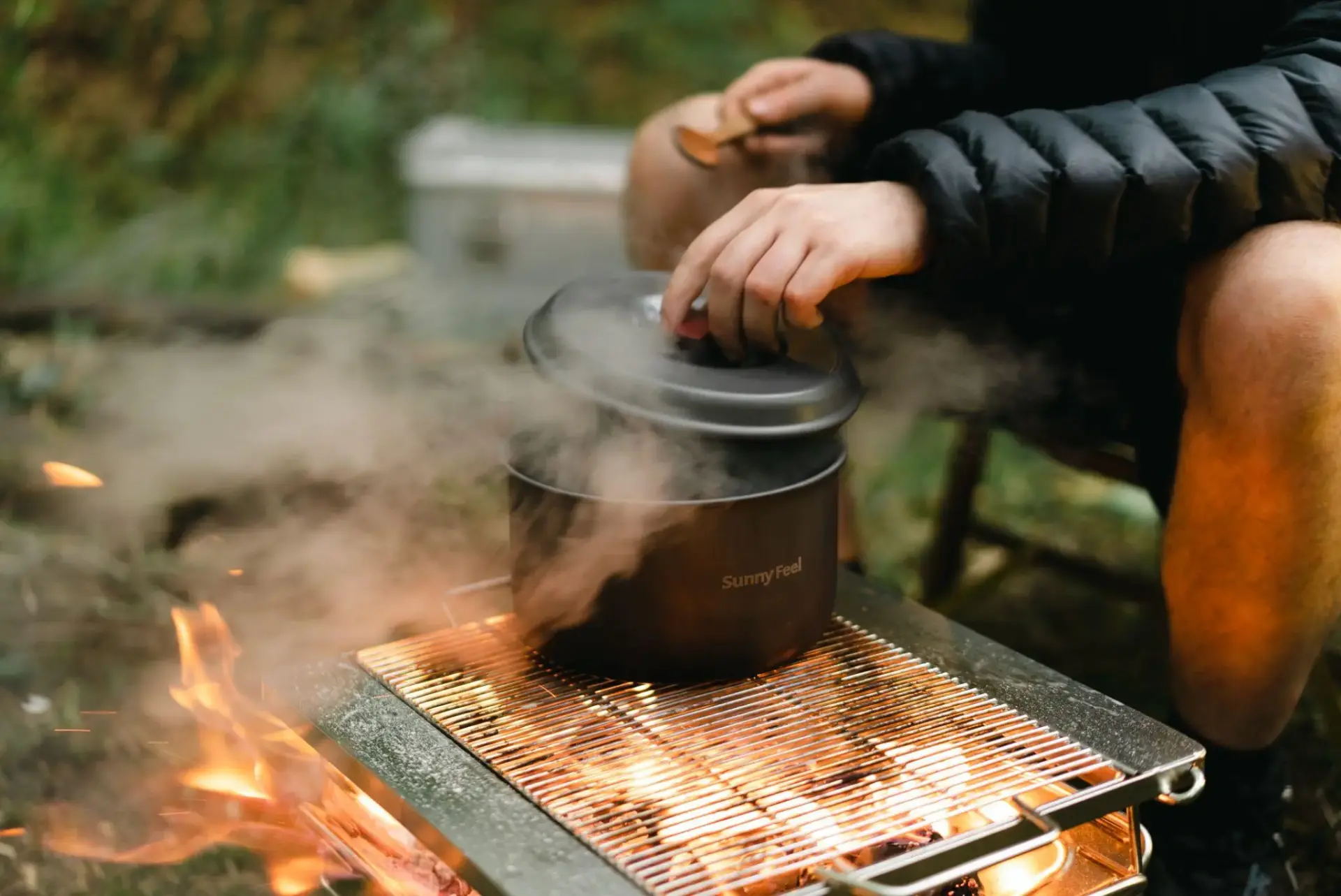
Put your stove near the center of the table to balance weight. Leave space on one side for tools and ingredients—don’t crowd the cooking area.
| Table Area | Purpose |
| Center | Stove or grill |
| Side | Cutting board, utensils |
| Back | Spices, oil, lighter |
If possible, keep grills and high-heat stoves on separate tables. That limits heat buildup and keeps raw food away from flames.
Set table height at waist level so you don’t have to bend or reach too much. It’s just easier on your back and gives you better control with hot pans.
Maintaining Cleanliness and Food Safety Outdoors
A clean setup protects your food, keeps pests away, and saves you time. Folding tables help you separate tasks, control spills, and keep supplies off the ground.
Clear routines matter more than extra gear. Don’t overthink it—just keep it tidy and simple.
Organizing Cleaning Areas on Folding Tables
Dedicate one folding table just for cleaning. Set it downhill, away from where you prep food. This helps limit splashes and keeps cross-contact in check.
Arrange your zones left to right: scrape, wash, rinse, and dry. Put out a small tub or bin for each step. Use warm water for washing and fresh water for rinsing.
Table layout
- Scrape bin: food scraps and a scraper
- Wash tub: biodegradable soap and sponge
- Rinse tub: clean water
- Dry area: rack or clean towel
Wipe down the table before and after meals. Hang towels so they don’t drag on the dirt. Swap out water when it gets cloudy.
This setup keeps dishes safe and makes cleanup quicker, honestly.
Storing Ingredients and Leftovers Securely
Keep food off the ground and out of the sun. Use a folding table for staging, but not for long-term storage. Separate raw and cooked foods, always.
Seal everything in containers with tight lids. Mark them with tape or a marker. Cold stuff goes in a hard cooler with ice packs—shade helps, and keep that lid shut tight.
Storage rules
- Raw meat in leakproof bags
- Dry goods in bins with lids
- Cool leftovers fast, then seal
- Eat leftovers within 24 hours
At night, stash all food in a bear locker or locked car, depending on the rules. Don’t risk it.
Waste Control and Leave No Trace Practices
Manage waste to protect wildlife and the campsite. Use a folding table just for trash and sorting, set away from the kitchen. Weighted bags or bins with lids are a must.
Filter dishwater to catch chunks. Toss scraps in the trash bag. If allowed, scatter strained gray water over a wide area—never dump it in one spot.
Waste setup
- Trash, recycle, and compost bags
- Food scrap strainer
- Extra liners and wipes
Wipe tables after every meal. Pick up crumbs, even the tiny ones. Before you leave, scan the ground. A clean site means fewer animals, less stink, and less damage. Worth the effort.
Packing Down and Storing Your Camping Kitchen
Packing down in a set order saves time and helps your gear last. Focus on shutting down safely, cleaning surfaces, and packing smart so your folding tables and kitchen tools are good to go next time.
Efficient Breakdown and Folding Table Storage
Turn off and disconnect fuel before touching tables or cookware. Let stoves cool completely. Clear the table, then fold it up in order—no need to rush and risk pinched fingers.
- Collapse legs first, then fold the top.
- Lock latches to keep the table shut during transit.
- Use sleeves or pads to protect corners and edges.
Store folding tables flat if possible. If you have to stand them up, slip a rubber mat between each one. Keep heavy tables low in the car so they don’t tip. Label table bags by size to make setup easier next time.
Cleaning and Caring for Folding Tables After Use
Clean tables before packing them away. Leftover food attracts bugs and can stain.
- Wipe down with warm water and mild soap.
- Scrub sticky spots using a soft brush.
- Dry completely to prevent rust and mildew.
Check joints and bolts as you clean. Tighten anything loose with a small wrench. For aluminum tops, skip harsh cleaners. For steel frames, dry seams and spray a bit of protectant if you camp in wet places. Only store tables when they’re dry—damp storage leads to smells and shortens their life.
Organizing and Packing Gear for Transport
Group gear by task for faster unloading and setup. Clear bins help you spot what you need right away.
| Bin Label | What Goes Inside |
| Cooking | Stove, fuel, lighter, windscreen |
| Prep | Knives, boards, foil, spices |
| Wash | Soap, sponge, drying towel |
| Table | Folding table, clips, cover |
Nest cookware, secure lids with bands, and wrap fragile items in towels. Pack wash bins last so you can clean up as soon as you arrive. Tuck a short checklist in the table bag—just a quick way to make sure nothing gets forgotten.
Frequently Asked Questions
What essentials should be included in a camping kitchen checklist?
Pack a folding table for prepping and serving—make sure it’s sturdy and weather-resistant, with room to actually work.
Bring a stove or grill, fuel, cookware, utensils, and a sharp knife. Cutting boards, heat-safe gloves, and a lighter or matches are super useful too.
Don’t forget storage bins, a cooler with ice, and sealable bags. Dish soap, a sponge, paper towels, and trash bags round out the basics.
What steps should be followed to set up an outdoor kitchen area at a campsite?
Pick a flat spot, not too close to tents or sleeping bags. Set up your folding table first, then plan the rest of your kitchen around it.
Put the stove on something stable, with space on both sides. Line up prep, cooking, and cleanup areas to cut down on spills and mess.
Keep food in sealed bins, and close the cooler when you’re not grabbing something. Hang utensils or stash them in a container so your table stays clear. Simple, but it works.
How do you maintain hygiene and manage waste effectively in a camp kitchen?
Always wash your hands before cooking and after touching raw food. If water’s scarce, hand sanitizer works in a pinch.
Scrub surfaces and tools as soon as you’re done using them. Wipe down the folding table each day to get rid of crumbs and dampness.
Keep trash in sealed bags and haul it out regularly. Strain dishwater, then scatter it away from camp, and carry out all your food scraps.
Want to Know More About Our Products?
View All Products NowAbout Author
Spring Nee
Spring Nee is the Sales & Marketing Director at Zhejiang Sunshine Leisure Products Co., Ltd. With nearly 20 years of experience in the outdoor leisure furniture industry, she specializes in camping chairs, beach chairs, folding outdoor seating, and OEM/ODM project communication. Spring also leads the company’s marketing content direction. Most of the articles published on this website are either written by Spring herself or reviewed by her before publication, ensuring that the content is practical, accurate, and based on real industry experience.