Why Does Metal Patio Furniture Leave Rust Stains on Decks?

Jump to section
Metal patio chairs with hollow steel tubing trap moisture inside unsealed frames. Internal corrosion produces iron-oxide-rich water that drains onto deck surfaces, creating permanent orange-brown stains. This defect originates at the manufacturing stage — not from consumer misuse — and requires factory-level tube sealing, seamless welding, and engineered end cap design to prevent.
A homeowner invests $15,000 in a new composite deck. They place a set of metal dining chairs on it. After the first rainstorm, brown streaks appear beneath every chair leg. The stains do not wash off. The chairs look perfect on the outside. The damage is already done.
This scenario repeats across thousands of patios every year. Forums and product review sections are filled with consumers reporting the same problem: hollow metal furniture leaking rusty water from inside the frame. The issue is not cosmetic. Composite decking materials cost $30–$60 per square foot installed in the United States. Natural hardwood decking costs even more. Iron oxide stains bond chemically to cellulose fibers in wood and to polymer matrices in composite boards, making removal expensive and often incomplete.
For brands, retailers, and hospitality operators sourcing outdoor furniture at volume, this is not a maintenance question. It is a supply chain quality control question. The rust was sealed inside the product before it left the factory.
What Causes Rust Water to Drain from Metal Outdoor Chairs?
Rust water drains from metal outdoor chairs when rainwater or condensation enters hollow steel tubing through unsealed tube ends, weld pinholes, or loose foot plugs. Trapped moisture oxidizes the uncoated interior wall, producing iron oxide liquid that seeps onto patio surfaces below.
Most mid-range and budget outdoor metal chairs use hollow carbon steel tubing with wall thicknesses of 1.0–1.5 mm. This design balances structural strength against shipping weight. The problem is what happens inside these tubes when moisture enters.
Water infiltrates through three pathways:
Unsealed tube ends. When steel tubing is cut to length during production, each cut creates an open cross-section. If no end cap or seal is applied, rainwater flows directly into the tube interior. This is the most common entry point and the easiest to prevent — yet it is routinely overlooked in cost-driven production.
Weld pinholes. Where two tube sections meet at a joint, welding fuses the metal together. Incomplete fusion produces microscopic pores — often smaller than 0.1 mm — invisible to the naked eye. These pinholes allow water to infiltrate via capillary action. A single pinhole is sufficient to introduce enough moisture to initiate corrosion within weeks.
Internal condensation. Even without rain, day-to-night temperature differentials cause water vapor inside a sealed tube to condense on the cooler interior wall. This mechanism explains why furniture stored under cover or in dry climates can still develop internal rust over time.
Once water contacts bare carbon steel inside the tube, the electrochemical reaction begins: iron (Fe) reacts with water (H₂O) and oxygen (O₂) to form hydrated iron oxide (Fe₂O₃·nH₂O) — the orange-brown substance commonly known as rust. This reaction can initiate within hours of moisture exposure and accelerates in warm, humid environments. The resulting rust-laden water accumulates at the lowest point of the tube and eventually drains through any available opening — typically the chair leg bottom — directly onto the patio surface.
The critical distinction is that this is internal corrosion, not surface rust. The exterior of the chair may appear flawless. The powder coating may be fully intact. The destruction is happening where no one can see it until the stain appears on the deck.
How Does Internal Tube Corrosion Damage Patio Deck Surfaces?
Internal tube corrosion produces iron-oxide-rich water that drains through chair legs onto patio surfaces. This rust water penetrates porous materials like composite decking and natural wood, creating permanent orange-brown stains that resist standard cleaning methods and require professional remediation costing $500 to $3,000.
The damage mechanism is chemical, not just cosmetic. Iron oxide molecules are small enough to penetrate the surface pores of composite lumber, pressure-treated pine, cedar, ipe, and stone pavers. Once absorbed, the stain cannot be removed by pressure washing alone. Professional remediation typically involves oxalic acid treatment, sanding, and refinishing — a process that ranges from $500 for a small area to $3,000 or more for extensive staining across a full deck.
Consumer forums document this problem extensively. Users on home improvement discussion boards report rust appearing from inside sealed chair legs, with characteristic bubbling at the lowest tube points before perforation occurs. The pattern is consistent: water enters through an unsealed or poorly sealed opening, rusts the interior, and leaks out as brown liquid that permanently marks the deck surface.
For brands and retailers, the consequences extend beyond a single product return. A negative review describing permanent deck damage carries disproportionate weight in purchase decisions. One photograph of rust stains on a new deck, posted alongside a product listing, can reduce conversion rates for the entire product line. Large retail partners — the Walmarts, Targets, and JYSKs of the world — maintain strict quality thresholds for consumer complaints. A pattern of rust-related returns can trigger de-listing or mandatory recall.
The financial exposure is asymmetric: a $200 chair set can cause $3,000 in deck damage. The liability does not sit with the end consumer. It traces back through the supply chain to the point where the tube was left unsealed, the weld was left uninspected, or the end cap was left unengineered.
Why Do Some Metal Chairs Rust from the Inside While Looking Perfect Outside?
Metal chairs rust internally because exterior powder coating protects only the outside surface. Most manufacturers do not coat tube interiors. When moisture enters through gaps, the bare steel interior corrodes while the chair appears flawless externally, hiding the defect until rust water visibly leaks.
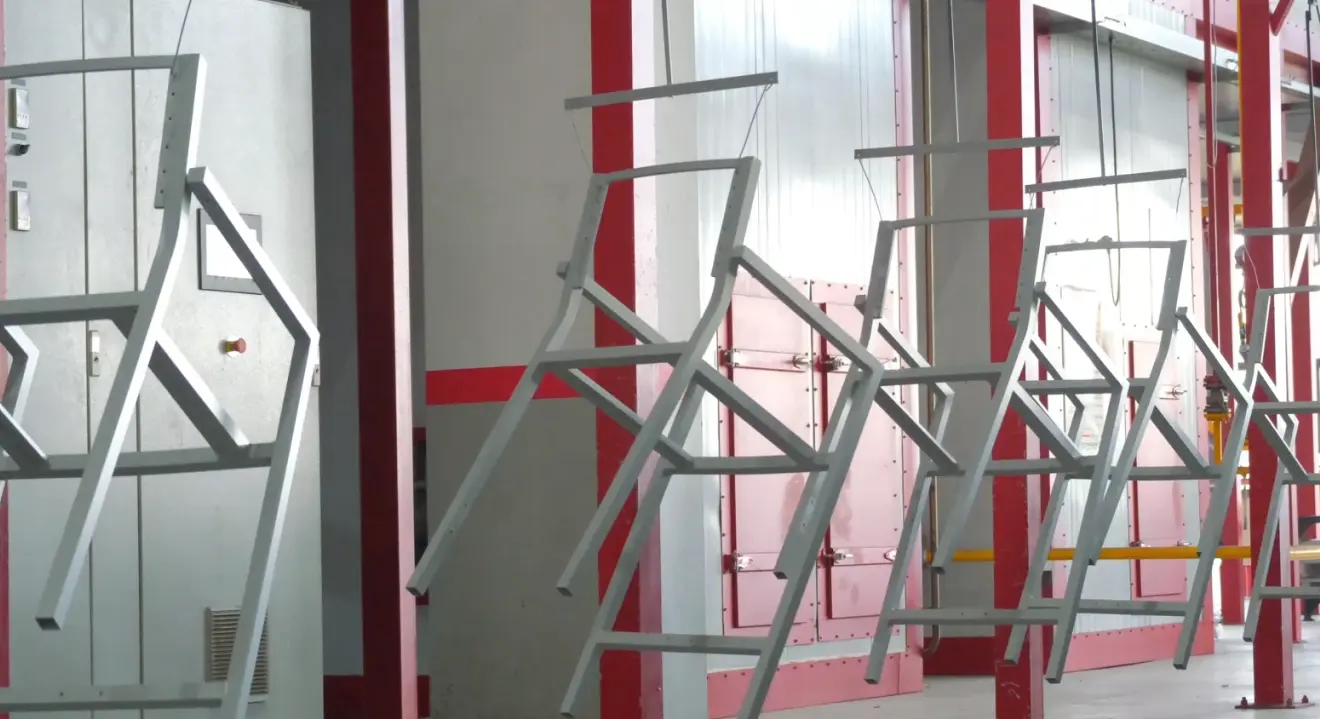
Standard powder coated aluminum outdoor furniture undergoes electrostatic spray application, where charged powder particles adhere to the grounded metal surface before heat-curing at 180–200°C. This process produces a durable exterior finish typically 60–120 μm thick, tested for adhesion per ASTM D3359 cross-cut standards. However, the physics of electrostatic spraying means the powder does not reach enclosed tube interiors. The inside of a welded, closed-section tube receives zero coating protection.
This creates an information asymmetry that frustrates consumers and damages brands. The buyer sees a smooth, uniform finish. The product passes a visual inspection. But the interior surface — bare carbon steel — is completely exposed to any moisture that enters. The corrosion progresses silently for months before manifesting as either bubbling paint (where rust pressure pushes outward from within) or brown liquid draining from the chair legs.
The alternative is aluminum alloy tubing, which eliminates ferrous corrosion entirely. Aluminum contains no iron and naturally forms a thin aluminum oxide (Al₂O₃) layer that protects against further oxidation. This is why aluminum frames do not produce rust water regardless of moisture exposure. The trade-off is cost: aluminum alloy tubing carries a 20–40% material cost premium over carbon steel. For premium product lines targeting hospitality, coastal markets, or high-end retail, aluminum is the standard choice. For mass-market retail programs where price sensitivity is high, steel remains dominant — but demands rigorous factory-level sealing and treatment to compensate for its corrosion vulnerability.
Sunshine Outdoor manufactures both aluminum and steel frame outdoor furniture across its dual facilities, allowing brand partners to select the optimal material for their market positioning and price architecture.
What Quality Control Steps Prevent Rust Water at the Manufacturing Stage?
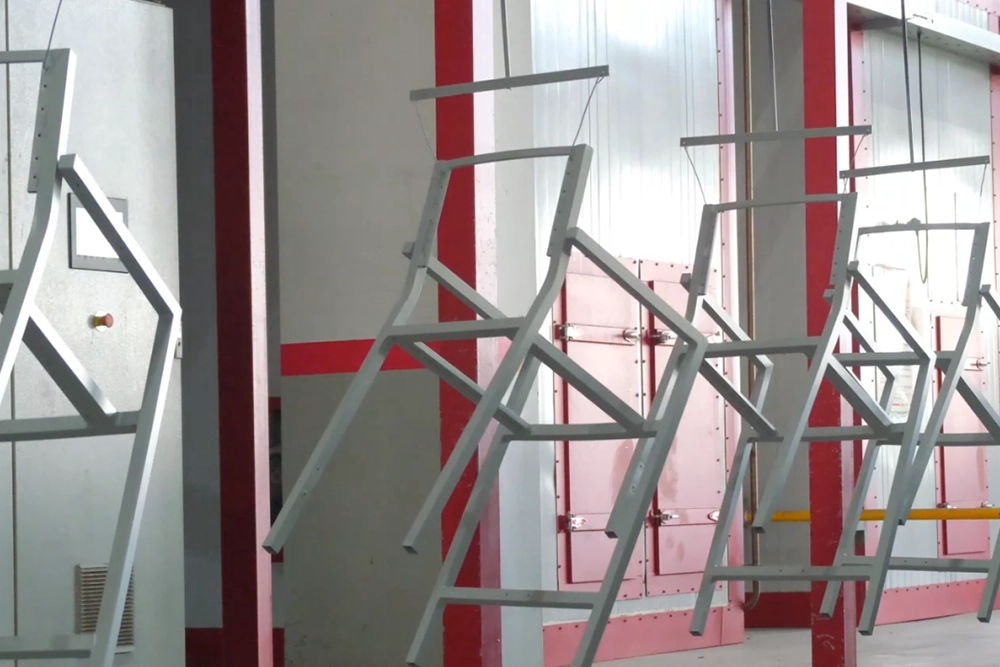
Preventing rust water requires three factory-level controls: sealed tube ends with press-fit end caps that block water ingress, pinhole-free welding verified through post-weld inspection, and complete surface treatment including internal corrosion protection before assembly. These steps eliminate the defect before the product ships.
The difference between a chair that stains a deck and one that does not is determined entirely in the factory. No consumer-applied spray, cover, or wax can compensate for an unsealed tube end or a porous weld seam. The following three quality control stages — applied consistently across Sunshine’s manufacturing operations in China and Vietnam — address each of the three moisture entry pathways identified above.
How Does Tube Sealing and End Cap Design Block Water Ingress?
Every hollow tube section in an outdoor furniture frame has at least two open ends after cutting. Each open end is a direct pathway for rainwater. The primary engineering control is a press-fit end cap — a PE, PP, or rubber plug inserted into the tube opening with interference tolerance.
The end cap is not a decorative component. It is the first line of defense against internal corrosion. Its design parameters include:
- Material selection: polyethylene (PE) or polypropylene (PP) for rigid caps; thermoplastic rubber (TPR) for applications requiring flexibility and enhanced grip on floor surfaces.
- Interference fit: the cap outer diameter is engineered slightly larger than the tube inner diameter, requiring mechanical force to insert. This creates a friction-based seal that resists casual displacement.
- Retention under use: outdoor furniture is moved, dragged, tilted, and exposed to thermal cycling (expansion and contraction) across seasons. A properly engineered end cap maintains its seal through these conditions over the product’s service life.
In cost-driven production, end caps are frequently undersized (loose fit), omitted on hidden surfaces, or made from brittle materials that crack after UV exposure. Each of these failures re-opens the tube to moisture ingress. Sunshine’s OEM and ODM process specifies end cap design, material, and fit tolerance as part of the product engineering package — not as an afterthought in final assembly.
What Welding Standards Eliminate Pinholes in Tube Joints?
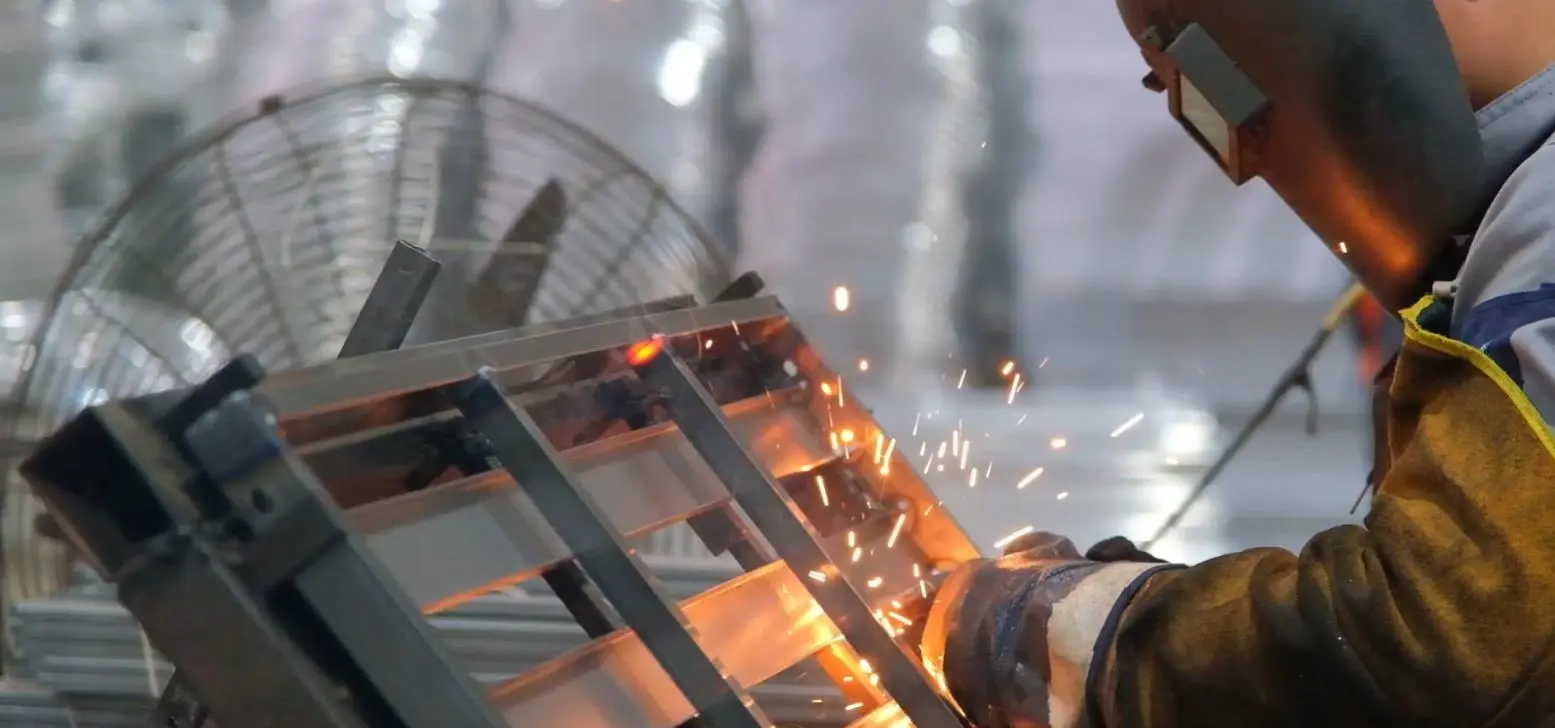
Where two tube sections meet — at corners, T-joints, and curved transitions — welding fuses the metal to create a continuous joint. The welding method (MIG, TIG, or robotic welding) determines the heat input, penetration depth, and porosity risk.
A pinhole in a weld seam is a manufacturing defect measuring as little as 0.05–0.1 mm in diameter. At this scale, the defect is invisible during casual visual inspection. Yet it is sufficient to allow capillary water infiltration under rain exposure. Over weeks or months, this micro-ingress initiates the internal corrosion cycle described above.
Eliminating pinholes requires two controls:
Process control — welding parameters (current, voltage, travel speed, shielding gas flow) must be calibrated to the specific tube material, wall thickness, and joint geometry. Robotic welding systems offer higher consistency than manual welding for repetitive joint types.
Post-weld inspection — every weld seam is visually inspected under controlled lighting. For critical joints, penetrant testing or equivalent methods can detect sub-surface porosity that visual inspection alone would miss.
The distinction between manufacturers that produce rust-free furniture and those that produce rust-leaking furniture often comes down to this single step: whether a post-weld inspection protocol exists, is documented, and is executed consistently across every production batch.
How Does Surface Treatment Protect Tube Interiors from Corrosion?
For steel-framed products, interior surface treatment provides a secondary barrier against corrosion in the event that moisture bypasses the end cap or enters through condensation.
Common interior treatment methods include:
- Phosphating (phosphate conversion coating): a chemical process that deposits a crystalline zinc or iron phosphate layer on the steel surface, creating a corrosion-resistant base that also improves paint adhesion. Typical coating weight: 1.5–4.0 g/m².
- E-coating (electrodeposition coating): an electrically deposited primer that provides uniform coverage including recessed areas. Film thickness: 15–25 μm. E-coating reaches interior surfaces more effectively than spray methods.
- Internal spray application: in some production configurations, a corrosion inhibitor is applied to tube interiors before end cap installation.
For aluminum alloy frames, interior treatment is unnecessary. Aluminum’s natural oxide layer (Al₂O₃) provides inherent corrosion protection. This is a primary reason that premium outdoor furniture collections for hospitality and coastal applications specify aluminum construction.
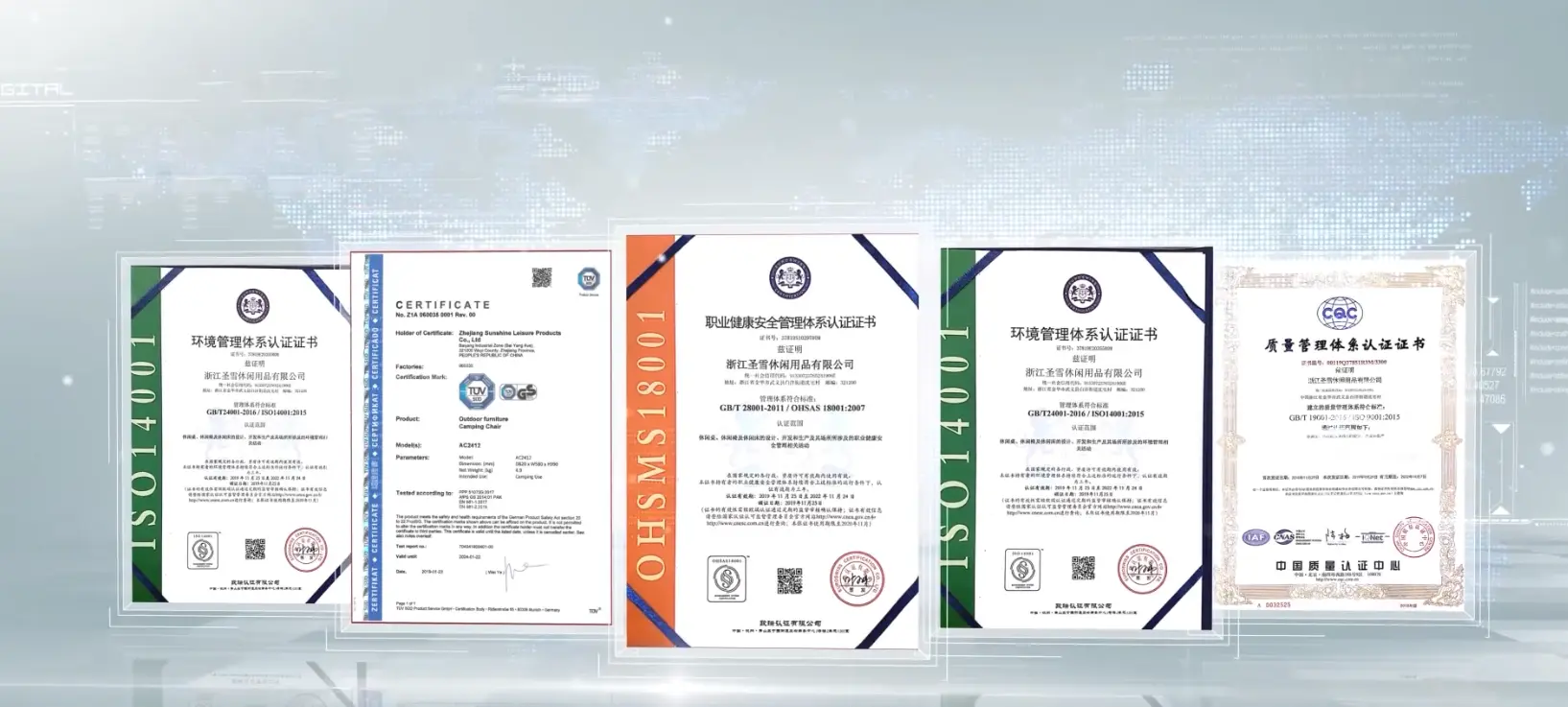
Sunshine’s quality system — certified to ISO 9001, ISO 45001, and ISO 14001 — ensures that surface treatment specifications are documented in the product control plan, verified during production, and audited at defined intervals.
What Is the Difference Between Aluminum and Steel Frames for Outdoor Furniture Corrosion?
Aluminum frames do not rust because aluminum contains no iron and forms a protective oxide layer naturally. Steel frames provide higher structural strength at lower cost but require sealed construction, internal treatment, and quality powder coating to prevent corrosion. Material choice depends on market positioning and end-use environment.
The following comparison covers the attributes most relevant to corrosion performance and sourcing decisions:
| Attribute | Aluminum Alloy Frame | Carbon Steel Frame |
| Rust potential | None — no iron content | High without protection |
| Natural protection | Self-forming Al₂O₃ oxide layer | None — requires applied coatings |
| Weight | 30–40% lighter than equivalent steel | Heavier; higher structural rigidity |
| Material cost | 20–40% premium over steel | Lower per unit |
| Internal treatment required | No | Yes — phosphating, e-coating, or inhibitor |
| Powder coating function | UV protection + color + scratch resistance | Corrosion barrier + UV + color + scratch resistance |
| Salt spray resistance (coated) | 1,000+ hours typical | 500–1,000 hours with quality coating system |
| Best application | Coastal markets, hospitality, resorts, premium retail | Mass retail, high-volume programs, inland markets |
| End cap criticality | Lower (no ferrous corrosion risk) | Critical (primary moisture barrier) |
The choice is not binary. Many successful outdoor furniture programs use steel frames for dining chairs and side tables (where cost sensitivity is highest) and aluminum frames for loungers and premium dining sets (where corrosion performance and weight reduction justify the material premium).
Sunshine maintains mature production lines for both materials across its China and Vietnam facilities, with a combined monthly output capacity exceeding 2,200,000 units. This dual-material capability allows brand partners to build coherent product ranges that span price tiers without switching suppliers — and without compromising corrosion protection at any tier.
How Can Furniture Buyers Verify Rust Prevention Quality Before Ordering?
Furniture buyers verify rust prevention by requesting the manufacturer’s tube sealing method, weld inspection records, powder coating thickness test reports (ASTM B499), salt spray test hours (ASTM B117), and end cap retention specifications. A qualified manufacturer provides this documentation as standard practice during sourcing.
The following checklist translates the quality control principles discussed above into specific questions a sourcing professional or brand buyer should ask during supplier evaluation:
| Verification Item | What to Request | Red Flag |
| Tube end sealing | Confirm all tube openings receive press-fit end caps; request cap material and dimensional spec | Friction-only caps; open cuts without caps on hidden surfaces |
| Weld integrity | Request post-weld inspection protocol documentation; confirm inspection is per-unit or per-batch | No documented inspection step; “we check randomly” with no defined AQL |
| Powder coating thickness | Request ASTM B499 coating thickness measurement report; target 60–120 μm | No thickness data; inconsistent readings below 50 μm |
| Salt spray resistance | Request ASTM B117 salt spray test report; target 500+ hours for steel, 1,000+ for aluminum | Fewer than 500 hours; no testing performed |
| Coating adhesion | Request ASTM D3359 cross-cut adhesion test results; target 4B–5B rating | Results below 3B; no adhesion testing |
| Internal corrosion protection | Ask whether tube interiors receive phosphating, e-coating, or inhibitor treatment | “Our powder coating covers everything” (factually incorrect for closed sections) |
| Material traceability | Request mill certificate for tube material confirming alloy grade and composition | No traceability; cannot identify material source |
| Final assembly water test | Ask whether finished products undergo rain simulation or water immersion testing | No final validation of assembled product |
A manufacturer that produces these documents routinely has embedded corrosion prevention into its quality management system. A manufacturer that cannot produce them is relying on luck — and transferring the corrosion risk downstream to the brand and the end consumer.
Sunshine provides full QC documentation as part of its OEM service, including material certificates, coating test reports, and inspection records aligned with the quality standards expected by its retail partners including Walmart, Target, Carrefour, JYSK, and ALDI.
What Certifications and Standards Ensure Outdoor Furniture Corrosion Resistance?
Key certifications for outdoor furniture corrosion resistance include EN 581 for structural safety, ASTM B117 for salt spray testing, ASTM D3359 for coating adhesion, ISO 9001 for quality management systems, and REACH for chemical safety compliance. These standards validate that manufacturer claims are independently verified.
Each standard addresses a specific layer of the quality system:
EN 581 — European standard for outdoor furniture strength, durability, and safety. EN 581-1 covers general safety requirements; EN 581-2 covers seating; EN 581-3 covers tables. Compliance confirms that the frame structure withstands defined static and dynamic loads, which directly relates to weld integrity and tube selection. A chair that passes EN 581 mechanical testing has demonstrated that its joints and frame members meet minimum structural thresholds.
ASTM B117 — Standard practice for operating salt spray (fog) testing apparatus. This accelerated corrosion test exposes coated metal samples to a continuous salt fog environment at 35°C. Results are reported in hours to first visible corrosion. For outdoor furniture, 500 hours is a baseline threshold; 1,000+ hours indicates a high-performance coating system. This test directly measures the powder coating’s ability to protect the steel substrate from moisture-induced corrosion.
ASTM D3359 — Standard test methods for rating adhesion of coatings by tape test. The cross-cut method (Method B) scores adhesion on a 0B–5B scale. A rating of 4B or 5B confirms that the coating remains bonded to the metal surface under mechanical stress — critical for preventing coating delamination that would expose bare steel to corrosion.
ISO 9001 — International standard for quality management systems. ISO 9001 certification confirms that the manufacturer operates documented processes for production control, inspection, corrective action, and continuous improvement. For corrosion prevention specifically, ISO 9001 ensures that the tube sealing, welding, and coating procedures described above are repeatable across every production batch — not dependent on individual operator judgment.
REACH — EU Registration, Evaluation, Authorisation and Restriction of Chemicals regulation. REACH compliance ensures that coatings, treatments, and materials used in furniture production do not contain prohibited or restricted chemical substances. This is relevant to corrosion prevention because certain effective but hazardous treatments (e.g., hexavalent chromium conversion coatings) are restricted under REACH, requiring manufacturers to use compliant alternatives.
Sunshine holds active certifications including BSCI, FSC, GRS, REACH, EN 581, and ISO 9001/45001/14001 — a certification portfolio that reflects 21 years of supplying quality-verified outdoor furniture to global retail brands. These are not self-declared claims. Each certification is subject to periodic third-party audit and renewal.
Sourcing Decisions Made at the Factory Determine What Happens on the Patio
The rust stain on a homeowner’s new deck is the visible endpoint of a quality failure that occurred months earlier, thousands of miles away, on a production line. The tube was left unsealed. The weld was left uninspected. The end cap was left unengineered. By the time the brown water appears beneath the chair leg, the defect has already traveled through packaging, container shipping, warehouse distribution, retail shelf placement, and consumer purchase. Every link in that chain absorbs the cost of a problem that should have been solved at the first link.
The most effective corrosion prevention for metal patio furniture is not a spray can, a furniture cover, or a consumer maintenance routine. It is a manufacturing partner that seals every tube, inspects every weld, and engineers every end cap before the product leaves the production line.
Sunshine Outdoor has operated this standard across its dual manufacturing facilities for over two decades, serving brands that cannot afford a rust complaint — because their customers’ decks, and their brand reputations, are on the line.
Request a sample to inspect Sunshine’s sealed-tube construction and QC documentation firsthand.
Want to Know More About Our Products?
View All Products NowAbout Author
Spring Nee
Spring Nee is the Sales & Marketing Director at Zhejiang Sunshine Leisure Products Co., Ltd. With nearly 20 years of experience in the outdoor leisure furniture industry, she specializes in camping chairs, beach chairs, folding outdoor seating, and OEM/ODM project communication. Spring also leads the company’s marketing content direction. Most of the articles published on this website are either written by Spring herself or reviewed by her before publication, ensuring that the content is practical, accurate, and based on real industry experience.