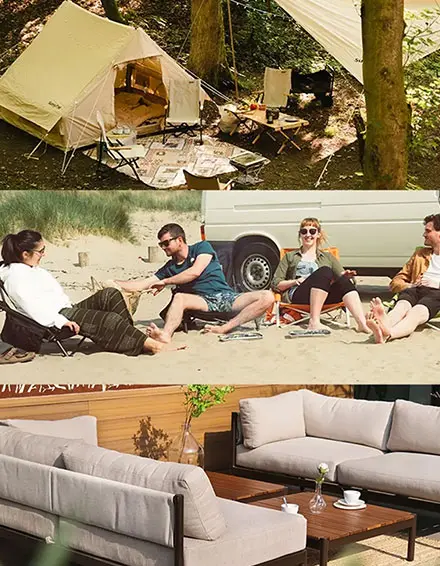
How to Choose Director Chairs: The Complete Buyer’s Guide

Jump to section
A director chair is a collapsible X-frame seat with fabric slings and wide armrests, used for camping, patios, events, and commercial settings. Choosing the right director chair requires evaluating frame material, seat height, fabric type, weight capacity, and extra features against the intended use environment. This guide provides a structured eight-step decision framework with real product specifications from Sunshine Outdoor’s director chair collection.
What Is a Director’s Chair and Why Is It Still Popular?

A director’s chair is a portable folding seat defined by its scissor-style X-frame, fabric sling seat and backrest, and paddle-shaped armrests. The design dates to 15th-century European folding chairs and became a cultural icon on Hollywood film sets after the Gold Medal Classic won an award at the 1893 Chicago World’s Fair. Director chairs remain popular because they combine three qualities that most portable seating cannot: compact foldability for storage, elevated visual style, and genuine sitting comfort across indoor and outdoor environments.
Today director chairs serve patios, campsites, trade shows, makeup stations, restaurants, RV parks, and living rooms. Their versatility is what makes the selection process important — a chair built for a backyard deck has very different requirements from one hauled to a campsite every weekend.
How Does Use Case Affect Director Chair Selection?

Use case is the single most important factor in choosing a director chair because it determines the required frame strength, fabric durability, weight, and feature set. Three questions narrow the field before any specification comparison begins.
Indoor or outdoor? Outdoor director chairs need weather-resistant frames with powder coating or anodized finishes, plus UV-treated fabric that resists fading and mildew. Indoor chairs can prioritize aesthetics and cushioning. For outdoor environments from campsites to RV parks, portable camping furniture with foldable frames is purpose-built to handle sun, rain, and frequent transport.
Stationary or portable? If the chair travels in a car trunk weekly, net weight and fold-down dimensions are critical constraints. If it stays on a patio year-round, durability and design take priority.
Occasional or daily? A chair used a few times per year can be an entry-level model. A chair used daily at a commercial event space or production set needs reinforced construction with a higher weight rating and a manufacturer warranty.
What Frame Material Is Best for a Director Chair?
The best frame material for a director chair depends on the balance between strength, weight, corrosion resistance, and aesthetic preference required by the use environment. Steel is strongest, aluminum is lightest, and wood delivers the classic visual appeal.
Steel Frames
Steel frames offer the highest weight capacity and structural rigidity among director chair frame options. Powder-coated steel resists corrosion and typically supports 300 lbs or more. The trade-off is added weight, which limits portability but suits commercial, event, and heavy-duty outdoor use.
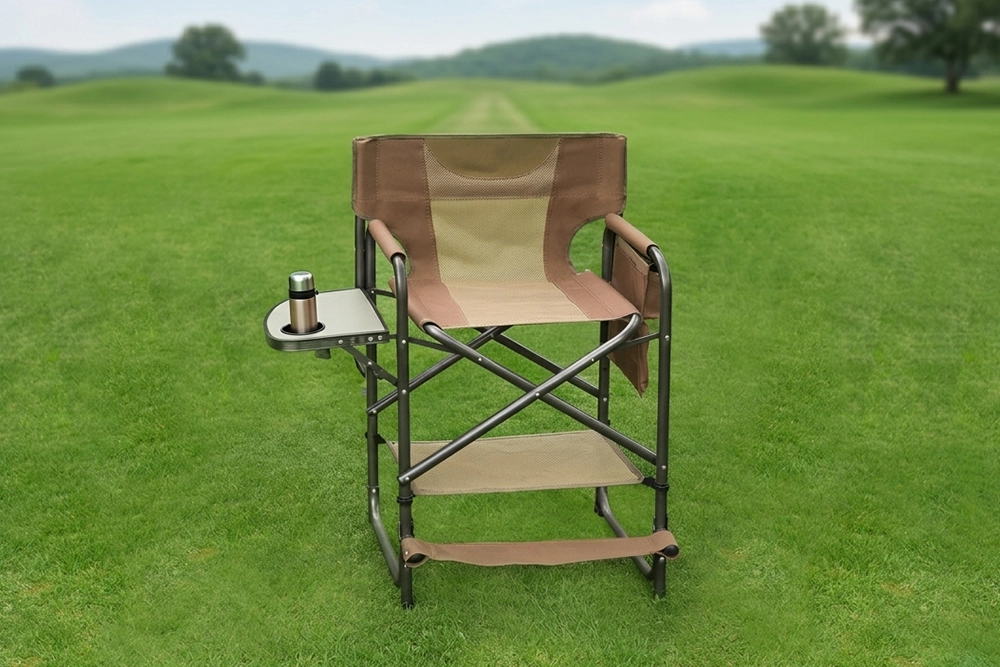
The heavy-duty steel director chair with side table (AC3066B) uses a Φ19mm powder-coated steel frame rated at 300 lbs with a net weight of 4.6 kg. The steel-frame director folding chair with waterproof fabric (AC3008F) pairs the same 300 lb steel frame with waterproof 600D polyester and an integrated side table — a configuration designed for camping, events, and park use.
Aluminum Frames
Aluminum frames are the lightest option for director chairs and provide natural rust resistance without requiring a protective coating. They fold easily and suit frequent-transport scenarios: car camping, beach trips, tailgating, and trade shows. The finish is typically silver or black anodized aluminum.
The lightweight aluminum director chair for portable outdoor use (AC3087B) demonstrates this category: it folds compactly, weighs significantly less than steel equivalents, and targets users who prioritize grab-and-go convenience over maximum load capacity.
Wood Frames
Wood frames deliver the original director chair aesthetic. Common hardwoods include beech, ash, and oak, with finishes ranging from light natural to dark mahogany. Premium models use bamboo or elm. Wood looks best on patios, in dining areas, and at events where visual style matters. The trade-off is heavier weight and sensitivity to moisture — wood frames require dry storage to prevent warping and cracking.
How Do Steel, Aluminum, and Wood Director Chair Frames Compare?
Steel, aluminum, and wood director chair frames differ across five dimensions: weight, maximum load capacity, corrosion resistance, visual style, and ideal use environment.
| Attribute | Steel | Aluminum | Wood |
| Weight | Heaviest | Lightest | Medium |
| Typical load capacity | 300 lbs+ | 200–250 lbs | 250–300 lbs |
| Corrosion resistance | Good (powder coat required) | Excellent (natural) | N/A (moisture-sensitive) |
| Visual style | Industrial / modern | Clean / minimal | Classic / warm |
| Best use environment | Commercial, heavy-duty outdoor | Portable camping, beach, travel | Patio, indoor, styled events |
What Seat Height Should a Director Chair Have?
A director chair should have a seat height matched to the surface it will be used beside: 18 inches for dining tables and patios, 24 inches for kitchen counters, and 30 inches for bar counters and professional makeup or film stations.
Table height (18 inches) is the most versatile option. It works at dining tables, on decks, and as general-purpose extra seating. It is comfortable for all age groups and the easiest height to get in and out of.
Counter height (24 inches) fits kitchen countertops and elevated workstations. It is a practical middle option between casual seating and bar-height stools.
Bar height (30 inches) is designed for bar counters, tall pub tables, and professional settings like makeup chairs on film sets. Most bar-height director chairs include a footrest — the footrest position should be tested against the user’s leg length, as some models set it too low for shorter individuals.
When uncertain, 18-inch table height is the safest default because it accommodates the widest range of environments and body types.
What Fabric Is Most Durable for an Outdoor Director Chair?

The most durable fabric for an outdoor director chair is 600D polyester Oxford cloth because it combines fast drying, mildew resistance, UV tolerance, and abrasion resistance in a single material. The denier rating (D) indicates fabric thickness — higher denier means stronger fabric.
Polyester / Oxford cloth (600D+) is the standard choice for outdoor director chairs. It dries quickly after rain, resists mold, and withstands repeated folding without tearing. Most models in the Sunshine Outdoor director chair range use 600D polyester Oxford cloth for these performance characteristics.
Canvas (cotton) is the traditional director chair fabric. It is breathable, comfortable, and pairs visually with wooden frames. However, cotton absorbs moisture and develops mold if left wet. Cotton slings must be air-dried only — heated dryers shrink them permanently. Periodic treatment with a fabric protector like Scotchgard extends canvas life.
Mesh provides the best airflow among director chair fabrics and suits hot climates. It cleans easily with mild soap and water but feels less substantial than canvas or heavy polyester.
Leather delivers a premium feel for indoor director chairs. Leather degrades under direct sunlight, heat, and moisture, making it unsuitable for outdoor environments.
How Much Weight Can a Director Chair Support?
A standard director chair supports 200 to 250 lbs, while reinforced models with steel frames and heavy-gauge construction support 300 lbs or more. The weight capacity is determined primarily by frame material, joint reinforcement, and fabric tensile strength.
Both the heavy-duty steel director chair (AC3066B) and the steel-frame director chair with side table and waterproof fabric (AC3008F)are rated at 300 lbs due to their Φ19mm powder-coated steel frames and 600D polyester slings.
For users who need a wider seat and taller backrest, oversized camping chairs with reinforced frames offer higher capacity with more spacious seating geometry.
A practical rule: purchase a director chair rated at least 20% above the user’s actual weight. A chair operating near its maximum capacity wears faster at the joints and fabric attachment points, shortens useful lifespan, and feels less stable during use.
What Extra Features Add the Most Value to a Director Chair?
The extra features that add the most value to a director chair are a built-in side table, cup holder with storage pockets, and a carrying bag — because they eliminate the need for separate accessories and increase the chair’s utility per unit of weight carried.
Side table or folding tray. A built-in side table provides a flat surface for drinks, phones, plates, and books without requiring an additional table. The steel-frame director chair with integrated side table (AC3008F) integrates the table directly into the armrest structure, maintaining a compact fold-down profile.
Cup holder and storage pockets. The compact director chair with cup holder, storage pockets, and accessibility-friendly design (AC3086) combines a built-in cup holder with side pockets for small items. This model is also designed for accessibility — a consideration that few director chair manufacturers address.
Carrying bag or shoulder strap. A dedicated carry bag protects the chair during transport and makes one-handed carrying practical. Many Sunshine Outdoor director chair models include a carry bag as standard.
Padded armrests reduce forearm pressure during long sitting sessions — relevant for trade shows, face painting, outdoor concerts, and film sets.
Footrest is essential on bar-height (30-inch) models. The footrest height should match the user’s seated leg position; a poorly positioned footrest negates the comfort benefit entirely.
How Can Director Chairs Be Customized for Branding and Events?
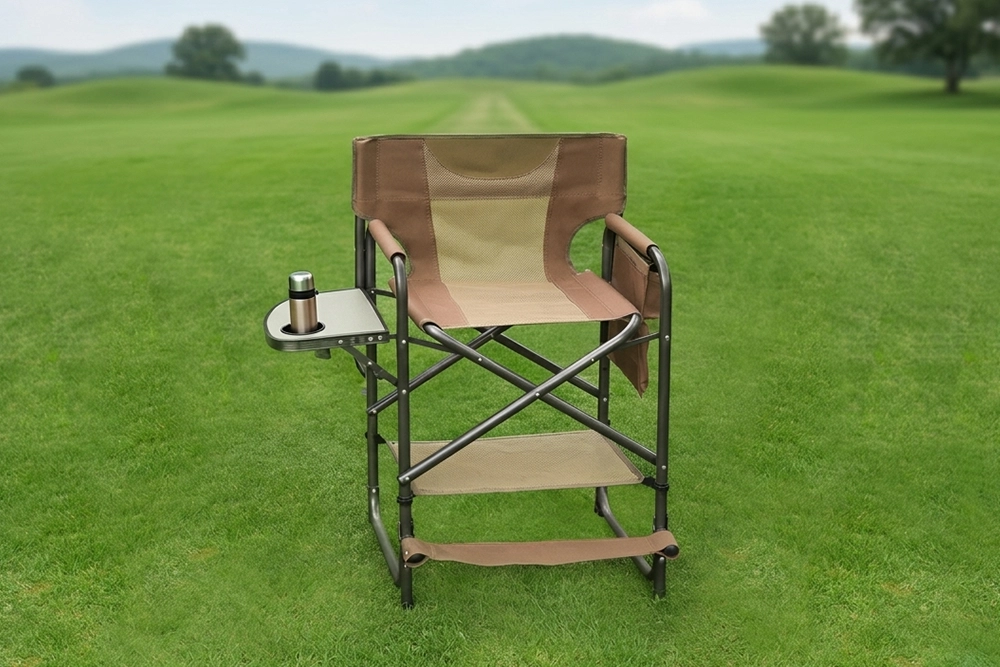
Director chairs can be customized for branding and events through four primary methods: heat-transfer printing for logos and images, embroidery for names and titles, dye-sublimation for edge-to-edge full-color graphics, and replacement canvas sets for color changes.
Customization turns a functional chair into a branded marketing asset. This makes director chairs popular at trade shows, product launches, hospitality venues, and film productions where brand visibility on set matters.
For businesses sourcing custom director chairs at scale, working directly with a manufacturer provides control over logo placement, fabric color, frame finish, and packaging design. Sunshine Outdoor provides OEM and ODM outdoor furniture manufacturing with 21 years of production experience, supporting projects from single prototypes to high-volume orders. The customizable portable director chair (AC3013) and the OEM director chair with custom logo and color options (AC3065B) are specifically designed for branded and private-label programs.
What Budget Should You Set for a Director Chair?
The appropriate budget for a director chair ranges from under $50 for occasional personal use to $150–$300+ for commercial-grade daily use, with the cost-per-year of ownership being a more useful metric than sticker price.
Under $50 (entry-level): Thinner frames, lower weight capacities around 200 lbs, and basic fabric. Suitable for seasonal use a few times per year — backyard gatherings and occasional camping.
$50–$150 (mid-range): Solid construction with 600D polyester or canvas, steel or aluminum frames, and weight limits around 250–300 lbs. Appropriate for regular home, patio, and camping use.
$150–$300+ (commercial-grade): Reinforced steel or premium hardwood frames, waterproof high-denier fabric, integrated features like side tables and carry bags, and manufacturer warranties. Designed for daily commercial use in hospitality, events, and production environments.
A $150 chair that lasts five years costs $30 per year. A $40 chair replaced annually costs $40 per year and delivers inferior comfort and stability throughout its shorter life. Price per year is the accurate measure of director chair value.
How Should a Director Chair Be Cleaned and Stored?
A director chair should be cleaned with a damp cloth for routine maintenance, machine-washed on gentle cycle for fabric slings, and stored folded in a dry environment to prevent frame warping and fabric mold.
Fabric maintenance: Wipe spills immediately with a damp cloth. For deeper cleaning, most polyester and canvas slings tolerate a gentle machine wash cycle. Air dry only — heated dryers shrink cotton canvas permanently. Reapply Scotchgard or an equivalent fabric protector after each wash to restore water and stain resistance.
Frame maintenance: Wipe wood or metal with a damp cloth. Use furniture polish for scuff marks on wood finishes. Never use abrasive cleaners on any director chair frame material — abrasives damage both powder coating and wood finishes.
Storage: Fold the chair and store in a dry indoor space. For long-term storage of wooden frames, remove the canvas sling set and store it flat in a drawer to prevent stretching. Hanging the folded chair from a wall hook keeps it off the floor and protected from accidental damage.
Which Director Chair Is Right for Your Needs?
The right director chair matches frame material to environment, seat height to intended surface, fabric to climate, and weight capacity to users — with a budget that reflects frequency of use.
Use this seven-point checklist before purchasing:
- Does the frame material suit the use environment — indoor, outdoor, or both?
- Is the seat height correct for the surface where the chair will be used?
- Does the fabric match the climate and the owner’s care willingness?
- Is the weight capacity at least 20% above the heaviest intended user?
- Are needed features present — side table, cup holder, storage, footrest?
- Is custom branding required for business, event, or production use?
- Does the budget reflect cost-per-year based on expected frequency of use?
Browse the full Sunshine Outdoor director chair collection for steel-frame, aluminum, and customizable models across all weight classes. For adjacent seating needs, explore weather-resistant beach furnitureand commercial patio and garden furniture.
For custom branding, private label, or bulk manufacturing inquiries, contact the Sunshine Outdoor team to discuss OEM and ODM outdoor furniture production from prototype through volume delivery.
Want to Know More About Our Products?
View All Products NowAbout Author
Spring Nee
Spring Nee is the Sales & Marketing Director at Zhejiang Sunshine Leisure Products Co., Ltd. With nearly 20 years of experience in the outdoor leisure furniture industry, she specializes in camping chairs, beach chairs, folding outdoor seating, and OEM/ODM project communication. Spring also leads the company’s marketing content direction. Most of the articles published on this website are either written by Spring herself or reviewed by her before publication, ensuring that the content is practical, accurate, and based on real industry experience.