The Complete Guide to Camping for Beginners: How to Plan, Pack, and Enjoy Your First Trip

Jump to section
To go camping for the first time, focus on five decisions in order: pick car camping as your entry point, reserve a campsite with facilities, pack gear across six categories (shelter, sleep, seating, kitchen, clothing, safety), plan simple meals, and learn basic campsite etiquette before you leave. Get these five right and your first trip will be comfortable enough to guarantee a second one.
This guide is written by the outdoor research team at Sunshine Outdoor, a camping furniture manufacturer since 2004. We produce over 2 million chairs, tables, cots, and wagons annually for leading outdoor brands. The recommendations here, especially around seating, furniture layout, and gear durability, come from two decades of load testing, field-return data, and failure-mode analysis across thousands of SKUs. Most beginner camping guides are based on affiliate lists or weekend reviews. This one is based on manufacturing-side evidence of what holds up in the field and what breaks.
After reading, you will know how to choose a camping type, book a campsite, build a gear list without overspending, set up a functional campsite layout, plan meals with and without refrigeration, handle weather and wildlife, follow Leave No Trace principles, and adapt your setup for kids, groups, solo trips, or RVs.
One position shapes every recommendation: comfort is not a camping luxury. It is what determines whether a beginner camps once or for life. The right sleeping pad, the right chair, the right campsite layout. These are the baseline, not upgrades.
What Is Camping and Why Should You Try It?
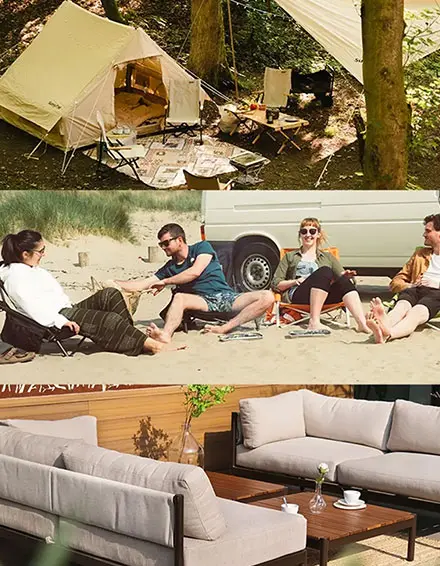
Camping is an outdoor recreational activity where you sleep away from home in a tent, RV, or under the open sky, typically in a natural setting such as a forest, lake, or mountain area. Camping ranges from basic backcountry trips to fully equipped car camping with portable furniture, kitchen setups, and comfortable seating.
Over 57 million American households go camping each year. The activity requires no special skills, no expensive memberships, and no athletic ability. A campsite costs between $20 and $50 per night at most public campgrounds. The barrier to entry is lower than almost any other outdoor sport.
The most common reason first-time campers hesitate is uncertainty about gear and preparation. This guide eliminates that uncertainty. Every section covers one specific decision you need to make before and during your first trip.
At Sunshine Outdoor, we have manufactured camping furniture for the world’s leading outdoor brands since 2004. Over two decades and more than 2 million units produced annually, we have observed one consistent pattern: what makes people return to camping is not the destination. It is the comfort of their setup when they arrive. A stable chair by the campfire, a level table for morning coffee, a cot that keeps you off cold ground — these details separate a great trip from a miserable one.
What Are the Different Types of Camping for Beginners?
The main camping types are car camping, campground camping, glamping, backcountry camping, and dispersed camping. For beginners, car camping at an established campground is the best starting point because it combines convenience with the full outdoor experience. You drive directly to your site, bring as much gear as your vehicle holds, and have access to restrooms, water, and often showers.
Why Is Car Camping the Best Option for First-Time Campers?
Car camping means you park your vehicle next to your campsite. There is no weight limit on your gear. You can bring a full-size tent, a proper camping chair with a built-in side table, a folding camp table, a large cooler, and multiple changes of clothes. If you forget something, your car is right there.
This format is forgiving. Mistakes are inconveniences, not emergencies. You learn by doing, and you learn in relative comfort.
Car camping also offers the most flexibility. You can set up an elaborate campsite with a cooking station, a dining area, and a dedicated lounging zone. You have room for comfort items that make the experience enjoyable rather than just tolerable.
What Is the Difference Between Glamping and Traditional Camping?
Glamping — short for glamorous camping — provides pre-built accommodations such as canvas tents, yurts, treehouses, or cabins with real beds, furniture, and sometimes electricity. You arrive with a suitcase rather than a gear list.
Traditional camping requires you to bring and set up your own shelter, sleeping system, and camp furniture. The tradeoff is cost (glamping runs $100 to $500+ per night) and flexibility (you choose your own setup).
If you want the outdoor experience without the setup work, glamping is a valid starting point. If you want to learn actual camping skills, start with car camping. For a detailed breakdown of every style, read our complete guide to camping types.
Some campers bridge the gap by bringing padded lounge chairs and quality furniture to a traditional campsite. This approach gives you the self-sufficiency of camping with comfort levels approaching glamping.
How Do You Plan a Camping Trip Step by Step?
Plan a camping trip in five steps: choose a date during camping season, reserve a campsite, create a gear checklist, plan your meals, and inform someone of your itinerary. Allow at least one week of preparation time for your first trip. Each step narrows your decisions and reduces the chance of arriving unprepared.
When Is Camping Season and the Best Time to Go?
Camping season in most of the United States runs from May through October. National parks and state campgrounds publish their exact opening and closing dates each year. Some campgrounds in southern states and coastal areas operate year-round.
The best time for a first trip is late spring (May or June) or early fall (September). Temperatures are moderate. Crowds are smaller than peak summer. Bugs are less active than in July and August.
Avoid holiday weekends for your first trip. The Fourth of July and Labor Day weekends fill campgrounds to maximum capacity. Noise increases. Privacy decreases. A regular weekend gives you a calmer introduction to the experience.
Where Should Beginners Go Camping?
Start at an established campground with facilities. State parks offer the best balance of nature, affordability, and amenities. National parks provide dramatic scenery but often require reservations months in advance.
KOA (Kampgrounds of America) operates over 500 locations across North America with standardized amenities including restrooms, showers, laundry, and camp stores. KOA campgrounds are designed for families and beginners. The consistency reduces surprises.
Reserve your campsite through Recreation.gov for federal lands (national parks, national forests) or through individual state park websites. Popular campgrounds book out 6 months in advance. Midweek stays are easier to book than weekends.
Choose a campsite within a 2-hour drive of your home for the first trip. Minimize driving time so you arrive with energy to set up camp before dark.
How Much Does a Camping Trip Cost?
A campsite at a state park costs $20 to $40 per night. National park sites range from $15 to $35. KOA sites run $30 to $70 depending on the location and hookups.
Your largest expense is the initial gear investment. A basic setup — tent, sleeping bag, sleeping pad, camp chair, cooler, and stove — costs approximately $300 to $600 if purchased new. This equipment lasts for years with basic care. The per-trip cost drops with every outing.
Borrow gear for your first trip if possible. Most camping equipment is used a few weekends per year. Friends and family often have idle tents and sleeping bags. Test before you invest.
Quality matters more than quantity. A well-made folding chair from a certified manufacturer will outlast five cheap ones. Powder-coated steel frames, 600D polyester fabric, and reinforced stress points are the markers of furniture that survives seasons of use.
How Do You Make a Camping Checklist?
Divide your checklist into six categories: shelter, sleep, seating and furniture, kitchen, clothing, and safety. Within each category, list only what is essential for a one-night or two-night trip. Resist the urge to over-pack on your first outing.
A checklist prevents two problems: forgetting critical items and bringing too much. Both are common beginner mistakes. Our camping gear checklist provides a printable, category-by-category packing guide.
What Do You Need to Bring for Your First Camping Trip?
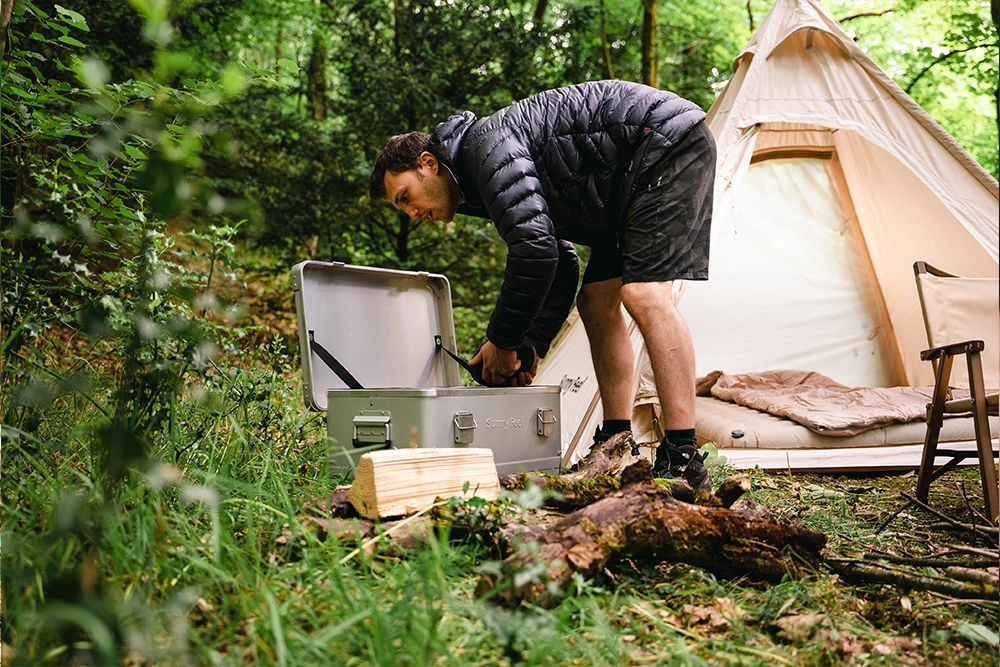
Bring a tent, sleeping bag, sleeping pad, camping chair, folding table, cooler, camp stove, headlamp, first aid kit, and weather-appropriate clothing. Prioritize comfort items — especially seating — because you will spend more waking hours in your camp chair than with any other single piece of gear.
The sections below cover each category. Focus on function over features. The best beginner gear is simple, reliable, and reusable.
What Tent Should a Beginner Buy?
Buy a tent rated for one more person than will actually sleep in it. A 3-person tent for 2 people provides room for gear. A 4-person tent for a family of 3 prevents claustrophobia on a rainy evening.
Look for a freestanding dome tent with a full-coverage rainfly. Freestanding means it holds its shape without stakes, which makes setup faster and more forgiving on rocky ground. A full rainfly covers the entire tent body and prevents leaks in heavy rain.
Practice setting up your tent at home before the trip. The backyard eliminates time pressure and frustration. Most modern tents take 10 to 15 minutes once you understand the pole configuration.
Ventilation matters as much as waterproofing. A tent without mesh panels and vents traps condensation overnight. You wake up in a damp tent and blame the rain, but the moisture came from your own breathing. Cross-ventilation solves this.
Do You Need a Sleeping Bag and Sleeping Pad for Camping?
You need both. A sleeping bag provides insulation. A sleeping pad provides cushioning and — more importantly — prevents heat loss to the ground. Without a pad, even a warm sleeping bag leaves you cold because the compressed insulation beneath you loses its ability to trap air.
Choose a sleeping bag with a temperature rating 10 to 15 degrees below the lowest temperature you expect. A bag rated to 30°F works for most three-season camping in temperate climates.
Sleeping pads come in three types: closed-cell foam (cheapest, lightest, most durable), self-inflating (good comfort-to-weight ratio), and air pads (most comfortable, highest risk of puncture). For car camping where weight does not matter, a self-inflating pad offers the best balance.
If sleeping on the ground does not appeal to you, a folding camping cot offers a bed-like experience outdoors. Cots elevate you off cold or uneven ground and eliminate the need for a thick sleeping pad. They fold to a compact size for transport.
How Do You Choose a Camping Chair?
Choose a camping chair based on three factors: comfort (high back, padded armrests, cup holder), weight (under 4 kg for car camping, under 1 kg for backpacking), and durability (powder-coated steel or aluminum frame, 600D polyester fabric, minimum 250 lbs load rating). A director-style chair with a side table is the most versatile choice for beginners.
The camping chair is the most underestimated piece of gear. You sit in it while cooking, eating, reading, watching the sunset, talking around the fire, and drinking your morning coffee. On a typical camping day, you spend 4 to 6 hours in your chair. No other single item gets that much use.
What to look for when buying a camping chair:
A stable frame is the foundation. Steel frames are heavier but more rigid. Aluminum frames are lighter but require thicker tubing for equivalent strength. Both work for car camping. For backpacking, aluminum is the only practical option.
Fabric determines comfort and longevity. 600D polyester resists tears and abrasion. Mesh panels in the seat back add ventilation in hot weather. UV-resistant coatings prevent fabric degradation from sun exposure.
Folding mechanism matters for safety. Anti-pinch designs prevent finger injuries during setup and teardown. This feature is especially important for families with children. Reinforced stress points at the joints extend the lifespan under repeated folding cycles.
At Sunshine Outdoor, we engineer every camping chair with these principles because we have seen what fails in the field. Our chairs undergo EN581 load testing, salt spray corrosion testing, UV exposure testing, and fatigue cycle testing. We manufacture over 2 million units annually for brands such as Coleman, and every unit follows the same quality standard.
Choosing by camping style:
For car camping, bring a full-size director’s chair with a side table. The flat armrests hold drinks. The side table holds your phone, book, or plate. The higher seat height makes standing up easier. Weight is irrelevant when your car is 10 feet away.
For backpacking, choose an ultralight chair under 2 lbs. These chairs use tension-based designs with minimal poles and a suspended fabric seat. They sacrifice armrests and table features for packability.
For campfire evenings, a rocking chair adds a dimension of comfort that a standard chair cannot match. The gentle motion is relaxing after a day of hiking.
For RV and caravan camping, look for chairs with multiple reclining positions and 3D air mesh fabric for breathability. These chairs often live semi-permanently at the campsite and need to handle extended daily use.
What Folding Table and Storage Do You Need at a Campsite?
A folding camp table provides a stable, elevated surface for food preparation, cooking, eating, and organizing gear. Without a table, you work on the ground or balance items on cooler lids. A table elevates the entire campsite experience.
Choose a table with aluminum legs and a rapid-lock mechanism. No-wobble cross-bracing prevents instability on uneven ground. A height between 25 and 28 inches matches standard chair seat heights for comfortable dining.
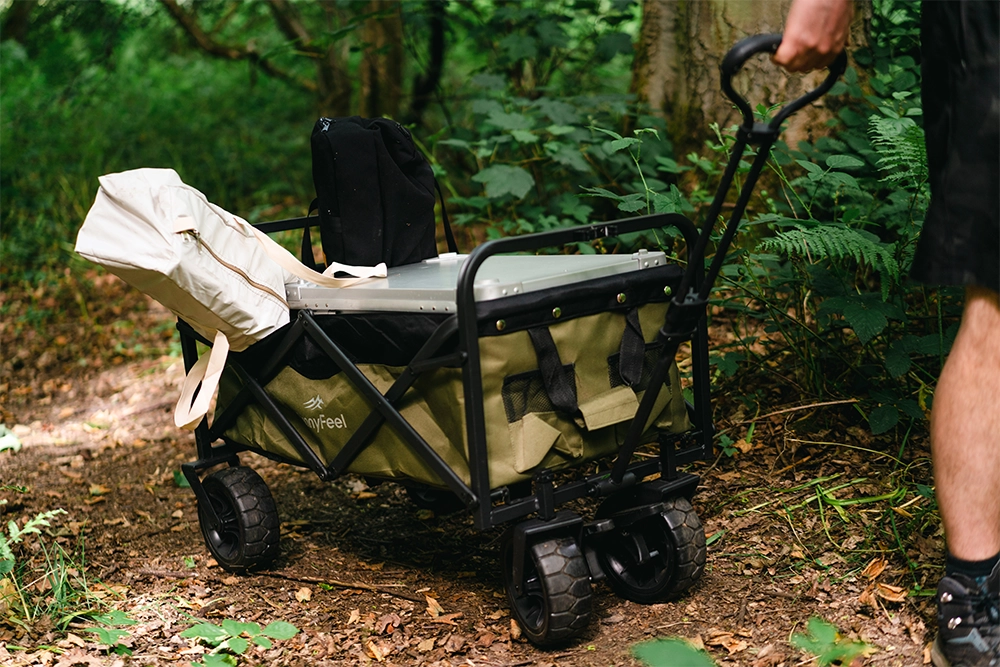
A collapsible camping wagon solves the transport problem. Most campgrounds require a 50-to-200-foot walk from the parking area to the campsite. A wagon carries your cooler, chairs, table, and firewood in a single trip. Large-diameter wheels handle grass, gravel, and dirt without bogging down.
Where Can You Buy Quality Camping Gear?
REI, Bass Pro Shops, and Cabela’s carry curated selections of camping gear with knowledgeable staff. Online retailers offer wider selection and competitive pricing. Brand manufacturer websites often carry their full product lines.
Look for gear from manufacturers with international certifications. EN581 certification means the furniture has been load-tested and fatigue-tested to European commercial standards. BSCI and ISO certifications verify ethical manufacturing and quality management systems. These certifications matter because they represent real testing protocols, not marketing claims.
The best time to buy camping gear is during end-of-season sales (September and October) and during major retail events (Prime Day, Black Friday). Off-season prices drop 20 to 40 percent on identical products.
For businesses, retailers, and campground operators looking for wholesale camping furniture, Sunshine Outdoor provides OEM and ODM manufacturing with dual production facilities in China and Vietnam.
What Should You Wear When Camping?
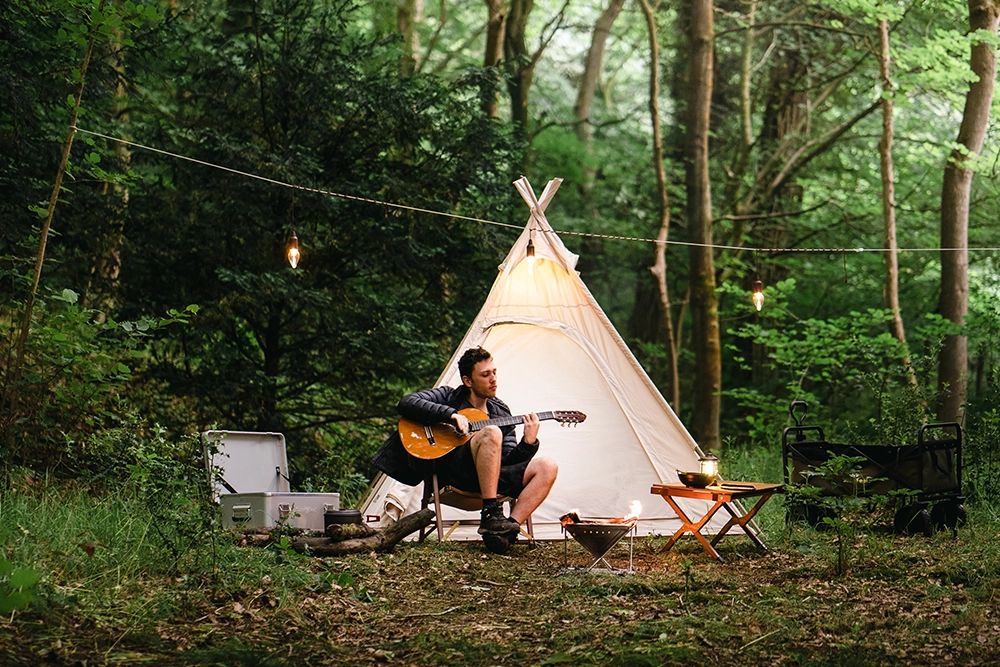
Wear moisture-wicking synthetic layers rather than cotton. Pack a base layer (polyester or merino wool), a mid layer (fleece or light down), and a waterproof outer shell. In summer, focus on UV protection and breathability. Always bring closed-toe shoes with ankle support and a dedicated set of dry clothes for sleeping.
What Is the Best Clothing Material for Camping?
Synthetic polyester and merino wool are the two best materials for camping clothing. Both wick moisture away from the skin, dry quickly, and retain insulation when damp.
Cotton is the worst choice. It absorbs moisture, dries slowly, and loses all insulating ability when wet. The outdoor community has a saying: “cotton kills.” This is dramatic but based on real thermal physics. Wet cotton against skin accelerates heat loss.
What Should You Wear Camping in Summer vs. Cold Weather?
In summer, wear lightweight, loose-fitting synthetics with UPF 30+ sun protection. Light colors reflect heat. A wide-brimmed hat protects your face and neck. Breathable hiking shoes replace heavy boots.
In cold weather, layer aggressively. A moisture-wicking base layer sits against your skin. A fleece or down mid layer provides insulation. A waterproof and windproof shell protects against precipitation and wind chill. Adjust layers throughout the day as your activity level changes.
Do You Sleep in Your Clothes When Camping?
Do not sleep in the clothes you wore during the day. Daytime clothes carry moisture from sweat and condensation. That moisture reduces insulation inside your sleeping bag and makes you feel colder.
Change into a clean, dry base layer before getting into your sleeping bag. This single habit improves sleep temperature more than upgrading your sleeping bag by one temperature rating.
What Food Should You Bring Camping and How Do You Cook It?
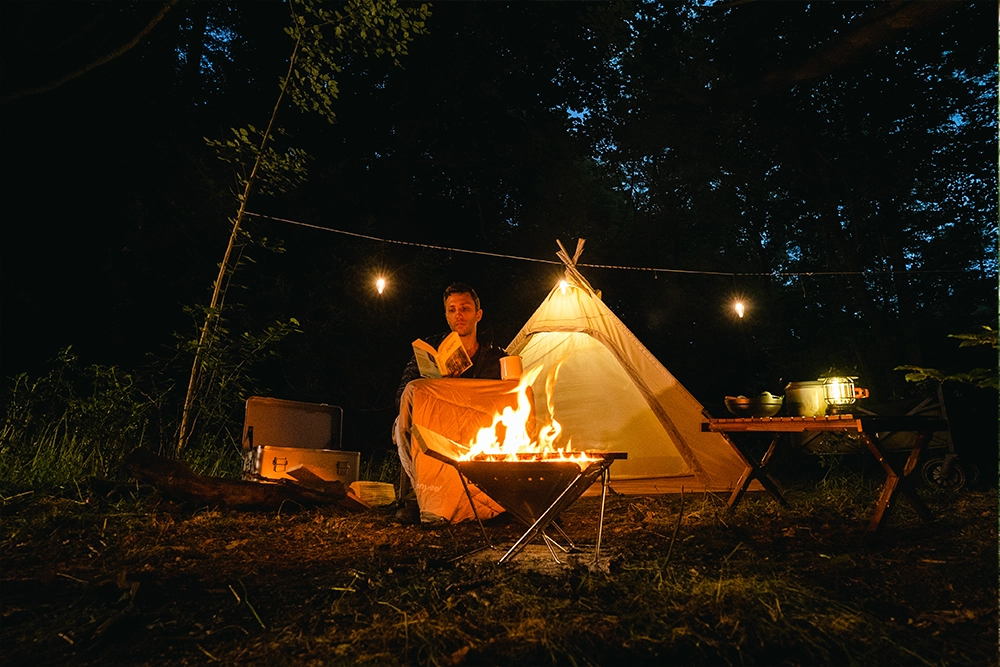
Bring non-perishable staples (oats, rice, pasta, canned goods, trail mix) plus perishables in a well-packed cooler with block ice. For cooking, a portable camp stove handles most meals. The easiest first-trip menu is sandwiches for lunch, foil-packet dinners over the fire, and instant coffee in the morning.
What Food Can You Take Camping Without a Fridge?
Shelf-stable foods that require no refrigeration include: oatmeal, dried pasta, rice, canned beans, canned tuna, peanut butter, tortillas, hard cheeses (cheddar, parmesan), dried fruit, nuts, trail mix, energy bars, and jerky.
These foods last the entire trip without ice. They are lightweight, calorie-dense, and simple to prepare. For a two-night trip, plan 2,500 to 3,000 calories per person per day, adjusted upward if you plan to hike.
How Do You Make Coffee While Camping?
The three most practical methods for camp coffee are pour-over drippers, French press, and instant coffee packets.
Pour-over uses a small cone filter placed over your mug. Boil water, pour it through ground coffee, and discard the filter. No equipment to clean. No heavy gear to pack.
French press works identically to home use. Add coarse grounds, pour hot water, wait 4 minutes, press. A metal camping French press weighs under 300 grams.
Instant coffee is the fastest option. Quality has improved substantially. Brands like Steeped and Mount Hagen produce single-serve packets that taste closer to drip coffee than the instant powder of previous decades.
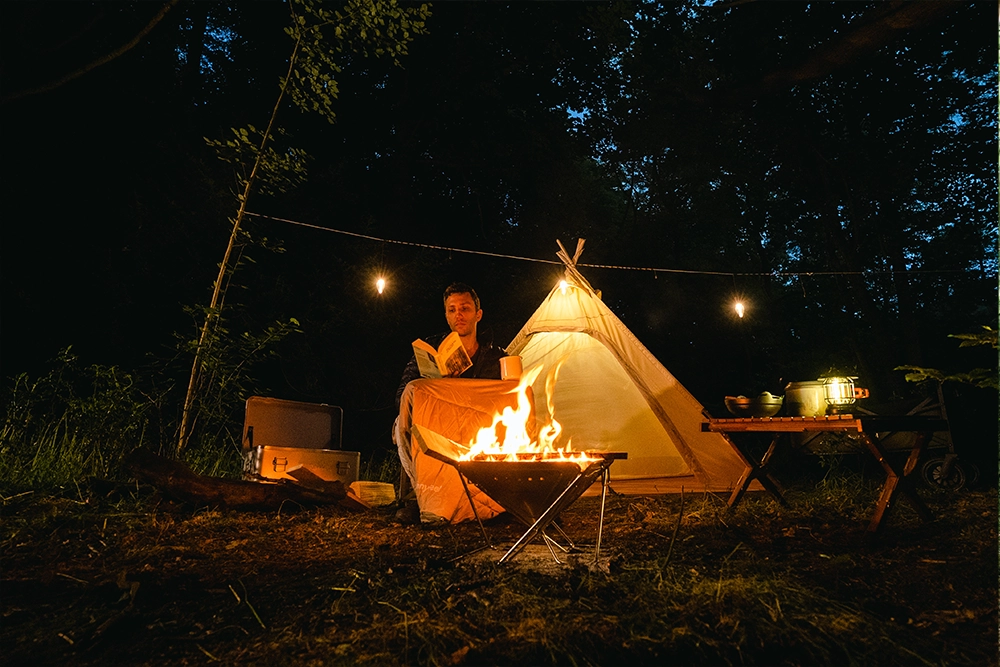
Morning coffee at camp is a ritual. Pour-over into a metal mug, sitting in a director’s chair with a cup holder, watching mist rise off the lake — this is the moment that makes camping addictive.
How Do You Keep Food Cold and Safe While Camping?
Use a hard-sided cooler with block ice rather than cubed ice. Block ice melts slower because it has less surface area per unit of volume. A single 10-pound block lasts 2 to 3 days in a quality cooler.
Pre-chill the cooler 12 hours before packing. Fill it with ice or frozen water bottles overnight. A warm cooler melts ice immediately. Pre-chilling extends cold retention by a full day.
Pack food in reverse meal order: last meals on the bottom, first meals on top. Minimize opening the lid. Every opening exchanges cold air for warm air and accelerates melting.
In bear country, store food in a bear canister or hang it from a tree branch at least 10 feet off the ground and 4 feet from the trunk. Never store food in your tent.
How Do You Pack Food for a Camping Trip?
Pre-portion meals at home in zip-lock bags. Remove excess packaging. Label each bag with the meal and day (e.g., “Saturday Dinner — pasta + sauce”). This reduces campsite waste and cooking time.
Separate raw meats into a dedicated bag inside the cooler. Place them at the bottom where meltwater pools. Cross-contamination is the primary food safety risk at camp.
How Do You Set Up a Campsite When You Arrive?
Set up camp in four zones: a sleeping zone (flat ground, tent door facing away from wind), a cooking zone (downwind from the tent, 15 feet minimum separation), a fire zone (use existing fire rings only), and a living zone with your chairs and table positioned between the fire and cooking areas. This layout creates a natural workflow and keeps smoke, sparks, and food smells away from your sleeping area.
How Do You Set Up a Camping Tent?
Clear the ground of rocks, sticks, and pinecones. Lay down a footprint or tarp cut slightly smaller than the tent floor. Assemble poles. Attach the tent body. Stake the corners at 45-degree angles. Attach the rainfly with all guy lines taut.
Orient the tent door away from the prevailing wind direction. This prevents rain from blowing directly inside when you enter or exit. If the campsite has a slight slope, position your head uphill.
How Do You Start a Campfire Safely?
Use an existing fire ring. Do not build new fire pits. Check fire restrictions before your trip — many areas ban open fires during dry seasons.
Gather or buy three sizes of wood: tinder (dry leaves, small twigs, fire starters), kindling (sticks the diameter of a pencil), and fuel wood (arm-thickness logs). Build a small tepee of tinder, surround it with kindling, and light the base. Add fuel wood only after the kindling burns steadily.
Never leave a fire unattended. Before sleeping, douse the fire with water, stir the ashes, and douse again. The ashes should be cool to the touch. “Drowned, stirred, and felt” is the protocol.
Most campgrounds sell firewood bundles for $5 to $10. Buy local wood. Transporting firewood from home spreads invasive insects that destroy forests. Many parks prohibit outside firewood.
How Do You Create a Comfortable Camp Living Area?
The living area is where 80% of your awake time happens. Position your chairs in a semicircle facing the fire. Place the table adjacent to the chairs for easy access during meals. The layout should feel like an outdoor living room.
At Sunshine Outdoor, we design chairs, tables, and cots as an integrated system. Matching frame heights mean your chair armrest aligns with the table surface. Compatible folding mechanisms allow all furniture to pack flat together. When your furniture works as a system, your campsite feels like a home rather than a collection of random gear.
Ground conditions matter. Place chair legs on flat, firm ground. Soft soil causes legs to sink unevenly. On sand or soft grass, use furniture with wider foot pads or place flat rocks under each leg.
How Do You Stay Comfortable While Camping?
Stay comfortable by managing three factors: temperature (layers for cold, shade and ventilation for heat), hygiene (biodegradable wipes, portable shower), and ergonomics (quality sleeping pad and camping chair). Most beginners underestimate how much time they spend sitting. A chair with proper back support prevents soreness after a long day of activity.
How Do You Stay Warm While Camping at Night?
Wear dry base layers to bed. Use a sleeping bag rated 10 to 15 degrees below the expected low temperature. Place a sleeping pad beneath you — ground contact causes more heat loss than air temperature.
Add a fleece liner inside your sleeping bag for an extra 10 to 15 degrees of warmth. Fill dead space inside the bag with a dry jacket or clothing stuff sack. Less empty air volume means less air for your body to heat.
Eat a high-calorie snack before bed. Your body generates heat through digestion. A handful of nuts or a chocolate bar provides fuel for overnight thermogenesis.
How Do You Stay Cool While Camping in Summer?
Choose a campsite with natural shade from trees. Orient your tent to catch cross-breezes. Open all mesh panels and remove the rainfly on clear nights to maximize airflow.
Wet a bandana and drape it around your neck. Evaporative cooling is highly effective in dry climates. Drink water continuously — dehydration impairs your body’s cooling mechanism before you feel thirsty.
Plan physical activities for morning and evening. Rest during the hottest hours (noon to 3 PM). This is when your camp chair earns its value. Sit in the shade, read, hydrate, and wait for the heat to break.
How Do You Shower and Stay Clean While Camping?
Biodegradable wet wipes handle daily hygiene when showers are unavailable. Wipe your face, neck, underarms, and feet each evening. Pack used wipes out — do not bury them.
A portable solar shower bag provides warm water. Fill the 5-gallon bag in the morning and leave it in direct sunlight. By late afternoon, the water is warm enough for a comfortable rinse. Hang the bag from a tree branch at head height.
Many established campgrounds have shower facilities. State parks typically include showers in the campsite fee. KOA campgrounds offer hot showers as a standard amenity.
For extended trips, caravan-style chairs with reclining positions allow you to rest comfortably between activities. The 3D air mesh fabric in these chairs prevents the sweaty-back problem that plagues solid-fabric chairs in hot weather.
Is Camping Safe and How Do You Stay Safe Outdoors?
Camping is safe when you follow basic precautions: store food properly to avoid wildlife encounters, check weather forecasts before departing, carry a first aid kit, inform someone of your itinerary, and choose established campgrounds for your first trip. National and state park campgrounds have rangers and fellow campers nearby, making them the safest option for beginners.
How Do You Keep Bears and Wildlife Away When Camping?
Store all food, coolers, scented items (toothpaste, sunscreen, lip balm), and trash in your vehicle or a bear-proof container. Never store food inside your tent.
Cook and eat at least 200 feet downwind from your sleeping area. Food odors cling to clothing. Change into clean clothes before entering your tent.
If you encounter a bear, do not run. Speak calmly and firmly. Back away slowly. In most cases, the bear will leave first. Carry bear spray in grizzly country and know how to deploy it before you need it.
How Do You Keep Mosquitoes and Bugs Away While Camping?
Apply DEET-based or picaridin-based repellent to exposed skin. These are the only two active ingredients with consistent efficacy data across peer-reviewed studies.
Wear long sleeves and pants during dawn and dusk — peak mosquito activity hours. Light-colored clothing attracts fewer mosquitoes than dark colors.
Keep your tent zipped at all times. Even a 30-second opening admits dozens of mosquitoes. Enter and exit quickly. Check for insects before zipping.
Citronella candles and coils provide localized relief around your seating area. They are supplementary to repellent, not replacements.
What Should You Put in a First Aid Kit for Camping?
A basic camping first aid kit contains: adhesive bandages (various sizes), sterile gauze pads, medical tape, antiseptic wipes, antibiotic ointment, ibuprofen, antihistamine tablets (for allergic reactions and insect bites), tweezers (for ticks and splinters), moleskin (for blisters), and an emergency whistle.
Add personal medications and any prescription items. Carry an EpiPen if anyone in your group has severe allergies. Include a small card listing allergies, blood types, and emergency contacts for each person.
What Should You Do If It Rains While Camping?
Check that your rainfly is taut with all guy lines staked. Dig a small channel around the uphill side of your tent to divert water flow. Move gear inside the tent vestibule or into your vehicle.
Accept the rain rather than fight it. Bring a tarp and rope to create a covered area over your chairs and table. Cook under the tarp. Play cards. Read. Rain at camp is atmospheric when you are prepared and miserable when you are not.
The difference between a ruined trip and a cozy rainy day is a dry seating area. A tarp over your camp chairs and table creates a sheltered living room. Waterproof furniture fabric — standard on quality chairs using 600D polyester with water-resistant coating — means your seating dries quickly when the rain stops.
What Are the Unwritten Rules of Camping?
The golden rule of camping is Leave No Trace: pack out everything you bring in and leave the site cleaner than you found it. Additional rules include the 200-foot rule (camp and wash 200 feet from water sources), respecting quiet hours (typically 10 PM to 6 AM), and never cutting live trees for firewood.
What Is the Leave No Trace Principle?
Leave No Trace is a set of seven principles developed by the Leave No Trace Center for Outdoor Ethics. The principles are: plan ahead, travel on durable surfaces, dispose of waste properly, leave what you find, minimize campfire impact, respect wildlife, and be considerate of other visitors.
In practice, this means packing out all trash (including food scraps), using established fire rings, not picking flowers or disturbing natural features, observing wildlife from a distance, and keeping noise to reasonable levels.
What Is the 3-3-3 Rule for Camping?
The 3-3-3 rule applies primarily to RV and road-trip camping. It means: drive no more than 300 miles per day, arrive at your campsite by 3 PM, and stay at least 3 nights before moving on.
This rule prevents exhaustion from excessive driving and constant setup and teardown. It also ensures you arrive with enough daylight to set up camp and explore your surroundings.
For tent campers on their first trip, the principle adapts well: drive no more than 2 hours, arrive before 4 PM, and stay at least 2 nights. One-night trips are mostly setup and teardown. Two nights give you a full day to actually enjoy the campsite.
What Is the 200-Foot Rule for Camping?
The 200-foot rule requires that you camp, cook, and wash at least 200 feet (approximately 70 adult paces) from any lake, river, stream, or other water source.
This rule protects water quality. Soap — even biodegradable soap — harms aquatic ecosystems when it enters water directly. Food waste attracts wildlife to water sources, disrupting natural behavior patterns.
When washing dishes, carry water 200 feet from the source. Wash with a small amount of biodegradable soap. Strain food particles. Scatter the strained water broadly over the ground.
What Can You Do for Fun While Camping?
Popular camping activities include hiking, fishing, swimming, stargazing, campfire cooking, card games, nature photography, and birdwatching. For families with children, add scavenger hunts, marshmallow roasting, and glow-stick games after dark. On rainy days, bring card games, books, or a travel-sized board game for in-tent entertainment.
How Do You Make Camping Fun for Kids?
Give children specific roles in the campsite. A 6-year-old can collect kindling. A 10-year-old can help cook. Responsibility creates engagement. Kids who participate in camp tasks develop ownership of the experience.
Bring one structured activity per child per day: a nature scavenger hunt list, a star chart for evening identification, or a simple fishing rod. Between activities, boredom is productive. Children discover their own entertainment in nature when screens are absent.
Marshmallow roasting is the universal campfire activity for children. Bring long roasting sticks (at least 30 inches), marshmallows, graham crackers, and chocolate for s’mores. This single activity creates more lasting family memories than any planned itinerary.
For more adventurous families, dispersed camping at Spread Creekoffers a wilder experience away from established campgrounds.
How Should You Prepare for Camping in Special Situations?
Camping conditions change based on your group composition, weather, duration, and camping style. Each variation requires specific adjustments to your gear list and planning. The sections below cover the most common scenarios beginners encounter.
What Extra Gear Do You Need When Camping with Kids?
Add a larger tent (extra floor space for toys and clothing changes), a portable high chair or camp seat for toddlers, a dedicated first aid kit with children’s medications, and activities for downtime. Bring familiar bedtime items — a favorite stuffed animal or blanket helps children sleep in an unfamiliar environment.
Child-sized camping chairs with lower seat heights and smaller frames give children their own designated spot at the campsite. A child with their own chair feels included in the group rather than borrowing an adult-sized seat.
What Should You Pack for a One-Night Weekend Camping Trip?
A one-night trip requires the same categories of gear as a longer trip but in reduced quantities. One set of sleep clothes, one change of day clothes, two meals plus snacks, and one bag of ice for the cooler.
The reduced food and clothing needs mean a smaller vehicle load. You can set up faster and break down faster. A one-night trip is an excellent rehearsal before committing to a longer first trip.
How Do You Plan a Camping Trip with Friends?
Assign shared gear by household: one group brings the stove and cookware, another brings the tarp and camp table, a third brings the fire supplies and lanterns. This distributes cost and vehicle space.
Create a shared meal plan. Potluck-style camping works well: each person or household is responsible for one group meal. This simplifies shopping and guarantees variety.
Agree on quiet hours and activity plans before departure. Groups have different expectations about noise, wake times, and social vs. solo time. A brief conversation prevents friction.
What Do You Need for RV or Van Camping?
RV camping adds electrical hookup management, water management, and waste tank maintenance to the standard camping skill set. The tradeoff is a climate-controlled, furnished living space.
RV-specific furniture needs differ from tent camping. Storage space is limited. Space-saving RV camping furniture uses stackable, compact, and multi-use designs to maximize limited storage.
Caravan chairs with reclining positions are designed for this use case. They fold flatter than standard camping chairs and feature 7-position adjustment for all-day use outside the RV.
For campground and RV park operators, Sunshine Outdoor provides commercial-grade outdoor furniture engineered for heavy daily use, weather resistance, and easy maintenance.
What Is a 7-Day Action Plan Before Your First Camping Trip?
Start preparation seven days before departure. This timeline transforms an overwhelming task list into manageable daily actions. Each day addresses one category of preparation.
Day 7: Reserve and research. Confirm your campsite reservation. Download offline maps of the area. Check the campground’s facility list (water, toilets, fire rings, firewood availability). Read recent reviews for current conditions.
Day 6: Gather gear. Inventory everything you own or can borrow. Identify gaps. Purchase or borrow missing items. Do not wait until the day before.
Day 5: Test gear. Set up your tent in the backyard. Inflate your sleeping pad. Unfold your chairs and table. Test your camp stove. Find problems at home, not at the campsite.
Day 4: Plan meals. Write out every meal and snack for the trip. Create a grocery list. Pre-portion ingredients into labeled bags.
Day 3: Shop and prepare food. Buy groceries. Pre-chop vegetables. Pre-mix dry ingredients for campfire recipes. Freeze water bottles for cooler use (they serve double duty as ice and drinking water).
Day 2: Pack the vehicle. Heavy items (cooler, water jugs) go in first, against the back seat. Tent and sleeping gear go next. Chairs and table go last for immediate access upon arrival. Keep rain gear and a headlamp in the passenger compartment.
Day 1: Depart. Leave early enough to arrive at least 2 hours before sunset. This gives you daylight for setup, site orientation, and a relaxed first evening.
At Sunshine, we tell first-time campers the same thing we tell our retail partners: preparation beats improvisation. Lay out your gear at home. Unfold your chair. Set up your table. Practice your tent. The campsite is not the place for surprises.
Your first camping trip will not be perfect. You will forget something. You will learn something. You will sit in your chair after dinner, look at the fire, and understand why people do this. That moment is the point.
For a printable packing guide, see our camping gear checklist. To understand every camping style available to you, read our guide to camping types. To explore the camping furniture that makes the experience comfortable, browse our complete camping furniture collection.
Want to Know More About Our Products?
View All Products NowAbout Author
Spring Nee
Spring Nee is the Sales & Marketing Director at Zhejiang Sunshine Leisure Products Co., Ltd. With nearly 20 years of experience in the outdoor leisure furniture industry, she specializes in camping chairs, beach chairs, folding outdoor seating, and OEM/ODM project communication. Spring also leads the company’s marketing content direction. Most of the articles published on this website are either written by Spring herself or reviewed by her before publication, ensuring that the content is practical, accurate, and based on real industry experience.