Outdoor Sofa vs. Outdoor Sectional: Which One to Choose?

Jump to section
Outdoor living spaces have become extensions of the home, and choosing the right seating is one of the most impactful decisions for any patio, poolside area, or commercial terrace. While outdoor sofas and outdoor sectionals may appear similar at first glance, they differ significantly in layout flexibility, space requirements, seating capacity, and long-term value. This guide breaks down the defining features, advantages, limitations, and ideal use cases for each option — helping procurement teams, hospitality operators, and project managers make a confident, well-informed choice.
What Is an Outdoor Sofa and How Does It Work for Patio Spaces?
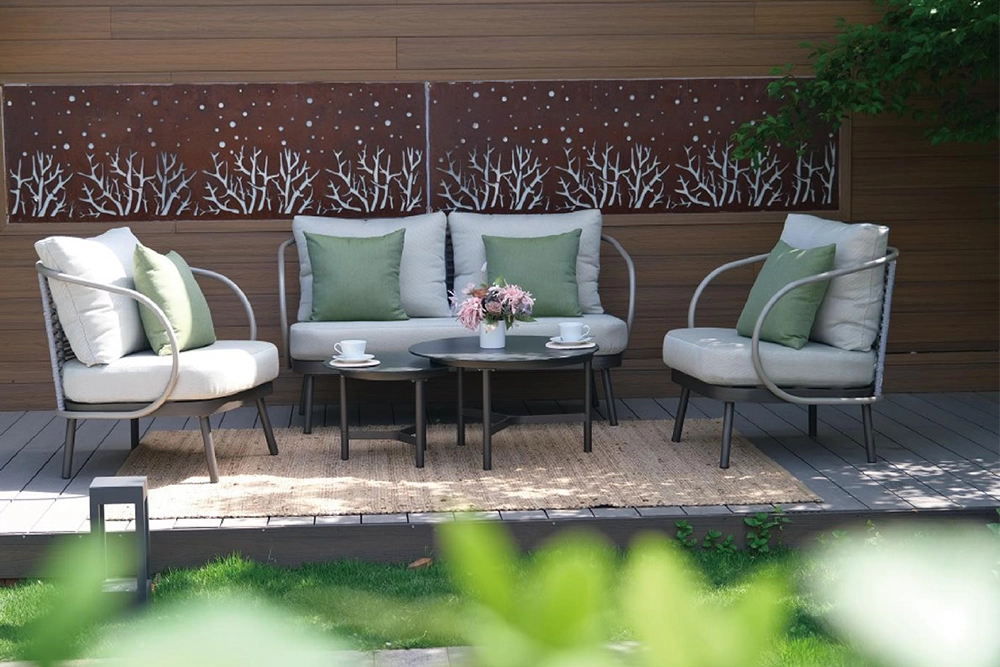
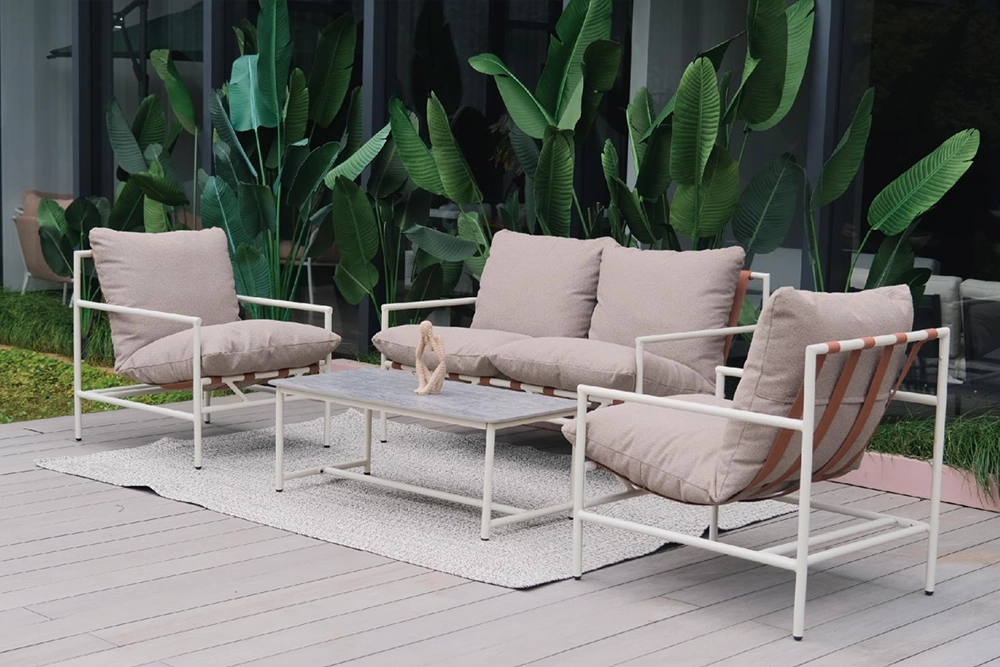
An outdoor sofa is a standalone seating unit that typically features a fixed frame with two or three seats, designed for patios, porches, and smaller outdoor areas where a compact, unified seating solution is needed.
Unlike modular systems, an outdoor sofa arrives as a single, complete piece. This makes it straightforward to position and easy to integrate into an existing outdoor furniture arrangement. Its fixed design ensures a clean, unified aesthetic that works well in both residential and commercial settings.
What Are the Common Types of Outdoor Sofas?
Outdoor sofas come in several standard forms, each suited to different space sizes and use cases. Two-seat loveseats work best for intimate balconies and narrow porches. Three-seat standard sofas provide the most common seating solution for mid-sized patios. Sofa sets that bundle a sofa with a matching coffee table offer a cohesive, ready-to-use arrangement — the Positano Style 4pc Outdoor Sofa Set pairs a steel-frame sofa with a glass-top coffee table for exactly this purpose. Chaise longue sofas, which extend the seat to support the legs, add a lounging dimension to the traditional sofa format.
What Materials Are Typically Used in Outdoor Sofas?
Outdoor sofas typically use powder-coated aluminum or steel frames paired with UV-resistant performance fabric cushions. Aluminum offers the best rust resistance and is lightweight enough for easy repositioning, while steel provides a heavier, more rigid structure at a lower price point. Cushion covers should use waterproof performance fabrics such as Olefin, which resist fading, repel stains, and clean easily — essential qualities for furniture exposed to sun and rain year-round. Accents like polywood tabletops further enhance weather resistance while maintaining a natural wood aesthetic without the upkeep demands of raw timber.
What Is an Outdoor Sectional and Why Is It Popular for Larger Spaces?
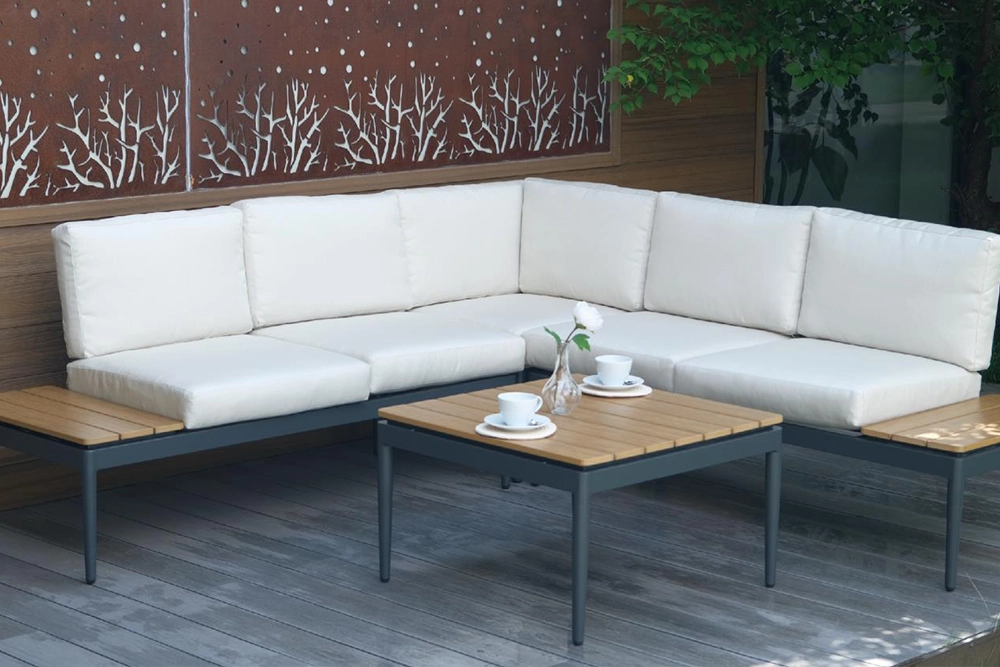
An outdoor sectional is a modular seating system that consists of multiple individual pieces which can be arranged in L-shapes, U-shapes, or custom configurations, making it ideal for large patios, poolside areas, and commercial hospitality settings.
The modularity of a sectional is its defining advantage. Each component can be repositioned to adapt to different events, guest counts, or seasonal layout changes. This flexibility makes sectionals the preferred choice for properties that need to serve multiple functions from the same outdoor space.
What Are the Main Configuration Styles for Outdoor Sectionals?
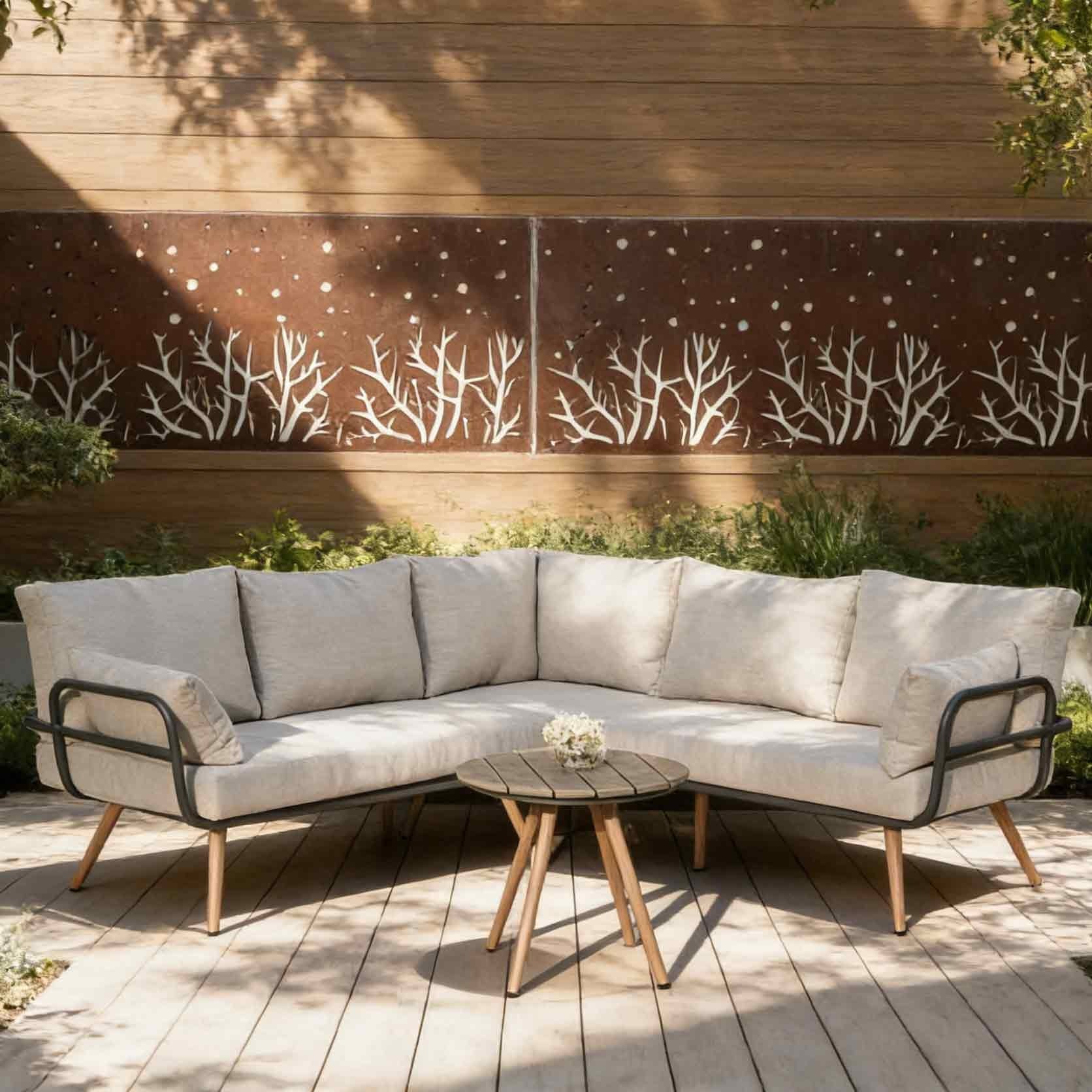
L-shaped, U-shaped, and curved layouts are the three most common configuration styles for outdoor sectionals. L-shaped sectionals tuck into patio corners, U-shaped sectionals create enclosed conversational zones, and curved or semi-circle layouts suit circular outdoor spaces. Each configuration is assembled from individual modules — armless seats, corner units, chaise ends, and ottoman attachments — that can be combined in different ways. A 3-piece aluminum corner sectional like the Denton 3 Piece Aluminum Corner Sofa Sectional Set combines a loveseat, a 3-seater sofa, and a polywood coffee table into an L-shaped layout that fits neatly into patio corners while seating up to five guests. One important consideration: non-modular L-shaped sectionals come in fixed left-arm or right-arm orientations and cannot be switched after purchase, so orientation should be confirmed before ordering.
What Materials Make Outdoor Sectionals Weather-Resistant and Durable?
Powder-coated aluminum or rust-proof steel frames combined with fade-resistant, stain-repellent performance fabrics form the foundation of weather-resistant sectionals. These core materials are shared with outdoor sofas. However, sectionals introduce additional design considerations due to their multi-piece structure. Well-designed sectionals incorporate non-slip cushion bases to prevent bottom cushions from shifting, and tie-down or slip-over backrest cushions that stay aligned during use. These practical details matter significantly in commercial settings such as hotels and resorts, where furniture must remain tidy between guest interactions without constant staff adjustment.
What Are the Key Differences Between an Outdoor Sofa and an Outdoor Sectional?
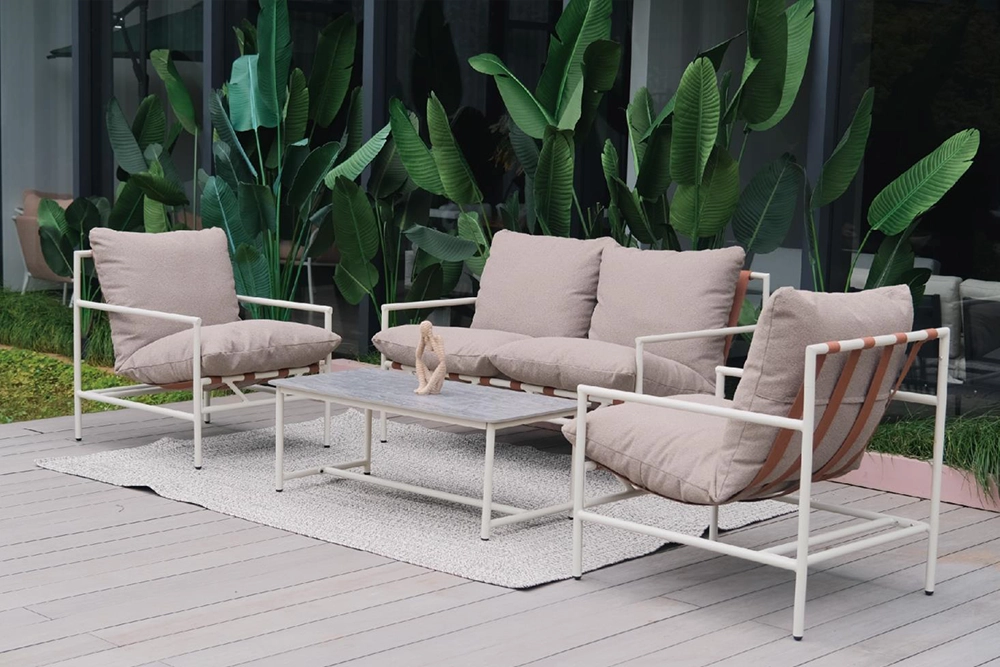
The key differences lie in layout flexibility, space requirements, seating capacity, and cost. Outdoor sofas offer a compact fixed design for smaller areas, while outdoor sectionals provide modular versatility and higher capacity suited to expansive outdoor entertaining zones.
How Do They Differ in Seating Capacity and Space Requirements?
A standard outdoor sofa seats two to four people, while outdoor sectionals accommodate four to eight or more guests in a single arrangement. The following table summarizes the core differences across the most important decision-making attributes:
| Attribute | Outdoor Sofa | Outdoor Sectional |
| Structure | Single fixed unit | Multiple modular pieces |
| Seating Capacity | 2–4 people | 4–8+ people |
| Space Requirement | Small to mid-sized patios | Large patios, poolside, commercial terraces |
| Layout Flexibility | Fixed — cannot be reconfigured | High — L-shape, U-shape, curved, custom |
| Typical Price Point | Lower upfront cost | Higher upfront, but expandable over time |
| Ease of Moving | Lightweight, easy to relocate | Heavier overall, individual pieces manageable |
| Best For | Balconies, porches, compact areas | Entertaining spaces, resorts, restaurants |
For detailed spacing guidelines on walkway clearance and legroom, see the measurement section below.
How Does Layout Flexibility Compare Between the Two?
Outdoor sofas have a fixed configuration that remains consistent over time. This predictability is an advantage for projects requiring a simple, unchanging arrangement, but it becomes a limitation when the space needs to serve multiple functions. Outdoor sectionals can be rearranged from an L-shape for casual evenings into a U-shape for larger gatherings, or separated into individual seats for open-format events. This adaptability is particularly valuable for hospitality businesses that host different types of activities throughout the week.
How Do Outdoor Sofas and Sectionals Compare in Comfort and Cushion Design?
Outdoor sofas typically provide full backrests and armrests on every seat, giving each person a defined, supportive seating zone. Sectionals may feature armless middle seats with lower backs, but compensate by offering chaise or recliner sections that allow full-body lounging — a comfort feature standard sofas cannot match. Cushion depth also matters: deeper cushions in the 30–36 inch range suit casual lounging, while 24–27 inch depths are better for upright conversation and dining-adjacent seating. Quality sectionals use multi-layer cushion systems — the Denton AF2107 features Olefin fabric over 24-density sponge and cotton fill for both weather resistance and lasting comfort.
How Do Outdoor Sofas and Sectionals Compare in Price and Value?
Outdoor sofas have a lower entry point, making them accessible for budget-conscious projects or smaller commercial setups. Sectionals require a higher initial investment, but their modular nature allows incremental expansion over time without replacing the entire set. For hospitality businesses scaling outdoor seating capacity across seasons, this expandability translates into meaningful long-term cost efficiency.
What Are the Advantages and Disadvantages of Choosing an Outdoor Sofa?
Outdoor sofas offer a space-efficient, budget-friendly seating option that is easy to place and move. However, they provide limited seating capacity and lack the layout versatility needed for large gatherings or irregularly shaped outdoor spaces.
What Makes an Outdoor Sofa a Good Choice?
Outdoor sofas occupy a compact footprint, making them ideal for small balconies, narrow porches, and urban rooftops. They are generally more affordable than sectionals, simpler to transport and store during off-seasons, and their fixed design ensures a clean, unified appearance. Every seat comes with armrests, which many end users prefer for the sense of personal space. Durable performance fabrics further extend their practicality — the 5-Piece Outdoor Sofa Set uses Olefin fabric specifically engineered for UV resistance, stain repellency, and easy cleaning, making it well suited for high-traffic commercial environments.
What Are the Limitations of an Outdoor Sofa?
A standard outdoor sofa seats only two to four people, which may fall short for larger gatherings or commercial entertaining needs. The fixed configuration cannot be rearranged to fit irregular patio shapes or to refresh the layout between seasons. There is also no option to expand seating count incrementally — upgrading capacity means purchasing entirely new furniture rather than adding a module.
What Are the Advantages and Disadvantages of Choosing an Outdoor Sectional?
Outdoor sectionals deliver superior seating capacity and modular flexibility, allowing custom layouts for any patio shape. The tradeoffs include higher upfront cost, greater space requirements, and more effort needed for cleaning and seasonal storage of multiple pieces.
What Makes an Outdoor Sectional a Better Fit for Large Spaces?
The following list highlights the key strengths that make sectionals the preferred choice for spacious environments:
- Seats 4–8+ guests in a single, unified arrangement — ideal for social gatherings and commercial hospitality use
- Modular pieces can be rearranged into L-shaped, U-shaped, or custom configurations to match any patio layout
- Enclosed U-shaped designs create an intimate, conversational atmosphere well suited for resort lobbies and poolside lounges
- Expandable over time — individual modules can be added without replacing the entire set
- Chaise and recliner extensions provide full-body lounging zones not available with standard sofas
What Should You Consider Before Buying an Outdoor Sectional?
Despite their advantages, sectionals come with practical tradeoffs. The upfront investment is significantly higher than a single sofa or sofa set. Multiple pieces mean more effort for seasonal cleaning, cushion storage, and connection-point inspection. Non-modular designs with a fixed L-shape cannot switch between left-arm and right-arm orientations after purchase. The combined weight of all modules also makes full relocation more labor-intensive than moving a single sofa, though individual pieces remain manageable on their own.
How to Measure Outdoor Space Before Choosing a Sofa or Sectional?
The most reliable method is to measure the total available floor area and then simulate the furniture footprint on the ground using painter’s tape or cardboard cutouts. This approach prevents the two most common mistakes — selecting furniture that overwhelms a small patio or looks undersized in a large area.
What Is the Best Way to Visualize Furniture Size in Your Space?
Painter’s tape or cardboard cutouts placed directly on the patio floor provide the most accurate preview of how furniture will occupy the space. This physical mock-up reveals fit issues far more reliably than mental estimation or catalog dimensions alone. For modular sectionals, each individual component should be outlined separately to test different configurations before committing to a layout.
How Much Clearance Space Should You Leave Around Outdoor Seating?
At least 30–36 inches of walkway space should be maintained behind and around seating for comfortable foot traffic. Between the seat edge and any coffee table or fire table, 18–24 inches allows adequate legroom. These spacing rules apply equally to sofas and sectionals, though sectional layouts require more careful planning due to their multi-piece nature and the need to accommodate transitions between modules.
How to Choose Between an Outdoor Sofa and an Outdoor Sectional for Your Space?
The right choice depends on four deciding factors: available space size, expected number of users, intended use style, and local climate. Small patios and balconies suit outdoor sofas, while large terraces, poolside areas, and commercial venues benefit most from outdoor sectionals’ modular design.
When Should You Choose an Outdoor Sofa?
Projects with limited patio space, tighter budgets, or a need for only two to three daily seats will find an outdoor sofa the most practical option. Sofas are also preferable when ease of moving and seasonal storage are priorities — a single unit is far simpler to cover, relocate, or bring indoors than a multi-piece system.
When Should You Choose an Outdoor Sectional?
Properties with spacious gardens, pool decks, or commercial terraces — and a need to host larger groups regularly — will benefit from the sectional’s scalable, reconfigurable design. Hotels, resorts, and restaurants particularly benefit from sectionals that can adapt layouts for different event types. Projects planning to expand outdoor seating capacity over time also gain from the modular approach, adding pieces season by season.
Can a Sofa and Loveseat Combo Replace an Outdoor Sectional?
A multi-piece sofa set can match a sectional’s total seating count while keeping each piece independently movable. The 5-Piece Outdoor Sofa Set with Olefin Fabric provides sectional-level capacity as a practical middle ground between a single sofa and a fully modular sectional. The sofa combo approach offers more armrests and personal space per seat, and individual pieces are easier to relocate. However, it lacks the unified wraparound aesthetic and the enclosed social atmosphere that a true sectional creates.
How Does Local Climate Affect the Choice?
Climate influences material selection more than furniture type. In high-rainfall regions, aluminum frames and quick-dry performance fabrics should be prioritized regardless of format. Coastal areas demand heightened rust and salt-spray resistance — powder-coated aluminum outperforms steel in these conditions. In hot climates, lighter-colored frames prevent heat absorption, and breathable cushion materials improve comfort during peak summer months.
FAQs
Is an outdoor sectional more durable than an outdoor sofa?
Durability depends on materials rather than furniture type. Both sofas and sectionals built with powder-coated aluminum frames and UV-resistant performance fabrics deliver comparable longevity when properly maintained.
What cushion depth is best for lounging vs. upright conversation?
For casual lounging, deeper cushions in the 30–36 inch range provide the most comfort. For upright socializing or dining-adjacent seating, 24–27 inch cushion depths offer better posture support.
Is it better to buy two outdoor sofas or one sectional?
Two sofas or a sofa-plus-loveseat combination can match a sectional’s total seating count while offering more armrests and easier repositioning. However, this approach lacks the unified wraparound aesthetic that sectionals provide.
How should outdoor seating furniture be maintained across seasons?
Monthly frame cleaning with mild soap, seasonal cushion washing, and off-season storage under UV-resistant covers will maximize lifespan. For sectionals, module connection hardware should be inspected and tightened seasonally.
Can outdoor sofas and sectionals be left outside year-round?
Furniture built with weather-resistant frames and performance fabrics can remain outdoors year-round. However, using protective covers and storing cushions during extended harsh weather will extend product life significantly.
Want to Know More About Our Products?
View All Products NowAbout Author
Spring Nee
Spring Nee is the Sales & Marketing Director at Zhejiang Sunshine Leisure Products Co., Ltd. With nearly 20 years of experience in the outdoor leisure furniture industry, she specializes in camping chairs, beach chairs, folding outdoor seating, and OEM/ODM project communication. Spring also leads the company’s marketing content direction. Most of the articles published on this website are either written by Spring herself or reviewed by her before publication, ensuring that the content is practical, accurate, and based on real industry experience.