7 Common Mistakes When Buying an Outdoor Couch (and How to Avoid Them)

Jump to section
An outdoor couch is one of the most important investments in any patio, poolside area, or commercial terrace. Yet many purchasing decisions are undermined by avoidable mistakes — from selecting the wrong frame material to overlooking cushion construction. These errors lead to premature deterioration, wasted budgets, and outdoor spaces that fail to perform. This guide identifies the seven most common mistakes buyers make when choosing an outdoor couch and provides practical solutions to avoid each one.
What Is an Outdoor Couch and Why Does Choosing the Right One Matter?
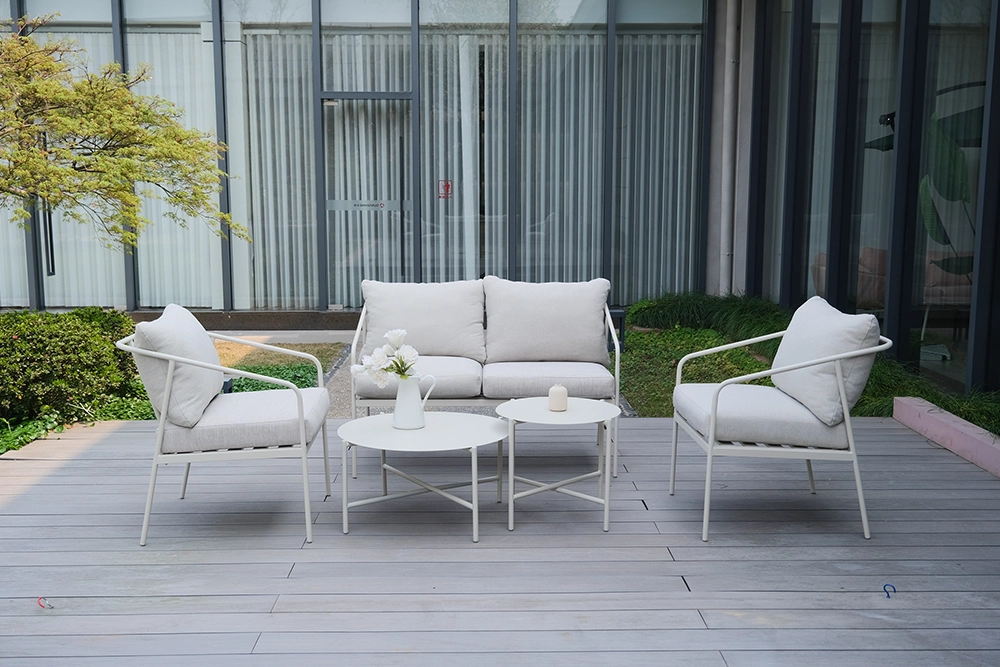
An outdoor couch is a weather-resistant seating unit that is specifically engineered with durable frames and performance fabrics for prolonged outdoor exposure. Choosing the wrong one leads to premature deterioration, wasted budget, and an underperforming outdoor space.
How Is an Outdoor Couch Different from an Indoor Sofa Used Outdoors?
An outdoor couch differs from an indoor sofa in three critical ways: frame treatment, cushion fabric, and structural engineering. Outdoor frames require rust-proof coatings or inherently corrosion-resistant metals. Cushions must use UV-stable, waterproof performance fabrics rather than standard upholstery textiles. Structural joints and hardware need to withstand temperature swings, moisture, and wind stress that indoor furniture never faces. Using an indoor sofa outdoors typically results in rusted frames, mildewed cushions, faded fabric, and warped structures within a single season.
Mistake #1: Prioritizing Appearance Over Function — How to Balance Style and Durability in an Outdoor Couch?
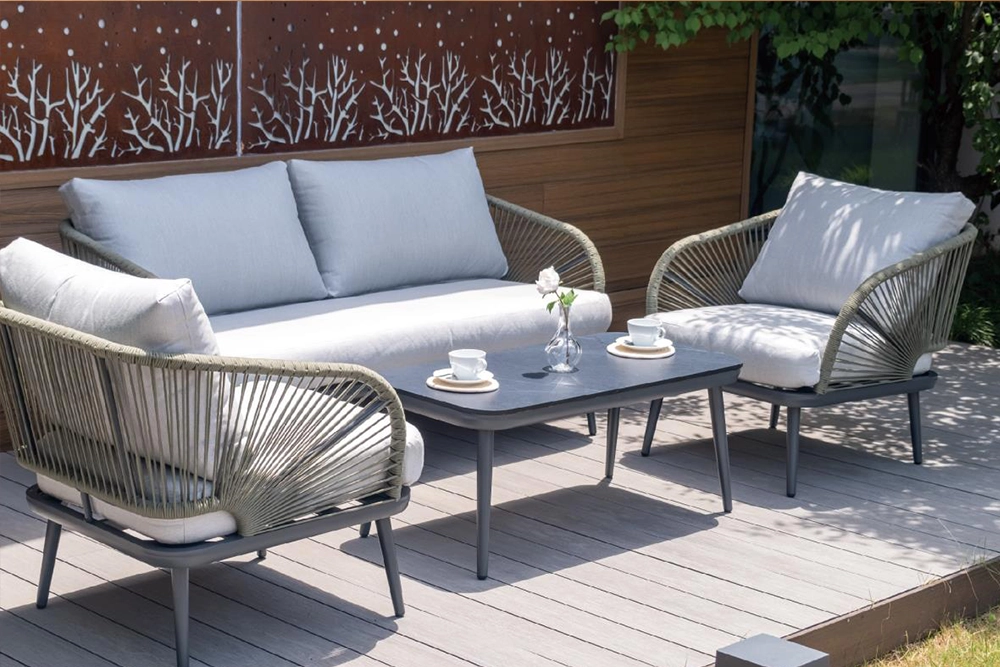
Balancing style and durability requires evaluating weather resistance, structural stability, and cushion performance before committing to a visual design. An outdoor couch that looks appealing but lacks functional engineering will deteriorate rapidly and require premature replacement, costing more than a quality product chosen from the start.
What Functional Qualities Should an Outdoor Couch Have Beyond Aesthetics?
Functional performance should be evaluated before visual design in every outdoor couch purchase. The essential qualities include weather-resistant frame construction, UV-stable and waterproof cushion fabric, structural stability under load, and a configuration that matches the intended space and use pattern. In practice, function and aesthetics are not mutually exclusive.
Why Does Buying the Cheapest Outdoor Couch Often Cost More in the Long Run?
Buying the cheapest outdoor couch often costs more because frequent replacements within one to two seasons accumulate to a higher total expenditure than a single quality purchase. Low-cost products commonly use thin, untreated metal frames and low-grade cushion fabrics that degrade rapidly. Common issues include frame instability under normal weight, cushion flattening after minimal use, fabric fading within weeks of sun exposure, and hardware corrosion at joints. Beyond inconvenience, structurally weak frames pose a genuine safety concern in commercial environments where multiple guests use the furniture daily.
Mistake #2: Ignoring Frame Material — How to Choose the Right Frame for an Outdoor Couch?
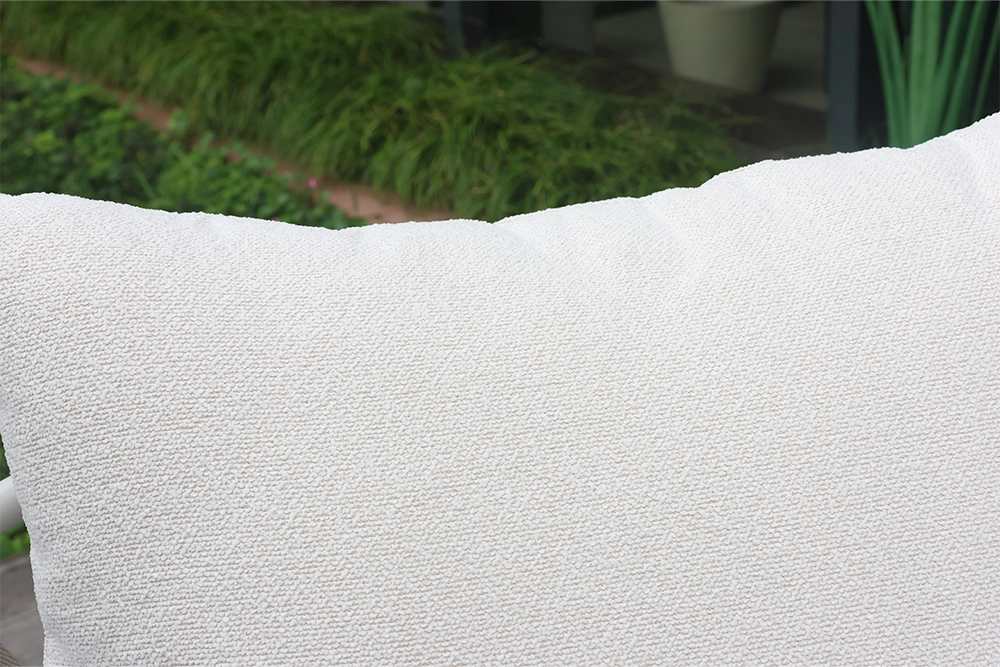
Choosing the right frame starts with matching the material to the intended environment and use intensity. The frame determines the outdoor couch’s structural lifespan, and low-quality or poorly matched frames rust, warp, or corrode within the first few seasons, forcing costly full replacements.
What Frame Materials Offer the Best Durability for Outdoor Couches?
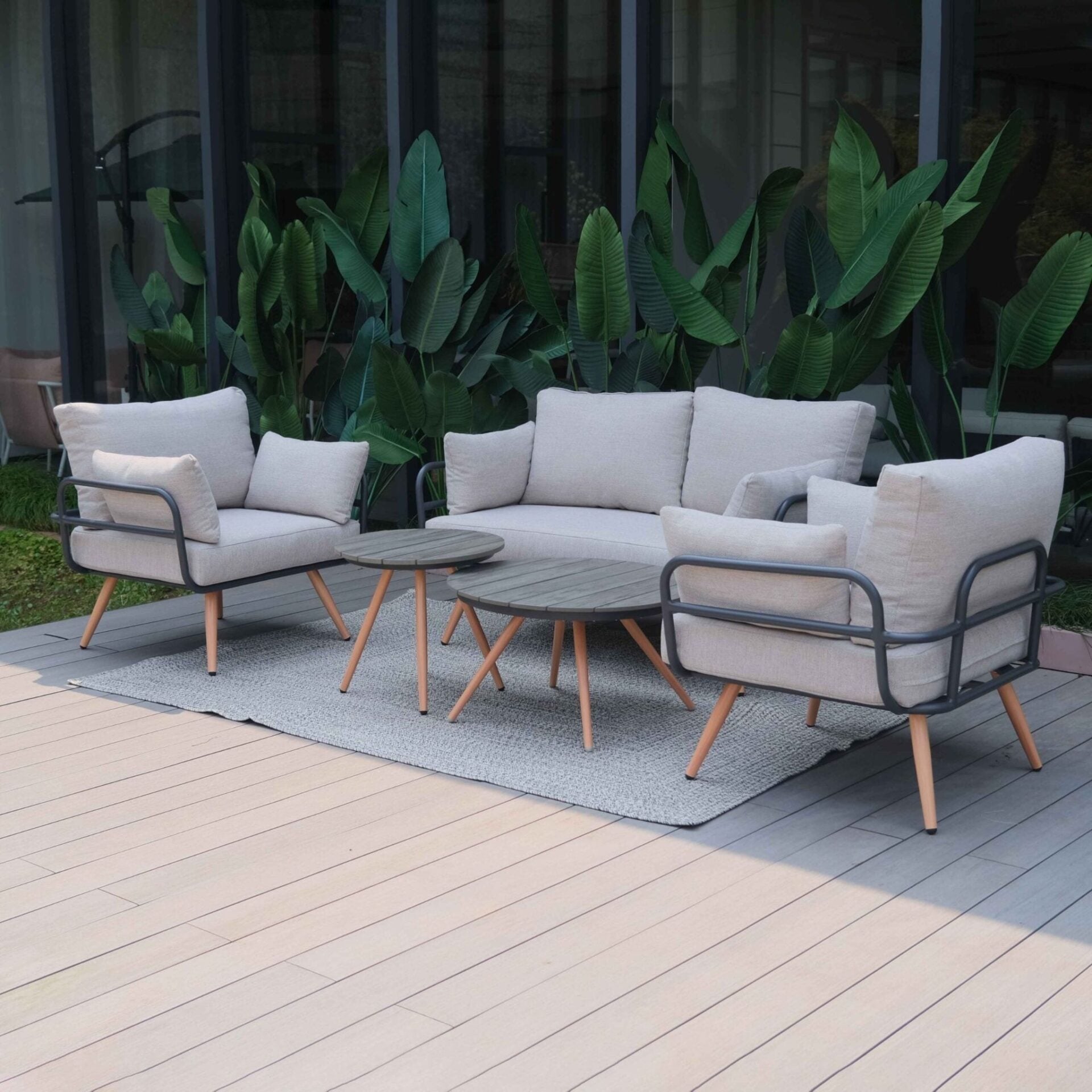
Powder-coated aluminum and powder-coated steel are the two most reliable frame materials for outdoor couches. Aluminum offers the best rust resistance combined with lightweight portability, making it easy to reposition for different events or seasonal changes. Steel provides a heavier, more rigid structure at a lower cost but requires a quality powder coating to prevent corrosion. In commercial settings that require frequent rearrangement, lightweight aluminum is especially advantageous — a five-piece set built on an aluminum frame with Olefin cushions can be repositioned by a single staff member without tools or heavy lifting.
How Does Local Climate Affect Outdoor Couch Frame Selection?
Local climate directly determines which frame material will perform best, as humidity, salt air, UV intensity, and rainfall each accelerate different types of material degradation. The following table summarizes these climate-material interactions:
| Climate Condition | Recommended Frame | Reason |
| High humidity | Aluminum with powder coating | Resists moisture-driven corrosion better than steel |
| Coastal / salt air | Aluminum with powder coating | Salt spray accelerates steel rust even with coatings |
| High heat / strong UV | Light-colored aluminum | Dark metal absorbs heat, making surfaces uncomfortable |
| Frequent rain | Aluminum or coated steel + quick-dry cushions | Both perform well if properly coated; cushion fabric matters more |
| Cold winters | Either material with seasonal covers | Temperature fluctuation affects coatings; covers prevent cracking |
Ignoring these climate factors is one of the fastest ways to shorten an outdoor couch’s functional lifespan, regardless of its initial build quality.
Mistake #3: Choosing the Wrong Cushion Fabric — What Makes Outdoor Couch Cushions Last?
Outdoor couch cushions last when they use performance fabrics engineered for UV resistance, moisture repellency, and stain protection. Choosing the wrong fabric — particularly standard indoor textiles — causes rapid fading, mildew growth, and permanent staining that makes the couch unusable within months.
What Makes Olefin and Performance Fabrics Essential for Outdoor Cushions?
Olefin is a synthetic performance fabric specifically designed for outdoor use. Its key properties include UV resistance that prevents color fading, inherent moisture repellency that blocks mildew growth, stain resistance that allows simple wipe-down cleaning, and colorfastness that maintains appearance across seasons. When all pieces in a set share the same performance fabric, maintenance becomes simpler and wear patterns stay consistent — the 5-Piece Outdoor Sofa Set SF2014 applies Olefin across every seating piece for exactly this reason.
What Happens When Indoor Cushion Fabrics Are Used on Outdoor Couches?
Standard indoor fabrics such as cotton, linen, and untreated polyester lack the protective treatments needed for outdoor exposure. Within weeks, UV radiation fades colors unevenly. Moisture absorption leads to mildew and odor that cannot be fully removed. Spills become permanent stains because the fabric lacks repellency. Foam fill compresses and retains water, creating heavy, soggy cushions that take days to dry. Since cushions are the most frequently replaced component of any outdoor couch, choosing the wrong fabric from the start multiplies replacement costs across the product’s lifespan.
Mistake #4: Not Measuring the Space — How to Size an Outdoor Couch Correctly?
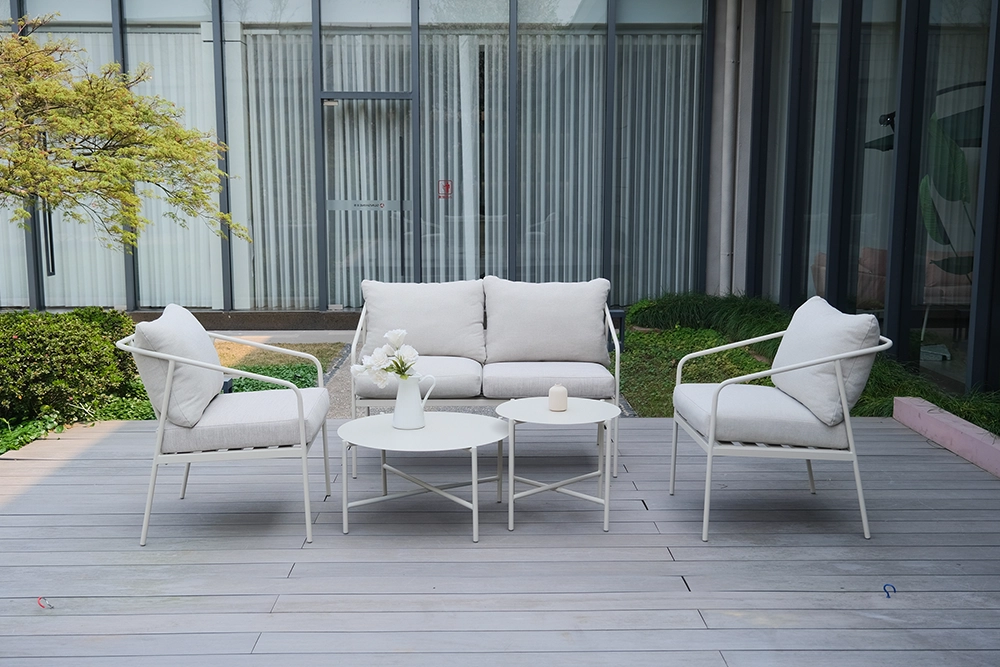
Sizing an outdoor couch correctly requires measuring the total available floor area and simulating the furniture’s footprint on the ground before ordering. Without accurate dimensions, the couch will either overwhelm a small patio or look undersized in a large area — both outcomes waste budget and reduce functionality.
How Should Outdoor Space Be Measured Before Buying a Couch?
The most effective method is to use painter’s tape or cardboard cutouts on the ground to outline the couch’s exact dimensions before ordering. This physical mock-up reveals fit issues far more reliably than catalog dimensions or mental estimation. At least 30–36 inches of walkway clearance should be maintained around the seating, and 18–24 inches should be left between the seat edge and any coffee table for comfortable legroom.
What Size Outdoor Couch Works Best for Small vs. Large Patios?
Space size should directly dictate the couch format. For small balconies and narrow porches, a two-seat loveseat or compact three-seater provides sufficient seating without crowding the area. For mid-sized L-shaped patios, a three-piece corner set offers an efficient use of corner space. For large terraces, pool decks, and commercial venues, a five-piece sofa set delivers the seating capacity and visual presence that larger areas demand.
Mistake #5: Overlooking Layout Flexibility — How to Pick Between Fixed and Modular Outdoor Couches?
Picking between fixed and modular comes down to how many functions the outdoor space needs to serve. A fixed couch works for single-purpose areas, while a modular system allows reconfiguration for different group sizes, events, and seasonal changes without purchasing additional furniture.
What Is the Difference Between Fixed and Modular Outdoor Couch Layouts?
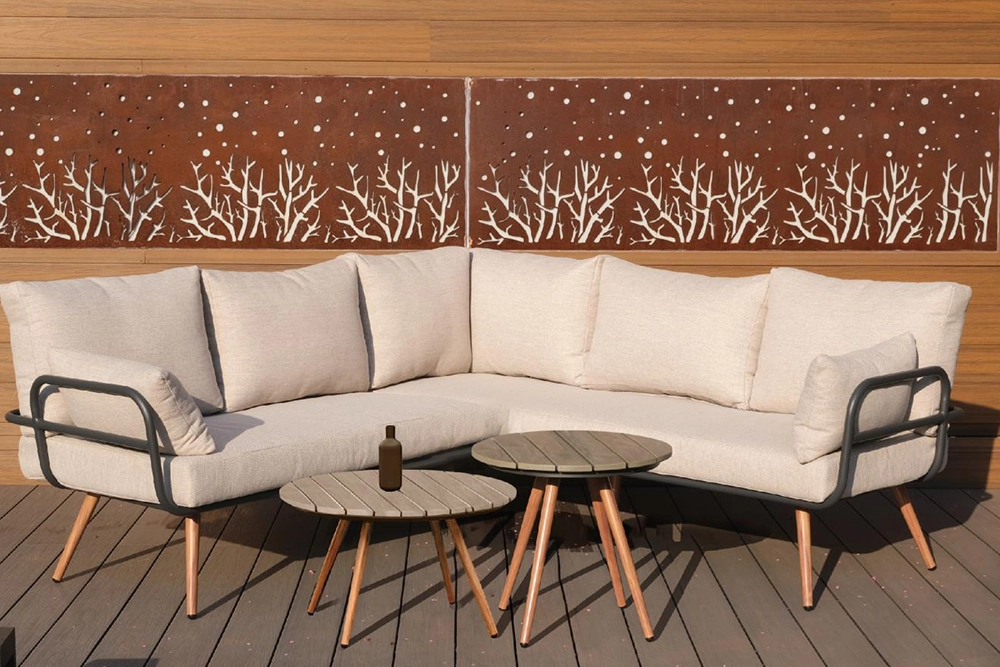
A fixed outdoor couch is a single-unit sofa that maintains one permanent configuration. A modular outdoor couch is a multi-piece seating system that allows individual sections to be rearranged into different configurations. Fixed layouts suit small, single-function spaces where simplicity is the priority. Modular layouts suit larger or multi-purpose spaces where the furniture needs to serve different group sizes and event formats. For example, a three-piece aluminum corner set — such as the Denton AF2107, which pairs a loveseat and three-seater sofa with a polywood coffee table — can be arranged as a compact L-shape for daily use or separated into distinct seating zones for larger events.
When Should You Choose a Fixed Outdoor Couch vs. a Modular Sectional?
The choice between fixed and modular depends primarily on space size, budget, usage variety, and whether the project requires future expansion. The following list breaks down when each format is the better fit:
Choose a fixed outdoor couch when:
- The patio or balcony is compact with a single, defined seating zone
- The budget is limited and a simple, complete solution is needed
- The furniture needs to be moved or stored frequently as a single unit
- The space serves one consistent purpose without layout changes
Choose a modular sectional when:
- The terrace, pool deck, or commercial area is large enough for multiple configurations
- Different events or guest counts require layout adjustments throughout the week
- The project plans to expand seating capacity incrementally over time
- Hospitality or commercial operations need adaptable furniture for varied functions
A middle-ground option also exists: a multi-piece sofa set provides more seating than a single sofa while keeping each piece independently movable, without relying on modular connection hardware.
Mistake #6: Ignoring Seating Capacity — How to Match an Outdoor Couch to the Right Group Size?
Matching an outdoor couch to the right group size means selecting a seat count that aligns with the typical number of daily users plus a small buffer for guests. Ignoring this step results in couches that are either too cramped for regular gatherings or excessively large for everyday use.
How Many Seats Does Each Type of Outdoor Couch Typically Provide?
Seating capacity varies significantly across outdoor couch formats. A two-seat loveseat accommodates two people. A standard three-seater sofa seats three. A four-piece sofa set typically seats four to five. Five-piece configurations, such as the SF2014 sofa set with Olefin fabric, spread seating across independently movable pieces — offering group-level capacity without locking the layout into a single fixed arrangement. An L-shaped corner sectional seats up to five. A U-shaped sectional accommodates six to eight or more. The practical rule is to match the seat count to the typical daily user count plus one to two additional seats as a buffer for occasional guests.
What Are the Advantages and Disadvantages of Buying a Larger Outdoor Couch?
Larger outdoor couches provide ample seating for group gatherings, create a commanding visual presence in spacious areas, and serve commercial hospitality needs effectively. However, they also require more floor space, carry a higher purchase cost, and increase seasonal cleaning and maintenance effort. In smaller spaces, an oversized couch creates a cramped, impractical layout. The right approach is to size the couch to the space and usage pattern rather than defaulting to the largest available option.
Mistake #7: Skipping Cushion Structure — How to Evaluate Outdoor Couch Cushion Quality?
Evaluating cushion quality requires looking beyond the surface fabric to examine the internal fill layers, density ratings, and retention design. A poorly constructed cushion flattens, sags, or loses shape after a few months, while a properly layered cushion maintains consistent support and appearance across multiple seasons.
What Should a High-Quality Outdoor Couch Cushion Include?
A high-quality outdoor cushion uses a three-layer construction: a performance fabric outer cover for weather protection, a high-density sponge core for structural support, and a cotton or polyester fill layer for surface comfort. This layered principle is visible in products like the Denton AF2107, where Olefin fabric covers a 24-density sponge core with cotton fill — each layer serving a distinct function from weather protection to structural support to surface comfort. Beyond fill quality, practical design details matter: non-slip bases prevent seat cushions from shifting on the frame, and tie-down or slip-over backrest cushions maintain a tidy appearance without constant readjustment.
How Does Cushion Depth Affect Comfort on an Outdoor Couch?
Cushion depth should match the intended use scenario. Deeper cushions in the 30–36 inch range encourage a reclined, lounging posture ideal for resort poolside areas and casual residential patios. Shallower cushions in the 24–27 inch range support a more upright seated position suited to restaurants, cafés, and formal conversation settings. Selecting a single depth without considering how the space will be used is a common oversight that reduces comfort for the primary user group.
FAQs
What is the most durable frame material for an outdoor couch?
Powder-coated aluminum offers the best combination of corrosion resistance, lightweight portability, and low maintenance. It outperforms untreated steel and iron in virtually all outdoor climate conditions.
How long should a quality outdoor couch last with proper care?
A well-constructed outdoor couch with powder-coated aluminum framing and performance fabric cushions can last five to ten years or more with routine cleaning, cushion storage during harsh weather, and seasonal hardware inspection.
Can indoor cushions be used on an outdoor couch?
Indoor cushions should not be used outdoors. They lack UV resistance, water repellency, and mildew protection, leading to rapid fading, moisture damage, and permanent staining that makes them unusable within weeks.
How should outdoor couch cushions be maintained across seasons?
Monthly frame cleaning with mild soap, seasonal cushion cover washing, and off-season cushion storage in weatherproof containers or indoors will maximize lifespan. For modular sectionals, connection hardware should be inspected and tightened each season.
Should delivery access and entryway dimensions be checked before buying?
For large sectionals and multi-piece sets, confirming that doorways, gates, and pathways can accommodate each component prevents delivery-day complications. Modular designs have an advantage here since individual pieces are smaller than a full-sized single-unit sofa.
Want to Know More About Our Products?
View All Products NowAbout Author
Spring Nee
Spring Nee is the Sales & Marketing Director at Zhejiang Sunshine Leisure Products Co., Ltd. With nearly 20 years of experience in the outdoor leisure furniture industry, she specializes in camping chairs, beach chairs, folding outdoor seating, and OEM/ODM project communication. Spring also leads the company’s marketing content direction. Most of the articles published on this website are either written by Spring herself or reviewed by her before publication, ensuring that the content is practical, accurate, and based on real industry experience.