Rust-Proof and Sand-Proof Beach Chairs: Why Coastal Corrosion Is Your Brand’s Biggest Hidden Liability

Jump to section
Every beach season, brand owners face the same costly pattern: chairs that looked perfect in the warehouse return from coastal markets with rust stains bleeding through the powder coat, frozen hinges that won’t fold, and fabric that faded from navy to pale gray in a single summer. The warranty claims pile up. The negative reviews multiply. And the root cause is almost always the same — materials and designs that were never engineered for the specific demands of saltwater, sand, and relentless UV exposure.
Coastal environments attack beach chairs through three simultaneous mechanisms. Saltwater deposits hygroscopic salt crystals that maintain a corrosive film on metal surfaces long after the chair has dried. Fine sand particles infiltrate every hinge and pivot point, grinding away at moving parts until the folding mechanism seizes. UV radiation breaks down polymer chains in fabric and coatings, causing color fade, brittleness, and structural weakening. A beach chair that ignores any one of these forces will fail — and that failure costs far more than the price of the chair itself.
This guide explains the material science and mechanical engineering behind truly rust-proof and sand-proof beach chairs. You will learn why aluminum alloy eliminates the corrosion problem that plagues steel frames, how sand-clearing hinge geometry prevents the mechanical failures that drive warranty claims, what surface treatments and fabric specifications deliver multi-season durability, and how to evaluate OEM suppliers for coastal-grade quality. Whether you are sourcing beach chairs for a consumer brand, a resort fleet, or a rental operation, the specifications in this guide will help you select products that survive harsh coastal conditions — and protect your brand from the hidden liability of premature failure.
What Makes a Beach Chair Truly Rust-Proof and Sand-Proof?
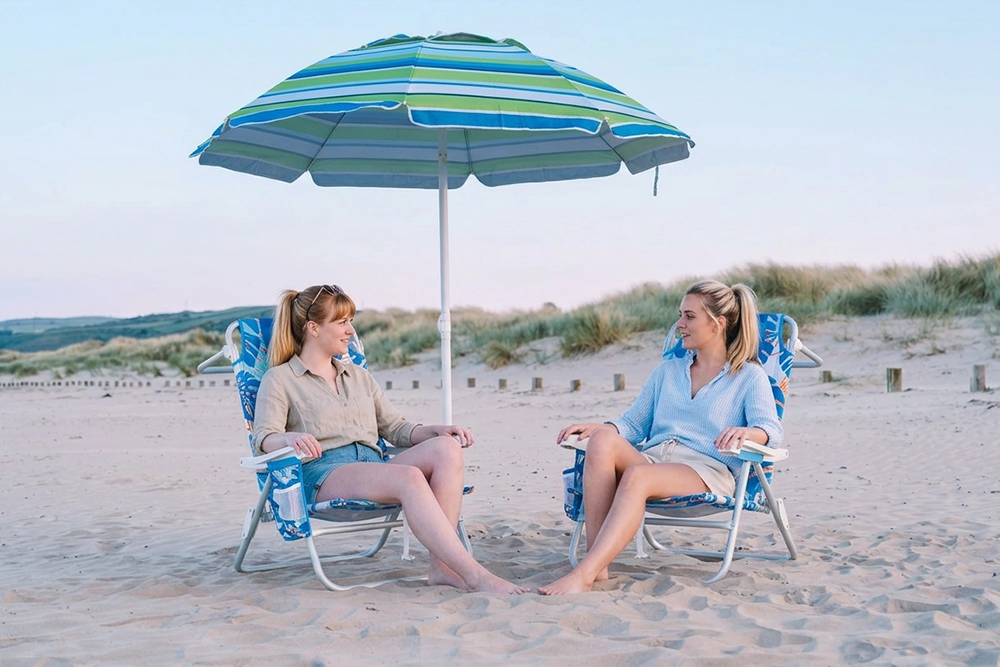
A truly rust-proof and sand-proof beach chair uses a 6063-T5 aluminum alloy frame with anodized or powder-coated surface treatment, stainless steel fasteners at all joint points, UV-stabilized quick-dry fabric, and sand-clearing hinge geometry that prevents granular debris from jamming the folding mechanism.
The difference between a beach chair that survives five coastal seasons and one that generates warranty claims after a single summer comes down to material science and mechanical design. Most consumer complaints about beach chairs fall into two categories: corrosion that appears as rust stains, pitting, or structural weakening, and sand accumulation that jams the folding or reclining mechanism. Both problems are preventable through engineering decisions made at the design and material specification stage — long before production begins.
A rust-proof beach chair starts with the frame material. Aluminum alloy does not rust because it contains no iron. When exposed to oxygen, aluminum forms a thin, self-healing oxide layer (Al₂O₃) on its surface that acts as a natural corrosion barrier. This oxide layer is what makes aluminum fundamentally different from steel, which forms iron oxide (rust) that flakes away and exposes fresh metal to continued attack. However, not all aluminum alloys perform equally in saltwater environments. Marine-grade alloys — specifically 6063-T5 and 6061-T6 — contain magnesium and silicon that enhance both strength and corrosion resistance in chloride-rich conditions.
A sand-proof beach chair requires mechanical design that acknowledges the reality of beach use: fine sand particles will enter every gap, crevice, and joint opening. Conventional hinge and pivot designs use tight-tolerance metal-on-metal contact surfaces that trap sand grains, creating abrasive wear and eventually seizing the mechanism. Sand-clearing designs use wider tolerance gaps, self-draining channels, and polymer bushings that allow sand to pass through rather than accumulate.
At Sunshine Outdoor, our beach furniture line is engineered specifically for harsh coastal conditions. We use aluminum alloy frames, stainless steel hardware, outdoor powder coating, and UV-resistant fabrics — combined with salt-spray testing and EN581 structural certification — to deliver beach chairs that minimize corrosion, sand jamming, and the warranty claims they generate.
Why Is Coastal Corrosion the Biggest Hidden Liability for Beach Chair Brands?
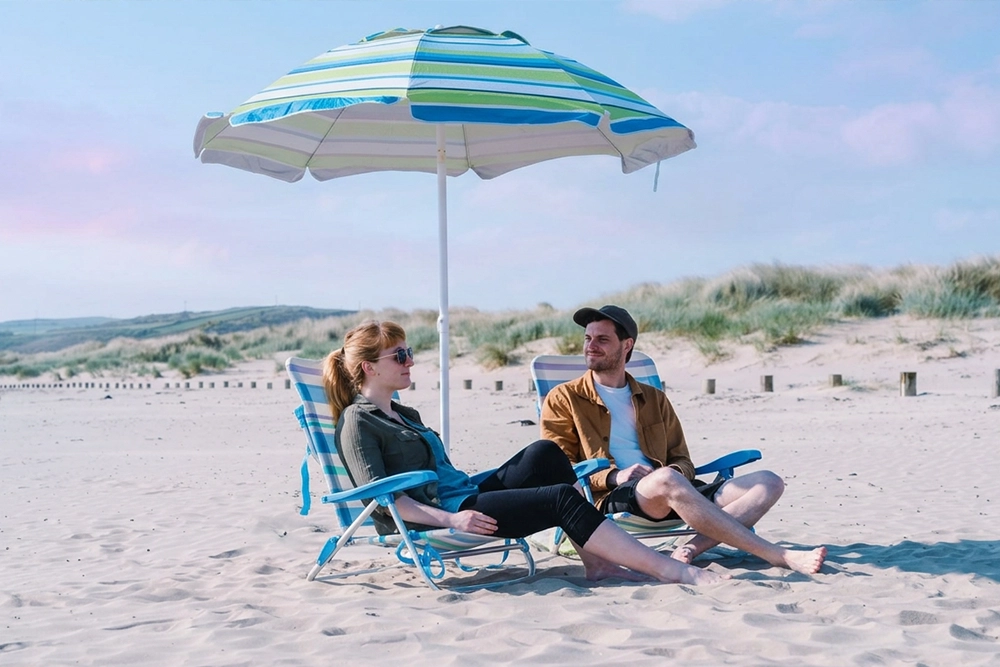
Coastal corrosion is the biggest hidden liability for beach chair brands because saltwater accelerates metal degradation 5–10x faster than freshwater exposure, and the damage often begins inside uncoated steel tubes where it is invisible until structural failure occurs — triggering warranty claims, returns, and brand reputation damage.
The economics of corrosion-related failure in beach chairs are more damaging than most brand owners realize. A single corroded chair does not simply cost the replacement value of the product. It costs the brand a customer, generates a negative review that deters 5–10 potential buyers, triggers a return shipment that erases margin, and in commercial settings like beach resorts or rental fleets, creates a safety liability when structural members weaken without visible warning.
The mechanism of saltwater corrosion in beach chairs follows a specific and predictable pattern. When a steel-frame beach chair is exposed to ocean spray, saltwater deposits sodium chloride crystals on the frame surface. These crystals are hygroscopic — they absorb moisture from the air even after the chair has dried — creating a persistent electrolyte film that accelerates electrochemical corrosion. On a powder-coated steel frame, this corrosion begins at any point where the coating is damaged: a scratch from transport, a chip from impact, or a wear mark from repeated folding.
The most insidious form of coastal corrosion in beach chairs occurs inside the tube. Many steel-frame chairs leave the interior tube surfaces uncoated because the coating process only treats the exterior. Saltwater enters through the open tube ends, through drainage holes, or through capillary action at joints. Once inside, it corrodes the tube from the interior outward — a process that is completely invisible to the user until the tube wall becomes thin enough to buckle under load. This is why users report chairs that “looked fine” but collapsed without warning.
Reddit communities focused on beach recreation and coastal living feature recurring threads from consumers who purchased steel-frame beach chairs that developed rust within weeks of coastal use. Users describe orange stains on clothing and towels, frozen folding mechanisms, and chairs that feel “soft” or wobbly after one season. For brand owners, every one of these posts is a permanent, searchable record of product failure associated with their brand name.
The solution is not better coatings on steel — it is eliminating iron-based metals entirely from the frame. Sunshine’s beach chairs and beach beds use aluminum alloy frames and stainless steel fasteners that are immune to the iron-oxide corrosion process by material composition, not by coating alone.
How Does Saltwater Corrode Different Beach Chair Frame Materials?
Saltwater corrodes different beach chair frame materials at different rates: uncoated mild steel fails within 3–6 months of coastal exposure, powder-coated steel lasts 1–3 years before coating breach allows corrosion to begin, aluminum alloy resists corrosion indefinitely through its self-healing oxide layer, and stainless steel 304/316 provides long-term resistance.
Understanding the corrosion behavior of each frame material helps brand owners make informed sourcing decisions and set accurate warranty terms. The following comparison covers the four most common frame materials used in beach chair manufacturing.
| Frame Material | Corrosion Mechanism | Coastal Lifespan | Cost Index |
| Mild steel (uncoated) | Iron oxide (rust); flakes, exposing fresh metal; accelerated by NaCl electrolyte | 3–6 months | 1.0x (lowest) |
| Powder-coated steel | Coating acts as barrier; any breach allows under-film corrosion to spread | 1–3 years (coating dependent) | 1.2–1.5x |
| Aluminum alloy (6063-T5) | Forms self-healing Al₂O₃ oxide layer; no iron = no rust; pitting possible only in extreme pH | 5–10+ years | 1.8–2.2x |
| Stainless steel (304/316) | Chromium oxide passive layer; 316 adds molybdenum for chloride resistance | 10–15+ years | 3.0–4.0x |
Mild steel is the lowest-cost frame material and the most vulnerable to coastal corrosion. In a saltwater environment, uncoated mild steel can show visible rust within days and structural degradation within months. The corrosion rate of mild steel in coastal atmosphere is approximately 0.025–0.05 mm per year — meaning a tube with 1.0 mm wall thickness can lose 5% of its structural capacity in a single season.
Powder-coated steel extends the life of a steel frame by providing a barrier between the metal and the environment. A well-applied powder coat (60–80 µm thickness) can delay corrosion onset for 1–3 years in coastal conditions. However, the coating is only as good as its weakest point. A single scratch, chip, or incomplete coverage at a joint leaves bare steel exposed to saltwater. Once corrosion begins beneath the coating, it spreads laterally under the film — a process called under-film corrosion or filiform corrosion — that lifts the coating and accelerates failure far beyond the original breach point.
Aluminum alloy eliminates the fundamental cause of rust: iron. Because aluminum contains no iron, the electrochemical reaction that produces iron oxide simply cannot occur. Instead, aluminum forms a transparent aluminum oxide (Al₂O₃) layer that is approximately 5–10 nm thick and reforms within milliseconds if scratched. This self-healing property means that scratches, chips, and wear marks on an aluminum frame do not create progressive corrosion sites the way they do on steel. For beach chairs, this is a decisive advantage.
Stainless steel (304/316) provides excellent corrosion resistance through a chromium oxide passive layer. Grade 316 adds molybdenum, which specifically improves resistance to chloride (saltwater) attack. However, stainless steel is significantly heavier and more expensive than aluminum, making it impractical for portable beach chairs. It is used effectively for fasteners, rivets, and hardware components where small amounts of material provide corrosion resistance at critical joints.
For a deeper technical analysis of how aluminum alloy performs in outdoor environments, see Sunshine’s blog post: Does Aluminum Patio Furniture Rust? Unveiling the Truth.
Why Does Sand Jam Beach Chair Folding Mechanisms — and How Do You Prevent It?
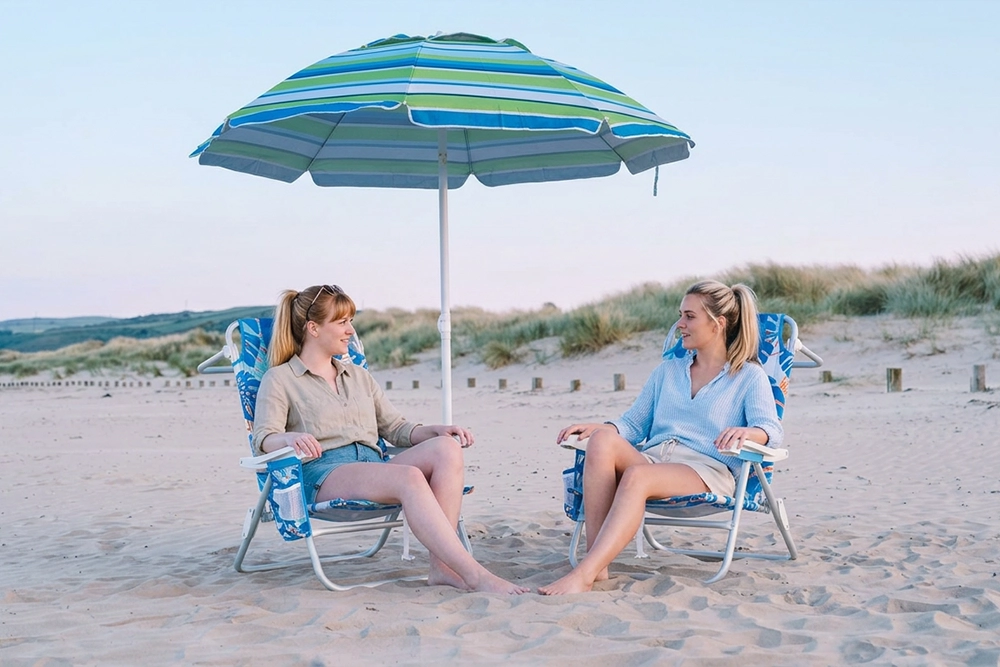
Sand jams beach chair folding mechanisms because conventional hinge designs use tight-tolerance metal-on-metal contact surfaces that trap fine sand particles (0.1–2.0 mm diameter), creating abrasive wear and increasing pivot friction until the mechanism seizes. Sand-clearing hinge designs use wider tolerances, self-draining channels, and polymer bushings to prevent accumulation.
Sand is the second most common cause of beach chair failure after corrosion, and it operates through a fundamentally different mechanism. Corrosion is a chemical process that degrades the frame material. Sand is a mechanical problem that degrades the moving parts — specifically the hinges, pivots, and reclining mechanisms that allow a beach chair to fold and adjust.
Beach sand consists primarily of silica (SiO₂) particles ranging from 0.1 to 2.0 mm in diameter. Silica has a Mohs hardness of 7 — significantly harder than aluminum (Mohs 2.5–3) and most steel alloys (Mohs 4–4.5). When sand grains enter a hinge or pivot joint, they act as an abrasive compound between the moving surfaces. Each operation of the mechanism — folding, unfolding, reclining, returning to upright — grinds sand particles against the metal contact surfaces, removing material and enlarging the joint clearance. Over time, this creates wobble, stiffness, and eventually seizing.
The problem is compounded by saltwater. When sand enters a joint along with saltwater, the water evaporates but leaves salt crystals and sand embedded in the joint. This combination creates a hard, abrasive, and corrosive paste that damages the joint surfaces much faster than dry sand alone.
Three engineering approaches prevent sand jamming:
1. Sand-clearing hinge geometry. Instead of tight-tolerance metal-on-metal pivot surfaces, sand-clearing hinges use wider gaps with tapered or chamfered edges that allow sand to fall through rather than accumulate. The joint maintains structural integrity through engagement length rather than tight clearance.
2. Self-draining channels. Channels or grooves cut into the hinge housing allow water and sand to drain out of the joint by gravity. This prevents the salt-sand paste from forming inside the mechanism.
3. Polymer bushings. Nylon, PTFE, or UHMWPE bushings inserted between the metal pivot surfaces provide a low-friction bearing surface that resists abrasive wear from sand particles. Polymer bushings also eliminate the metal-on-metal galvanic corrosion that occurs when dissimilar metals are in direct contact in a saltwater environment.
Sunshine’s beach chair designs incorporate sand-resistant mechanical details developed through over two decades of beach furniture manufacturing. Our engineering team works from real-world failure data collected across 50+ brand partnerships and 100+ export markets to identify and eliminate the mechanical failure modes that drive warranty claims in coastal environments.
What Fabric and Surface Treatments Protect Beach Chairs from UV Degradation and Saltwater?
Beach chairs require UV-stabilized fabrics with a minimum UPF 30+ rating and solution-dyed fiber construction to resist fading. Frame surface treatments include anodizing (10–25 µm oxide layer), powder coating (60–80 µm polyester finish), and electroplating — each offering different levels of corrosion resistance, UV stability, and cost.
Frame protection and fabric durability work as a system. An aluminum frame with excellent corrosion resistance paired with a fabric that degrades after one season of UV exposure still produces a product that fails to meet customer expectations. Both components must be specified for the coastal environment.
Frame Surface Treatments
Anodizing is an electrochemical process that thickens the natural aluminum oxide layer from approximately 5–10 nm to 10–25 µm. This thicker oxide layer is harder than the base aluminum (up to Mohs 9 for Type III hard anodizing), highly resistant to abrasion, and can be dyed in a range of colors before sealing. Anodized aluminum provides the best scratch resistance and color retention in coastal environments, but at a higher processing cost than powder coating.
Powder coating applies a dry thermoset polyester powder to the aluminum surface, which is then cured at 180–200°C to form a continuous 60–80 µm film. Powder coating provides good UV resistance, impact resistance, and corrosion protection at a lower cost than anodizing. It also allows a wider range of colors and finish textures (matte, satin, gloss, metallic, wood-grain). On aluminum frames, powder coating is applied over the existing oxide layer, creating a dual-layer protection system.
Electroplating deposits a thin layer of chrome, nickel, or zinc onto the metal surface through an electrolytic process. Electroplating provides an attractive high-gloss finish and moderate corrosion resistance, but the deposited layer is thin (typically 5–20 µm) and vulnerable to chipping. It is used primarily for decorative metal components rather than structural frame tubes.
Fabric Specifications
Solution-dyed fabrics (e.g., Textilene®, Phifertex®, marine-grade PVC-polyester blends) use pigment that is embedded in the fiber during extrusion, rather than applied to the surface after weaving. This means the color is integral to the fiber itself and cannot be stripped away by UV exposure, saltwater, or cleaning. Solution-dyed polyester and PVC-coated polyester fabrics retain 95%+ color intensity after 1,000+ hours of UV exposure in accelerated weathering tests.
Quick-dry construction is essential for beach chairs because fabric that retains moisture creates a hospitable environment for mold, mildew, and salt crystal formation. Textilene® and similar PVC-coated woven mesh fabrics allow water to drain through the weave structure, achieving dry-to-touch condition within 15–30 minutes of wetting. Closed-weave fabrics require drainage grommets or mesh panels to achieve comparable drying performance.
Sunshine uses Textilene®-grade fabrics and marine-rated PVC-polyester blends as standard in our beach furniture production. Metal tubes are finished with powder coating, anodizing, or electroplating depending on the application, cost target, and durability requirement. Our in-house fabric processing and quality control systems ensure batch-level consistency in color, weight, and UV performance across production runs.
How Does Sunshine Test Beach Chairs for Saltwater and UV Resistance?
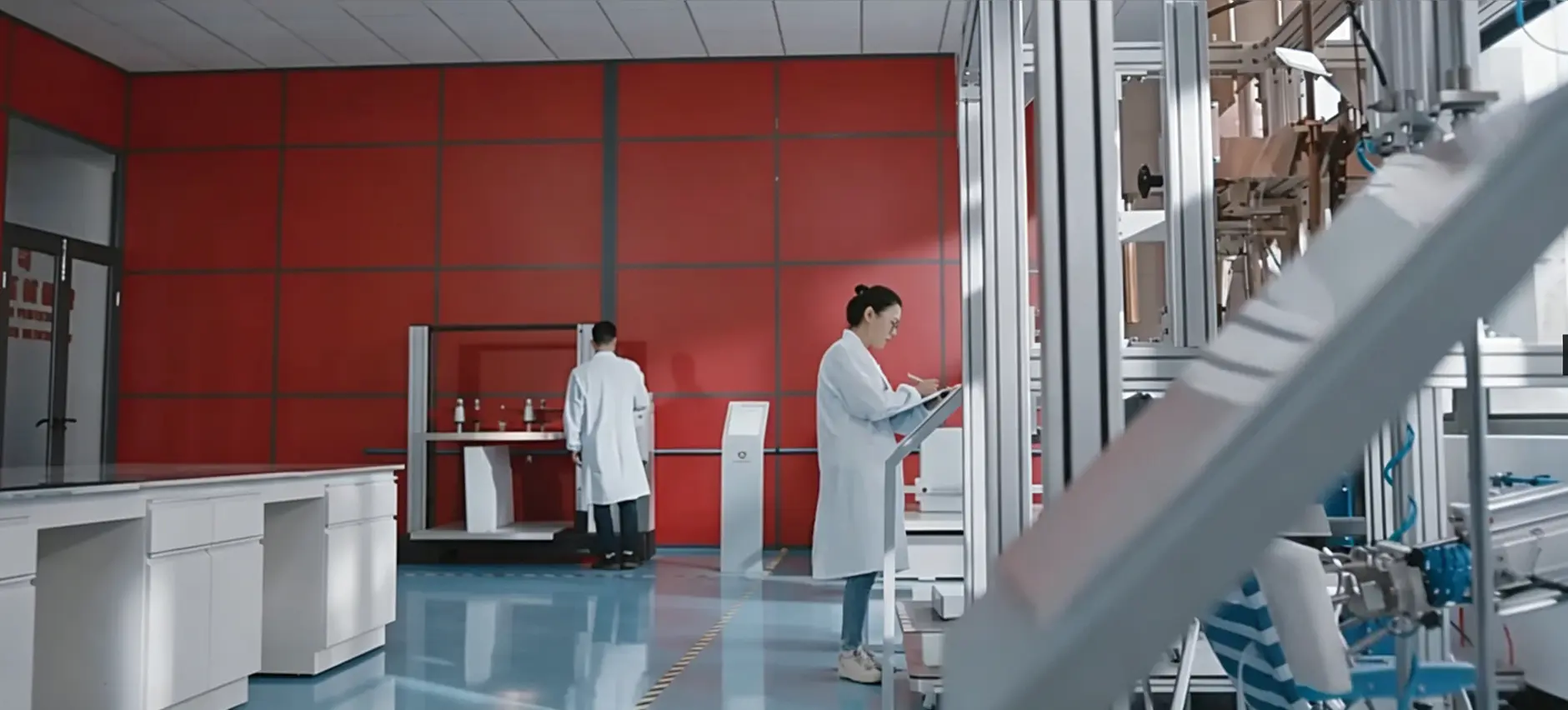
Sunshine tests beach chairs for saltwater and UV resistance through ASTM B117 salt-spray testing (500–1,000+ hours), accelerated UV weathering (1,000+ hours simulating 2–3 years of sun exposure), color fastness evaluation, and EN581 structural load testing — all conducted at our CNAS-accredited in-house testing center.
Durability claims without test data are marketing. Durability claims backed by standardized, third-party-verifiable testing protocols are engineering. Sunshine operates a CNAS-accredited testing center — conforming to ISO/IEC 17025 — that provides the data brand owners need to make accurate product claims and set defensible warranty terms.
Salt-Spray Testing (ASTM B117)
Salt-spray testing exposes the chair frame to a continuous mist of 5% NaCl solution at 35°C inside a sealed chamber. This accelerated corrosion test simulates months or years of coastal exposure in a controlled, repeatable environment. A 500-hour salt-spray test approximates 1–2 years of direct coastal exposure, while a 1,000-hour test approximates 3–5 years. The test evaluates the frame for visible corrosion, coating adhesion loss, blistering, and structural degradation. Sunshine’s aluminum alloy frames with powder coating routinely pass 1,000+ hours of salt-spray testing without visible corrosion.
UV Accelerated Weathering
UV weathering tests expose fabric samples and frame finishes to concentrated UV radiation (typically UVA-340 fluorescent lamps) in cycles that include moisture condensation to simulate dew. A 1,000-hour test approximates 2–3 years of outdoor UV exposure in a mid-latitude climate. The test measures color change (ΔE value), tensile strength retention, and surface chalking or cracking of coatings. Solution-dyed Textilene® and marine-grade PVC-polyester fabrics maintain ΔE < 1.0 (imperceptible color change) through 1,000+ hours.
EN581 Structural Testing
EN581 is the European standard for structural integrity of outdoor seating. It specifies static load, dynamic fatigue, and impact test protocols that verify the frame, joints, and fabric can withstand the forces of normal use. For beach chairs, EN581 testing confirms that the corrosion-resistant materials (aluminum, stainless steel fasteners) also provide the structural strength required for safe seating. Sunshine’s beach furniture passes EN581 certification at both factory sites.
All test data is generated at our CNAS-accredited testing center and available to brand partners as third-party verifiable reports. These reports support product page claims, retail compliance submissions, and warranty documentation. For details on our full certification portfolio — including REACH, BSCI, FSC, GRS, and ISO 9001/14001/45001 — visit our product certifications page.
What Should Brand Owners Look for in a Coastal-Grade Beach Chair OEM Supplier?
Brand owners should look for a coastal-grade beach chair OEM supplier that uses aluminum alloy 6063-T5 or equivalent frames, provides ASTM B117 salt-spray test reports of 500+ hours, offers sand-clearing hinge designs, specifies stainless steel fasteners, and supports UV-rated solution-dyed fabrics with documented color fastness data.
Selecting the wrong beach chair supplier for a coastal market creates a compounding liability: product returns in Season 1, negative reviews that suppress conversion in Season 2, and brand perception damage that takes years to reverse. The cost difference between a commodity supplier using powder-coated steel and a coastal-grade supplier using aluminum alloy is typically 30–50% per unit at wholesale — but the cost of a single warranty claim cycle (return shipping, replacement, customer service labor, review management) often exceeds the unit cost of the chair itself.
Six evaluation criteria for coastal-grade suppliers:
1. Frame material specification. The supplier must disclose the aluminum alloy grade (6063-T5 is the minimum for coastal use), wall thickness, and forming method (extrusion, casting). Avoid suppliers who list “aluminum frame” without specifying the alloy and temper — not all aluminum alloys provide adequate strength for seating.
2. Fastener material. All screws, rivets, bolts, and pins at joint points should be stainless steel 304 or 316. Mixing aluminum frames with carbon steel fasteners creates galvanic corrosion that accelerates failure at the exact points where structural integrity is most critical.
3. Salt-spray test data. Request ASTM B117 or equivalent salt-spray test reports with specific hour ratings. A minimum of 500 hours is necessary for consumer beach chairs; 1,000+ hours for commercial/resort applications.
4. Sand-resistant mechanical design. Ask the supplier to describe their hinge and pivot design philosophy. Look for wider-tolerance joints, self-draining features, and polymer bushings — not just tight-tolerance metal-on-metal pivots with a coat of grease.
5. UV-rated fabric with test documentation. Solution-dyed or pigment-integral fabrics with documented ΔE color change data from accelerated UV weathering tests. Avoid suppliers who offer “UV-resistant” fabric without specifying the test standard, exposure hours, and measured results.
6. End-to-end coastal engineering capability. The ideal supplier treats corrosion resistance, sand resistance, UV resistance, and structural integrity as an integrated system — not as separate problems solved by separate departments. This means the frame engineer, the surface treatment specialist, the fabric technologist, and the mechanical designer work from a single product specification that optimizes all four properties simultaneously.
How Sunshine Meets These Criteria:
Sunshine is a specialized beach furniture manufacturer with 21 years of production experience and partnerships with 50+ global brands. Our beach product line uses 6063-T5 aluminum alloy frames, stainless steel fasteners, Textilene®-grade fabrics, and sand-aware mechanical designs as standard specification — not as premium upgrades. Our CNAS-accredited testing center generates salt-spray, UV weathering, and EN581 structural test data that brand partners use for product documentation and retail compliance.
With two automated factories in China and Vietnam, annual capacity of 25 million units, 48-hour RFQ response, and free samples within 7 days on agreed designs, we give brand owners the speed and quality assurance to enter coastal markets with confidence. Visit our wholesale program for in-stock styles or contact our team for custom OEM development.
What Are the Most Common Coastal Beach Chair Failures — and How Much Do They Cost Brands?
The most common coastal beach chair failures are internal tube corrosion from saltwater, hinge seizure from sand accumulation, fabric UV degradation, and fastener galvanic corrosion. Each failure mode generates warranty claims costing 2–3x the wholesale unit price when return shipping, replacement, and customer service labor are included.
| Failure Mode | Root Cause | Time to Failure (Coastal) | Cost to Brand per Incident |
| Internal tube rust | Uncoated steel tube interior + saltwater ingress | 3–12 months | 2–3x unit cost (return + replace + service) |
| Hinge / pivot seizure | Sand + salt paste in tight-tolerance metal joints | 6–18 months | 1.5–2x unit cost (return + replace) |
| Fabric UV degradation | Non-solution-dyed polyester fading and weakening | 6–12 months | 1–1.5x unit cost (replace or refund) |
| Fastener galvanic corrosion | Carbon steel fasteners in aluminum frame + electrolyte | 3–12 months | 2–4x unit cost (structural safety liability) |
| Coating under-film corrosion | Powder coat breach on steel + saltwater penetration | 12–24 months | 1.5–2x unit cost (return + replace) |
The most expensive failure is fastener galvanic corrosion because it creates a structural safety liability. When a carbon steel screw corrodes inside an aluminum frame, the joint weakens progressively. If the chair collapses during use, the brand faces not only a product claim but potential personal injury liability. For commercial applications — beach resorts, rental fleets, event venues — this risk is amplified by volume.
Brand owners can calculate the break-even point for upgrading from steel-frame to aluminum-frame beach chairs by estimating the warranty claim rate in their coastal markets. If more than 8–10% of units in a coastal distribution channel generate warranty claims within the first year, the cost of those claims typically exceeds the per-unit cost premium of switching to aluminum. For most coastal-heavy product lines, the switch to aluminum-frame construction pays for itself within two seasons through reduced warranty expense alone.
How Do You Specify a Corrosion-Resistant Beach Chair for OEM Production?
Specifying a corrosion-resistant beach chair for OEM production requires defining six parameters: frame alloy grade and temper, surface treatment type and thickness, fastener material and grade, hinge design type, fabric composition and UV test standard, and target salt-spray test hours for the completed assembly.
| Parameter | Specification for Coastal Use | What to Avoid |
| Frame alloy | 6063-T5 or 6061-T6 aluminum | Unspecified “aluminum”; any mild steel |
| Surface treatment | Anodized (15–25 µm) or powder coat (60–80 µm) | Electroplating alone on structural tubes |
| Fasteners | Stainless steel 304 or 316 at all joints | Carbon steel or zinc-plated steel |
| Hinge design | Sand-clearing geometry with polymer bushings | Tight-tolerance metal-on-metal pivots |
| Fabric | Solution-dyed PVC-polyester or Textilene®; UPF 30+ | Non-solution-dyed polyester under 400D |
| Salt-spray target | ≥ 500 hrs (consumer) / ≥ 1,000 hrs (commercial) | No salt-spray data available |
| UV weathering target | ΔE < 1.5 at 1,000 hrs | No UV test data available |
| Structural certification | EN581 or BIFMA | No structural test report |
Brand owners should provide this specification table to potential OEM suppliers and request confirmation of each parameter before sampling. Suppliers who cannot confirm material grades, test standards, and test hour targets at the quotation stage are unlikely to deliver consistent coastal-grade quality at production scale.
Sunshine’s OEM process begins with a technical consultation where our engineering team reviews the target market environment, intended use frequency, price band, and warranty term to recommend the optimal specification for each parameter. From there, we move to sampling (free samples within 7 days on agreed designs), lab testing at our CNAS-accredited center, and production with batch-level QC — a complete end-to-end service from concept to container.
Conclusion: Ready to eliminate corrosion claims from your beach chair line?
Sunshine Outdoor engineers beach furniture specifically for harsh coastal conditions — aluminum alloy frames, stainless steel hardware, UV-stabilized fabrics, and sand-clearing mechanical designs. 21 years of manufacturing experience, two automated factories, CNAS-accredited testing, and partnerships with 50+ global brands.
→ Request a quote — 48-hour RFQ response, free sample within 7 days.
→ Browse coastal beach furniture — chairs, beds, loungers, and sun shelters engineered for saltwater environments.
→ Visit our wholesale program — in-stock styles with no MOQ.
FAQs
Does Aluminum Beach Furniture Rust in Saltwater Environments?
No. Aluminum does not rust because it contains no iron. Aluminum forms a self-healing aluminum oxide (Al₂O₃) layer on its surface that prevents corrosion in saltwater, freshwater, and humid air. This oxide layer reforms within milliseconds if scratched, making aluminum inherently rust-proof by composition rather than by coating. For detailed analysis, read Sunshine’s guide: Does Aluminum Patio Furniture Rust?
How Do You Remove Sand from Beach Chair Hinges?
To remove sand from beach chair hinges, rinse the joint area with fresh water immediately after beach use, then operate the mechanism through its full range of motion 3–5 times while wet to flush sand particles from the contact surfaces. Allow the joint to air-dry completely before storage. Chairs with sand-clearing hinge geometry and self-draining channels require less maintenance because they resist sand accumulation by design.
What Is the Best Surface Treatment for Coastal Beach Chairs?
The best surface treatment for coastal beach chairs depends on the application. Anodizing (15–25 µm) provides the hardest, most scratch-resistant, and most color-stable finish for premium or commercial-grade chairs. Powder coating (60–80 µm) provides good protection at a lower cost and offers a wider range of colors and textures for consumer-grade products. On aluminum frames, both treatments work over the existing natural oxide layer to provide dual-layer protection.
How Long Do Aluminum Beach Chairs Last in Coastal Conditions?
Aluminum beach chairs with proper surface treatment (anodized or powder-coated), stainless steel fasteners, and UV-stabilized fabric typically last 5–10 years in regular coastal use with basic maintenance (fresh water rinse, periodic lubrication of moving parts, dry storage). Commercial-grade aluminum beach chairs in resort settings can exceed 10 years of service when maintained according to manufacturer guidelines.
What Minimum Salt-Spray Test Hours Should a Coastal Beach Chair Pass?
Consumer-grade coastal beach chairs should pass a minimum of 500 hours of ASTM B117 salt-spray testing. Commercial-grade chairs for resorts, rental fleets, and beach clubs should pass 1,000+ hours. These thresholds approximate 1–2 years and 3–5 years of direct coastal exposure respectively. Sunshine’s aluminum beach chairs routinely pass 1,000+ hours of salt-spray testing.
Does Sunshine Offer OEM Beach Chairs Designed for Coastal Markets?
Yes. Sunshine is a specialized beach furniture manufacturer offering full OEM/ODM services for coastal markets. Our standard beach chair specification includes 6063-T5 aluminum alloy frames, stainless steel fasteners, Textilene®-grade UV-resistant fabric, and sand-aware mechanical design. We provide free samples within 7 days, 48-hour RFQ response, and CNAS-accredited salt-spray and UV test reports for all production models.
Want to Know More About Our Products?
View All Products NowAbout Author
Spring Nee
Spring Nee is the Sales & Marketing Director at Zhejiang Sunshine Leisure Products Co., Ltd. With nearly 20 years of experience in the outdoor leisure furniture industry, she specializes in camping chairs, beach chairs, folding outdoor seating, and OEM/ODM project communication. Spring also leads the company’s marketing content direction. Most of the articles published on this website are either written by Spring herself or reviewed by her before publication, ensuring that the content is practical, accurate, and based on real industry experience.