What Is Dispersed Camping? A Complete Guide to Free Camping on Public Lands

Jump to section
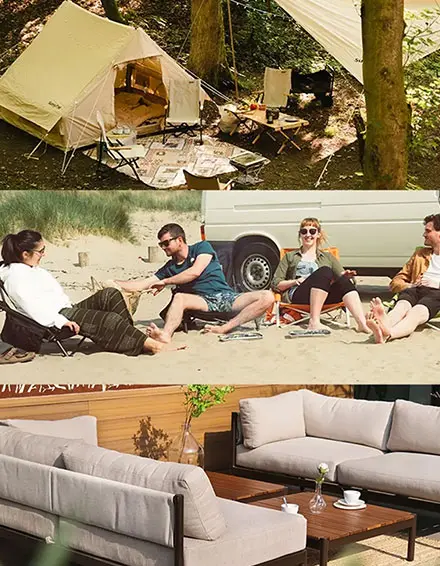
Dispersed camping is one of the fastest-growing outdoor trends in the United States. Each year, more campers skip crowded campgrounds and head for open public land instead. There are no hookups, no fees, and no neighbors at the next site. Unlike a regular campground, dispersed camping is simple — a vehicle, the right gear, and an open patch of public land where campers pick their own spot.
This guide covers everything a camper needs to know before heading out. It explains what dispersed camping is, where it is allowed, how to find a site, what gear to bring, what rules to follow, and what tips help first-timers succeed. Whether someone is an experienced overlander or a weekend car camper trying something new, this information will help turn curiosity into a well-planned trip.
What Is Dispersed Camping?
Dispersed camping means setting up camp on federal public land outside of any built or marked campground. There are no picnic tables, no trash cans, no restrooms, and no drinking water. Campers bring everything they need and pack out everything they use.It helps to know how dispersed camping differs from other types.
Car camping describes any camping that involves a vehicle, including stays at campgrounds with full facilities. Backcountry camping means hiking to a remote spot far from any road. Developed campground camping takes place at maintained sites that usually offer fire rings, toilets, and sometimes showers or power — often for a nightly fee. Dispersed camping sits between car camping and backcountry camping. It is usually reached by vehicle, but it takes place in areas with no facilities at all.
Why Go Dispersed Camping?
The biggest draw of dispersed camping is cost — it is free on most federal public lands. Campers who take several trips a season save a lot of money compared to campground fees of twenty to forty dollars per night.
Privacy and quiet are just as appealing. A camper might wake up next to a clear stream with no one else around, hearing only the wind in the trees. Developed campgrounds can feel like small neighborhoods, but a dispersed site offers a true escape from crowds.
Flexibility is another big reason to go. There are no reservations to book months ahead, no check-in times to meet, and no assigned sites. Campers can arrive when they want, stay within the allowed time, and move on when they feel like it. On top of that, dispersed camping builds real outdoor skills — from managing water and waste to driving rough roads and handling bad weather.
Where Can Campers Go Dispersed Camping?
Dispersed camping is mainly allowed on U.S. federal public lands. Three main types of land permit it, and each has its own managing agency and rules.
BLM (Bureau of Land Management) Lands
BLM land is the most popular choice for dispersed camping. The Bureau manages about 245 million acres, mostly in western states like Nevada, Utah, Arizona, and Oregon. Most BLM land allows free dispersed camping with a stay limit of 14 days in any 28-day period, though exact limits vary by field office.
Campers must set up at least 200 feet from any water source. Before a trip, it is smart to check with the local BLM field office or the agency’s website for area rules. Some zones are closed to camping to protect resources or wildlife during certain seasons.
National Forests (USFS)
The National Forest System, run by the U.S. Forest Service (USFS), also allows dispersed camping across its 193 million acres. Some forests require a free permit, and certain areas have strict campfire limits during fire season. Rules can differ a lot from one Ranger District to the next, even within the same forest.
Campers who plan to drive to a dispersed site should check the forest’s Motor Vehicle Use Map (MVUM). This map shows which roads and areas are open to vehicles. MVUMs are free to download on the USFS website.
Other Public Lands
Some State Trust Lands and Wildlife Management Areas (WMAs) also allow dispersed camping, but rules vary widely. Some require permits or fees, and the rules change from state to state. Campers should always check the rules before they go. National Parks usually do not allow dispersed camping — most require campers to stay in marked campgrounds or get backcountry permits for certain zones. This is an important detail, because mixing up National Forest land with National Park land is one of the most common mistakes new dispersed campers make.
Popular Dispersed Camping Destinations
Several spots across the country are well known for great dispersed camping.
BLM land near Moab, Utah offers dramatic desert terrain with red-rock canyons, making it ideal for off-road drivers and mountain bikers. San Isabel National Forest in Colorado has alpine forests with access to peaks above 14,000 feet, perfect for hikers and high-altitude campers. Coconino National Forest near Sedona, Arizona features red-rock landscapes and mild winter weather that draw campers all year. Alabama Hills in California sits at the base of the Sierra Nevada, famous for its rounded granite formations and wide mountain views — a favorite among photographers. Deschutes National Forest in central Oregon offers Pacific Northwest forests with volcanic landscapes, making it a great base for fishing and paddling.
How to Find Dispersed Camping Sites
Tools and Resources
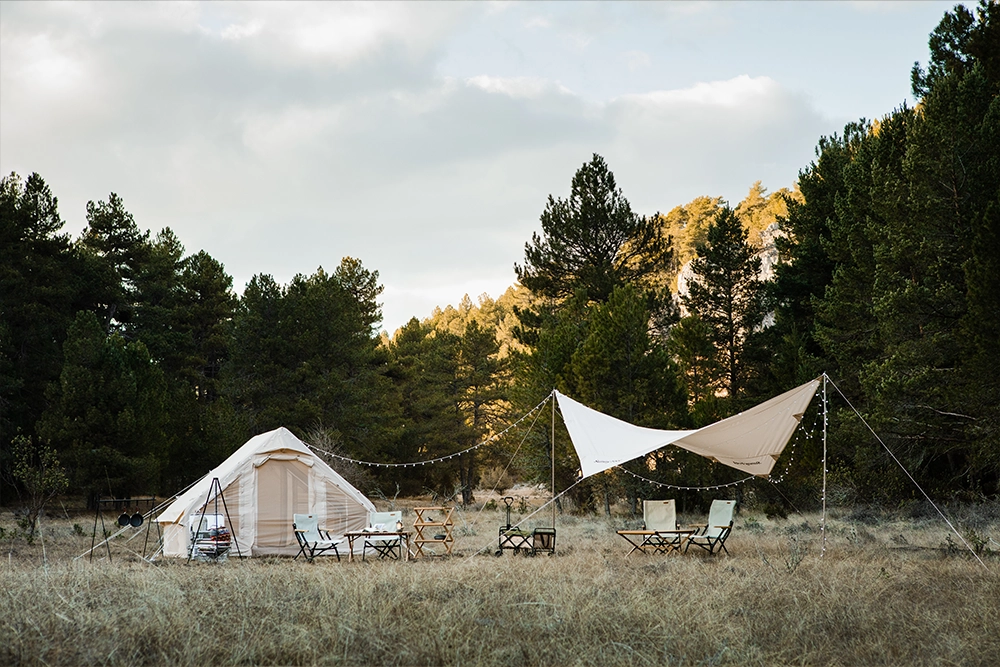
Several free and low-cost tools help campers find dispersed sites before a trip. Freecampsites.net is a user-built database where campers share GPS locations, photos, and reviews of free sites across the country. iOverlander serves a similar purpose but focuses on the overlanding and vehicle-touring community. Campendium collects both free and paid campsite data and lets users filter by amenities and access type.
For navigation, Gaia GPS and Avenza Maps are offline map apps that can load MVUM maps directly. This feature is key in areas with no cell service. The USFS and BLM both offer official maps on their websites, and Google Earth is helpful for checking terrain, road conditions, and the layout of possible campsites before leaving home.
On-the-Ground Scouting Tips
When a camper arrives at a dispersed camping area, timing matters. It is best to arrive before dark to check the area, look for hazards, and pick the best spot. Existing fire rings are a good sign that a site is used and allowed. Road conditions need careful review — unpaved forest roads can be rough, rutted, or washed out, and campers should confirm their vehicle can handle the drive before going further.
Checking cell coverage ahead of time with tools like Coverage Critic helps with planning, especially if a satellite communicator is not part of the gear list. Campers should also check that the ground is level and note which way water would drain. Camping in a low spot can become risky in a rainstorm, and even a small slope makes sleeping less comfortable.
What to Bring Dispersed Camping: Essential Gear Checklist
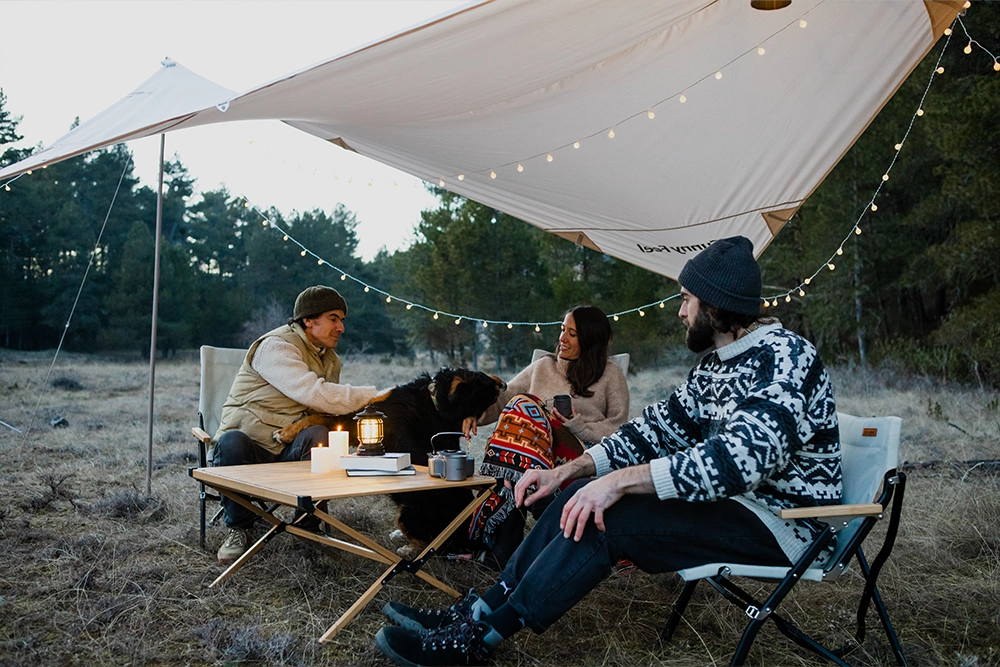
Because dispersed camping has no facilities at all, good gear prep is a must. The following categories cover the essentials.
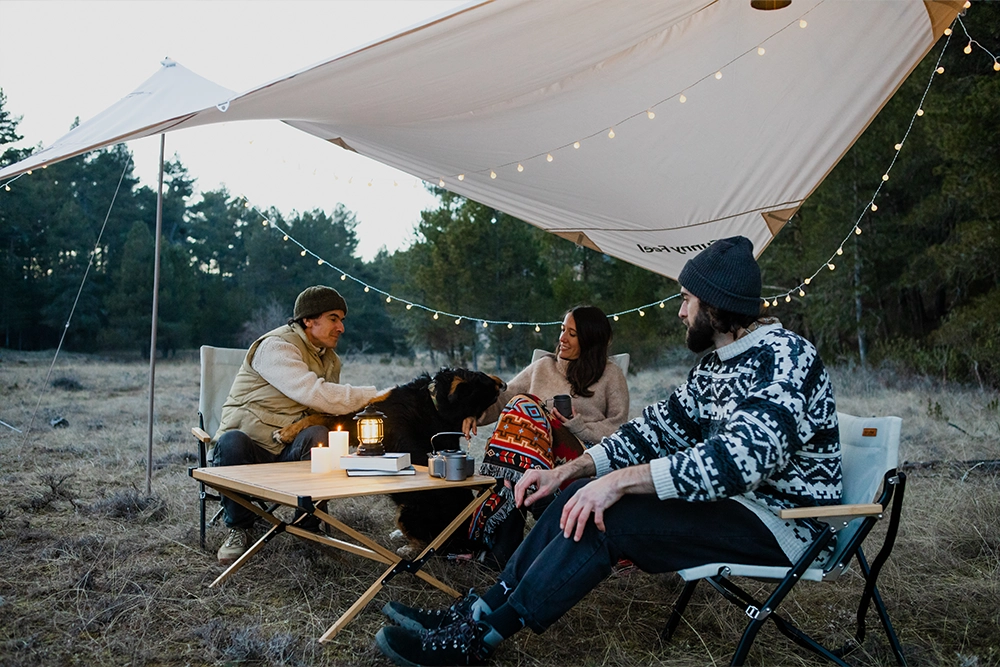
Camp Furniture. A portable camping chair, a folding table, and a camping cot make a big difference in comfort on multi-day trips. A sturdy folding table works as both a cooking surface and a dining area. Sunshine’s portable folding camping tables use lightweight aluminum frames and fold down small, making them easy to carry to remote sites while giving campers a stable surface for meals and gear.
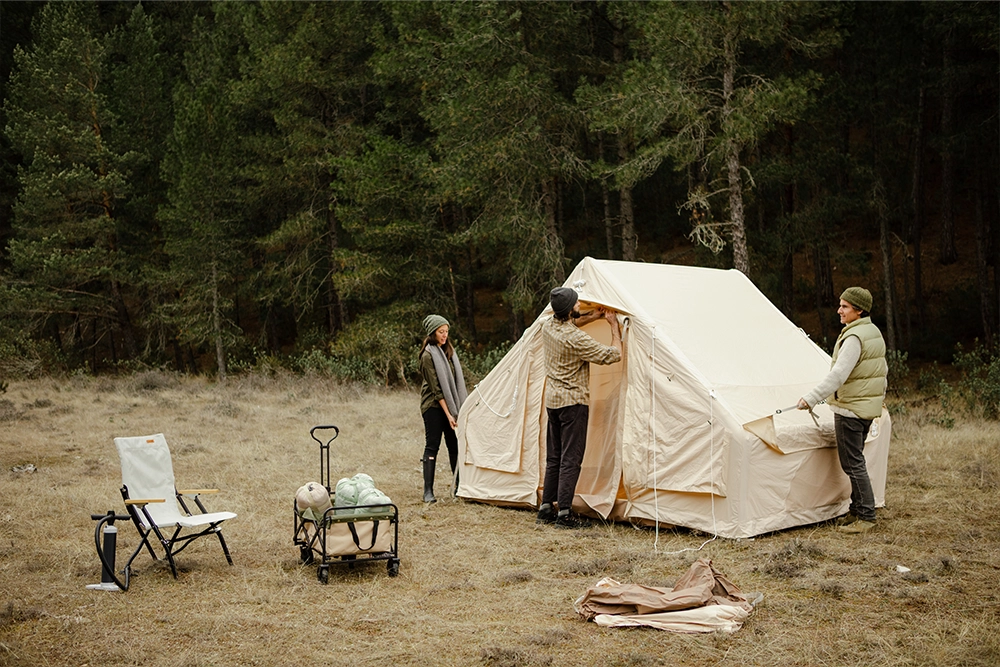
Shelter and Sleep. A good tent rated for the expected weather is the starting point. Campers should pair it with a sleeping bag matched to the season’s low temperatures and a sleeping pad — either inflatable for comfort or closed-cell foam for durability and warmth on rough ground.
Water and Sanitation. Dispersed camping has no running water or restrooms. Campers should carry at least five gallons of water per person for a weekend trip, plus a water filter or chemical purification tablets as a backup. A portable toilet or WAG Bags are needed for proper waste handling, and hand sanitizer should always be within reach.
Food and Cooking. A portable camp stove, a quality cooler, and sealable food containers cover the basics. In bear country, hard-sided bear canisters are required by law. A folding camp table gives campers a clean, raised surface for food prep, keeping items off the ground and away from dirt and bugs.
Navigation and Communication. Offline maps should be saved to a phone or GPS device before leaving. A stand-alone GPS unit adds backup. Because dispersed camping areas often have no cell signal, a satellite communicator — such as a Garmin inReach — is a key safety item. It lets campers send messages and call for emergency help from anywhere.
Power and Lighting. A portable battery pack keeps phones and GPS devices charged. A solar charger extends power on longer trips. A headlamp is a must for hands-free use around camp after dark, and a camp lantern lights up the whole site.
Safety and Emergency. A well-stocked first aid kit, a fire extinguisher, and vehicle recovery gear — including a tow strap, a shovel, and a tire repair kit — should be in every dispersed camper’s vehicle. Bear spray is a good idea in areas where bears are active.
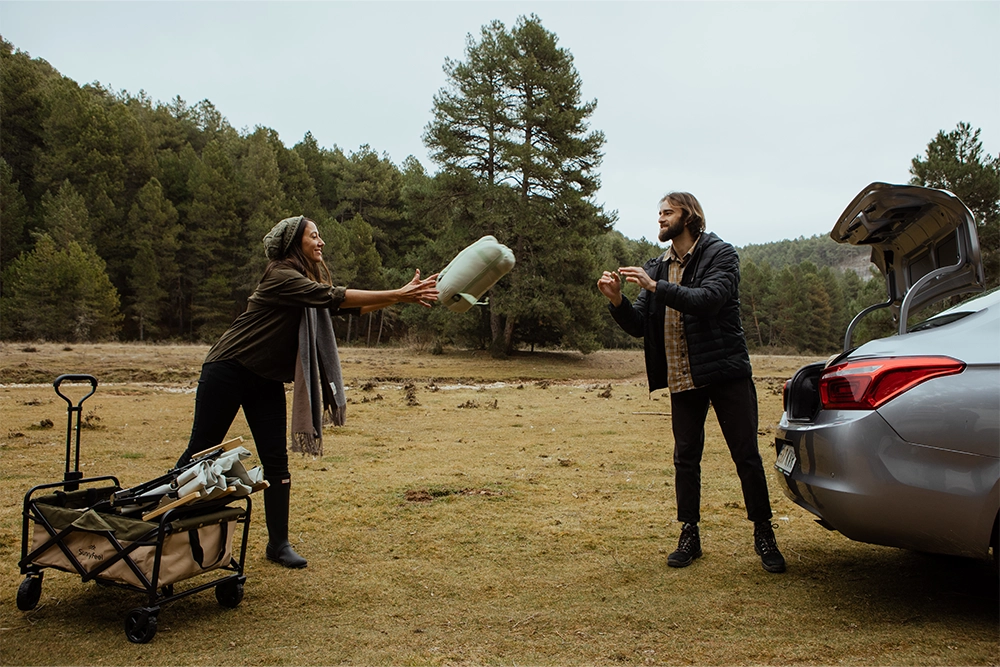
Transport and Hauling. Moving gear from a vehicle to a campsite that sits a short walk away can take several trips. A collapsible camping wagon fixes this problem fast. Sunshine’s folding camping wagons have wide wheels and strong frames built for uneven ground, making it easy to haul coolers, water jugs, and camp furniture in one load.
Dispersed Camping Rules
Following the rules that govern public land is what keeps dispersed camping open for everyone. Bad behavior leads to area closures, and every camper shares the duty to leave the land in better shape than they found it.
General Federal Land Rules
Most federal lands have a maximum stay of 14 days in any 28-day period. After 14 days, campers must move at least 25 miles from the last site. All trash must be packed out — there are no dumpsters or trash pickup. Campers must set up a minimum distance from built campgrounds, trailheads, and water sources. The exact distance depends on the area but is usually at least 200 feet from water and up to one mile from built facilities in some spots. Human waste must be packed out in WAG Bags or buried in catholes dug six to eight inches deep, at least 200 feet from water, trails, and camp.
Leave No Trace 7 Principles
The seven Leave No Trace principles give campers an ethical guide for outdoor recreation. Plan Ahead and Prepare means looking up rules and weather before the trip. Travel and Camp on Durable Surfaces means sticking to existing roads, trails, and used campsites to avoid harming plants. Dispose of Waste Properly means packing out all trash and handling human waste the right way.
Leave What You Find means not disturbing natural or cultural features. Minimize Campfire Impacts calls for using existing fire rings and keeping fires small. Respect Wildlife means watching animals from a distance and never feeding them. Be Considerate of Other Visitors reminds campers to keep noise low and respect the quiet that others came to enjoy.
Campfire Safety
Before starting any fire, campers must check whether local fire bans are in effect. Fire bans are common during dry summer months across the western United States, and fines for breaking them can be steep. When fires are allowed, campers should use existing fire rings instead of making new ones and keep fires small. Before leaving a fire or going to sleep, the “drown, stir, feel” method makes sure it is fully out — drown the coals with water, stir the ash, and feel with the back of the hand to confirm no heat remains. A fire extinguisher or a bucket of water should always be close by at the campsite.
Wildlife Safety
Wildlife risks change by region, and campers should prepare for the local area. In bear country, food and all scented items — including toothpaste, sunscreen, and lip balm — must be stored in bear canisters or hung at least 10 feet high and four feet from the nearest tree trunk. Keeping the campsite clean and free of food scraps is essential. In the desert Southwest, campers should watch for rattlesnakes near rocks and brush, especially during warm months.
In the northern Rockies and Pacific Northwest, moose and mountain lions may be present. Campers should know how to respond — make noise and back away from moose, and stand tall and maintain eye contact with mountain lions instead of running.
Dispersed Camping Tips for Beginners
First-timers should keep a few key points in mind before heading out. Starting with semi-dispersed areas — such as BLM campgrounds that offer basic facilities like a vault toilet and a fire ring — is a smart way to build confidence before going fully off-grid. Choosing a spot near a known campsite means help is close if something goes wrong. Leaving early and arriving with plenty of daylight gives time to check the site, set up camp, and make changes if needed.
Having a backup plan is a must. Popular dispersed sites can already be taken, roads can be closed without warning, and conditions on the ground do not always match satellite images. Campers should always pick at least one other spot before the trip. Sharing the full trip plan — including GPS coordinates and an expected return date — with a friend or family member creates a safety net in case of an emergency.
Finally, practicing basic vehicle recovery skills before the trip is well worth the effort. Knowing how to use a jack on uneven ground, jump-start a battery, and use a tow strap to get unstuck can turn a scary moment into a minor problem.
FAQs
What Is the Difference Between Dispersed Camping and Boondocking?
The two terms overlap a great deal. Dispersed camping usually means camping without facilities on federal public land, such as BLM or National Forest land. Boondocking is a term used more often in the RV community. It describes camping without water or power hookups, which can include public lands but also covers spots like store parking lots and private land with the owner’s permission. On public lands, the two terms mean the same thing — both describe self-contained camping with no built amenities.
Does Dispersed Camping Require a Permit?
Most BLM lands and National Forests do not require a permit for dispersed camping. However, some exceptions exist. Certain high-use areas — such as the Boundary Waters Canoe Area Wilderness in Minnesota and some wilderness zones within National Forests — require free or paid permits that may need to be booked in advance.
The safest step is to contact the local Ranger Station or check the agency’s official website before the trip to confirm whether a permit is needed for that area.
Conclusion
Dispersed camping offers something that developed campgrounds cannot match — total freedom to choose a campsite, real solitude, and a direct connection with the natural landscape. With the right preparation, knowledge of the rules, and proper gear, any outdoor lover can enjoy public land the way it was meant to be experienced.
For campers looking to gear up for their next dispersed camping trip with tough, portable camp furniture, Sunshine’s complete camping collection includes folding chairs, tables, cots, and wagons built for rugged off-grid conditions. Explore the full range to get ready for the next adventure.
Want to Know More About Our Products?
View All Products NowAbout Author
Spring Nee
Spring Nee is the Sales & Marketing Director at Zhejiang Sunshine Leisure Products Co., Ltd. With nearly 20 years of experience in the outdoor leisure furniture industry, she specializes in camping chairs, beach chairs, folding outdoor seating, and OEM/ODM project communication. Spring also leads the company’s marketing content direction. Most of the articles published on this website are either written by Spring herself or reviewed by her before publication, ensuring that the content is practical, accurate, and based on real industry experience.