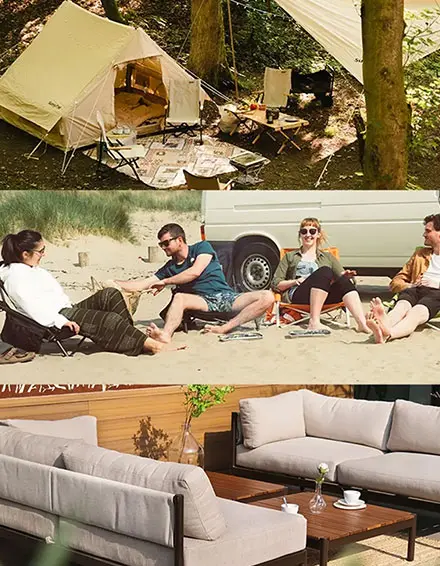
How Outdoor Furniture Is Made: A Factory Tour of the Full Production Process


Jump to section
Understanding how outdoor furniture moves from raw material to finished product is essential for any buyer evaluating factory capabilities and supplier reliability. The manufacturing process spans design engineering, material science, precision fabrication, surface chemistry, textile processing, and multi-stage quality assurance. This guide walks through every core production stage, giving sourcing professionals the knowledge to assess factories with confidence.
What Does the Full Production Process of Outdoor Furniture Look Like?
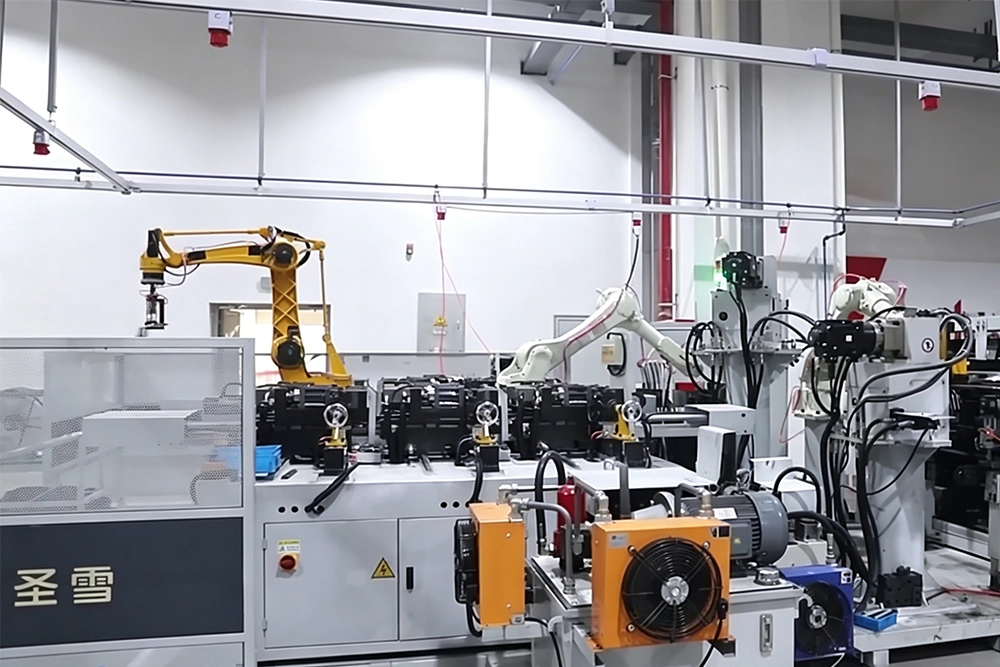
Outdoor furniture production is a multi-stage manufacturing process that transforms raw metals, wood, and technical fabrics into weather-resistant seating, tables, and loungers through a controlled sequence of fabrication, finishing, assembly, and inspection steps.
The complete workflow follows a standardized sequence: product design and prototyping, raw material sourcing and incoming inspection, metal frame fabrication, surface treatment, fabric and textile processing, component assembly, multi-stage quality control, and export packaging. Each stage feeds into the next through defined handoff criteria—no component advances until it passes the checkpoint of its current stage. A typical production cycle from confirmed order to container loading ranges from 30 to 60 days depending on order complexity.
How Does the Design and Prototyping Phase Shape an Outdoor Furniture Product Before Mass Production?
The design and prototyping phase determines every downstream manufacturing decision before a single production unit is made. It transforms market insights and buyer specifications into production-ready products through trend research, 3D CAD modeling, engineering review, physical sample creation, and iterative testing over a 2–8 week period.
Development begins with market analysis and buyer briefs, followed by digital renderings and Design for Manufacturability (DFM) analysis. A physical prototype is then fabricated, load-tested, and evaluated for folding mechanisms, reclining angles, and ergonomic comfort. Most products go through two to three revision cycles before a confirmed sample is approved. Factories offering OEM and ODM development services typically maintain dedicated engineering teams for this phase, with some capable of delivering free samples within 7 days.
How Are Raw Materials Sourced and Inspected Before Outdoor Furniture Production Begins?

Raw materials for outdoor furniture—including aluminum tubes, steel pipes, hardwood timber, and synthetic fabrics—undergo incoming quality inspection upon arrival at the factory. Checks cover dimensional accuracy, wall thickness, moisture content, tensile strength, and surface condition to ensure only qualified materials enter the production line.
Aluminum tubes are verified for alloy grade and wall thickness tolerance. Steel pipes undergo galvanization layer testing for pre-coated stock. Wood shipments are checked with moisture meters, targeting 8–12% content for hardwoods. Fabric rolls are sampled for weight per square meter and colorfastness grade. Certified factories assign batch numbers to every incoming lot for full traceability—FSC chain-of-custody documentation follows wood from certified forest to finished product, while GRS certification traces recycled content in metals and textiles.
How Are Metal Frames for Outdoor Furniture Cut, Bent, and Welded?
Metal frames are manufactured through a sequence of pipe cutting, CNC bending, welding, and post-weld grinding. Precision at this stage determines the structural integrity, dimensional consistency, and aesthetic quality of the final product.
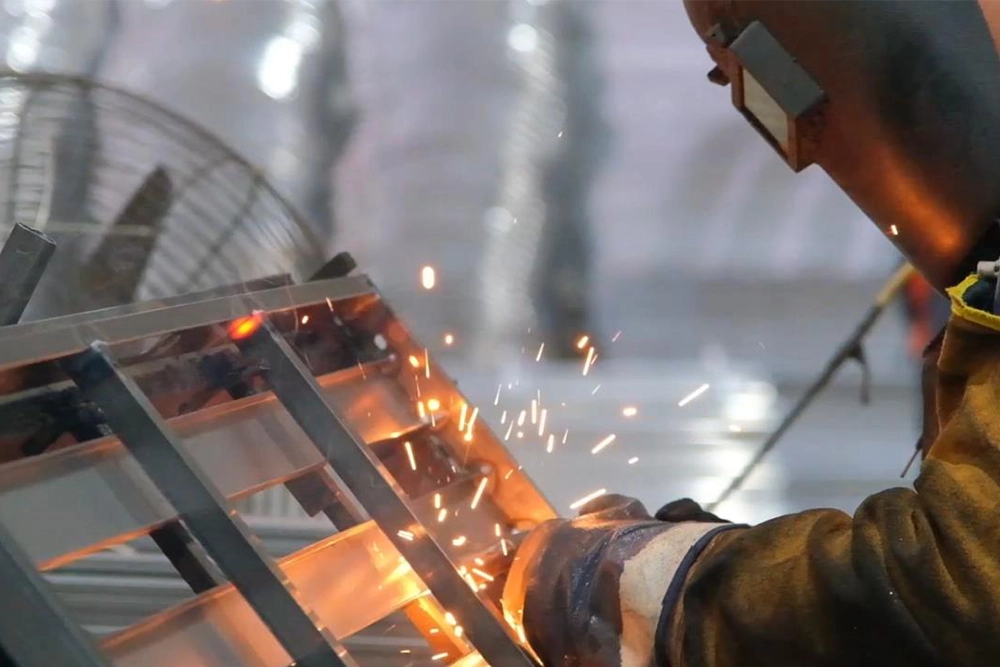
Aluminum frames require TIG (Tungsten Inert Gas) welding, which produces clean, precise joints but operates at slower speeds and demands higher operator skill. Steel frames typically use MIG (Metal Inert Gas) welding for faster throughput and stronger penetration on thicker walls. CNC bending machines handle both metals but require different tooling—aluminum’s softer alloy needs careful radius control to prevent cracking, while steel tolerates tighter bends. These differences mean a factory strong in aluminum garden furniture may use entirely different equipment than one focused on steel-frame seating.
Welding quality is the single largest determinant of structural safety under EN581 testing standards. Common defects—porosity, cold joints, and burn-through—create stress concentration points leading to premature failure. Qualified factories perform destructive testing on sample welds from each shift and maintain welder certification records as part of their ISO 9001 quality system.
How Is Powder Coating Applied to Outdoor Furniture Frames?
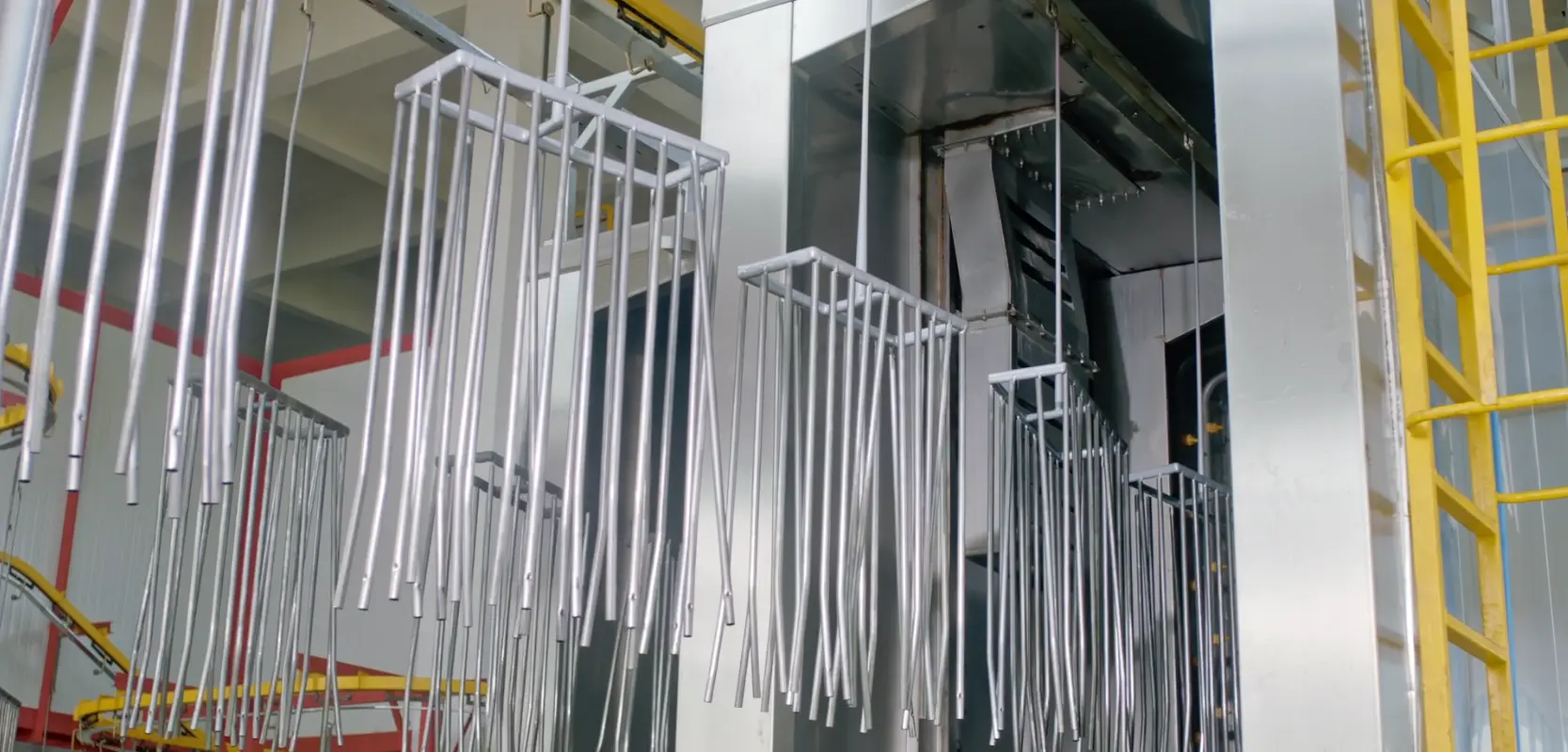
Powder coating is a dry surface finishing process that uses electrostatically charged polyester resin particles fused onto metal frames through high-temperature curing, creating a durable barrier against UV radiation, corrosion, and mechanical wear. Standard coating thickness for outdoor furniture ranges from 60 to 80 microns.
Pre-treatment follows a fixed sequence before coating: alkaline degreasing, acid pickling, phosphating or chromating to create an adhesion-promoting conversion layer, pure water rinsing, and oven drying. Skipping or shortening any step compromises adhesion—factories that cut pre-treatment time often see coating failures within months. After spraying, curing temperature must fall within a precise 180–200°C window. Under-curing leaves the coating brittle; over-curing causes yellowing and reduced UV resistance. Advanced lines use infrared monitoring systems to track each frame through the oven in real time.
How Is Wood Processed and Treated for Outdoor Furniture Manufacturing?

Wood processing begins with kiln drying and progresses through cutting, shaping, sanding, and protective surface treatment. Each species requires calibrated parameters—hardwoods like teak demand different drying schedules and finishing approaches than softwoods like pine.
Kiln drying reduces moisture content to a target range of 8–12%, preventing the warping, cracking, and joint failure that occur when insufficiently dried timber equilibrates with its environment after delivery. Surface treatments fall into three categories: penetrating oils (teak oil, tung oil) that maintain natural color; film-forming sealants that create a moisture barrier; and pressure impregnation with preservatives for softwoods lacking natural decay resistance. Buyers sourcing FSC-certified garden furniture should confirm that treatment chemicals comply with REACH regulations.
How Is Textilene, Outdoor Fabric, and Woven Material Processed on the Production Line?
Outdoor fabric processing is a controlled textile manufacturing sequence that converts raw synthetic yarns into weather-resistant woven or coated fabrics through warping, weaving, coating, and finishing operations calibrated to meet specific UV, tensile, and colorfastness standards.
Key incoming inspection metrics include fabric weight (g/m²), tensile strength (Newtons), colorfastness rating (Grade 4 or above), and accelerated UV aging results. For textilene beach furniture, production-grade textilene typically ranges from 480G to 600G, with higher weight indicating denser weave and greater durability.
Rope and wicker weaving is a semi-manual process in which HDPE synthetic rattan or polyester rope is hand-woven over metal frames following a pattern template. Tension consistency is critical—loose weaving leads to sagging, while over-tensioned strands crack at anchor points. Finished pieces undergo pull-force testing to verify load performance.
Outdoor cushion fabrication involves cutting quick-dry open-cell foam cores, wrapping them in breathable batting, and encasing them in UV-resistant fabric with waterproof zippers and marine-grade thread. Finished cushions are compression-tested and inspected for stitch consistency before pairing with frames.
How Are Individual Components Assembled Into Finished Outdoor Furniture?
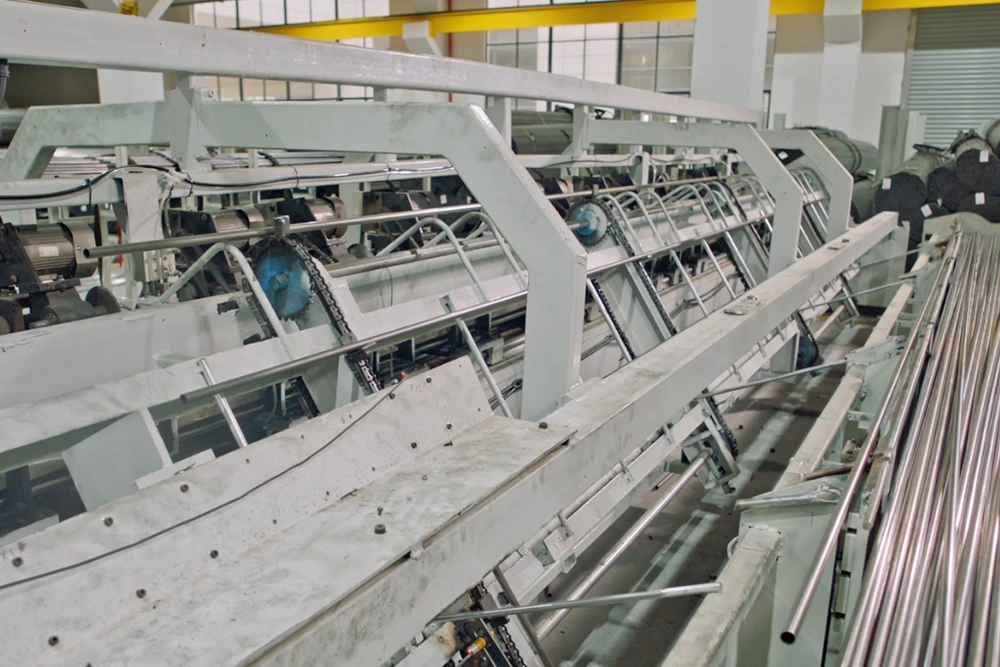
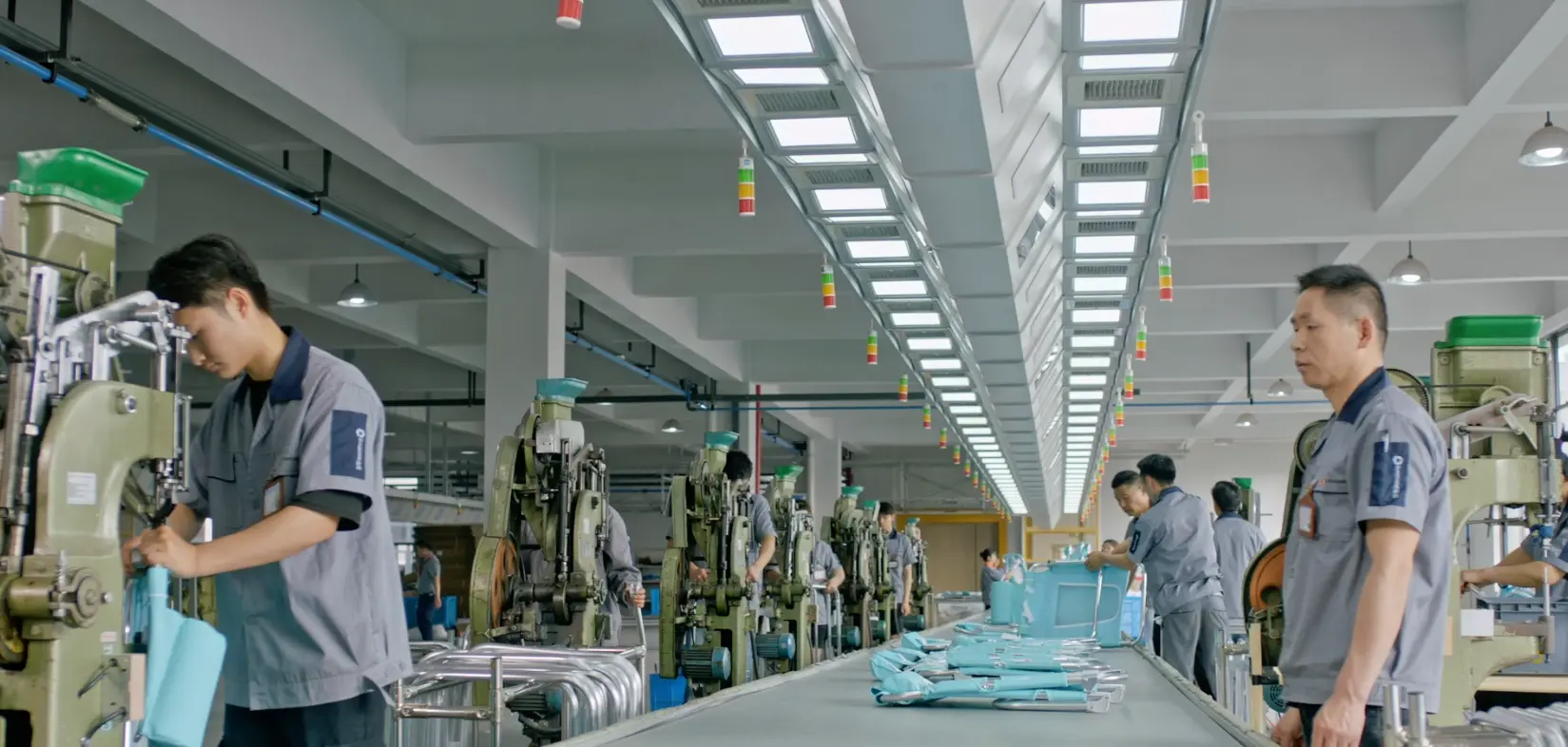
Assembly combines metal frames, fabric slings, cushions, wood panels, and hardware into finished units through workstation-based processes where each operator performs a defined task in sequence. Torque-controlled fastening tools, alignment jigs, and function testing at each station ensure consistent fit and safe mechanism operation.
A portable folding camping chair, for example, follows a typical sequence: frame positioning on a jig, rivet or bolt insertion at pivot points, textilene sling installation, folding mechanism adjustment, and a final function test. Mixed-material products—such as aluminum frames with textilene slings or steel bases with wood-slat surfaces—require adjusted techniques to accommodate different thermal expansion rates between dissimilar materials.
What Quality Control Checkpoints Exist Throughout Outdoor Furniture Production?
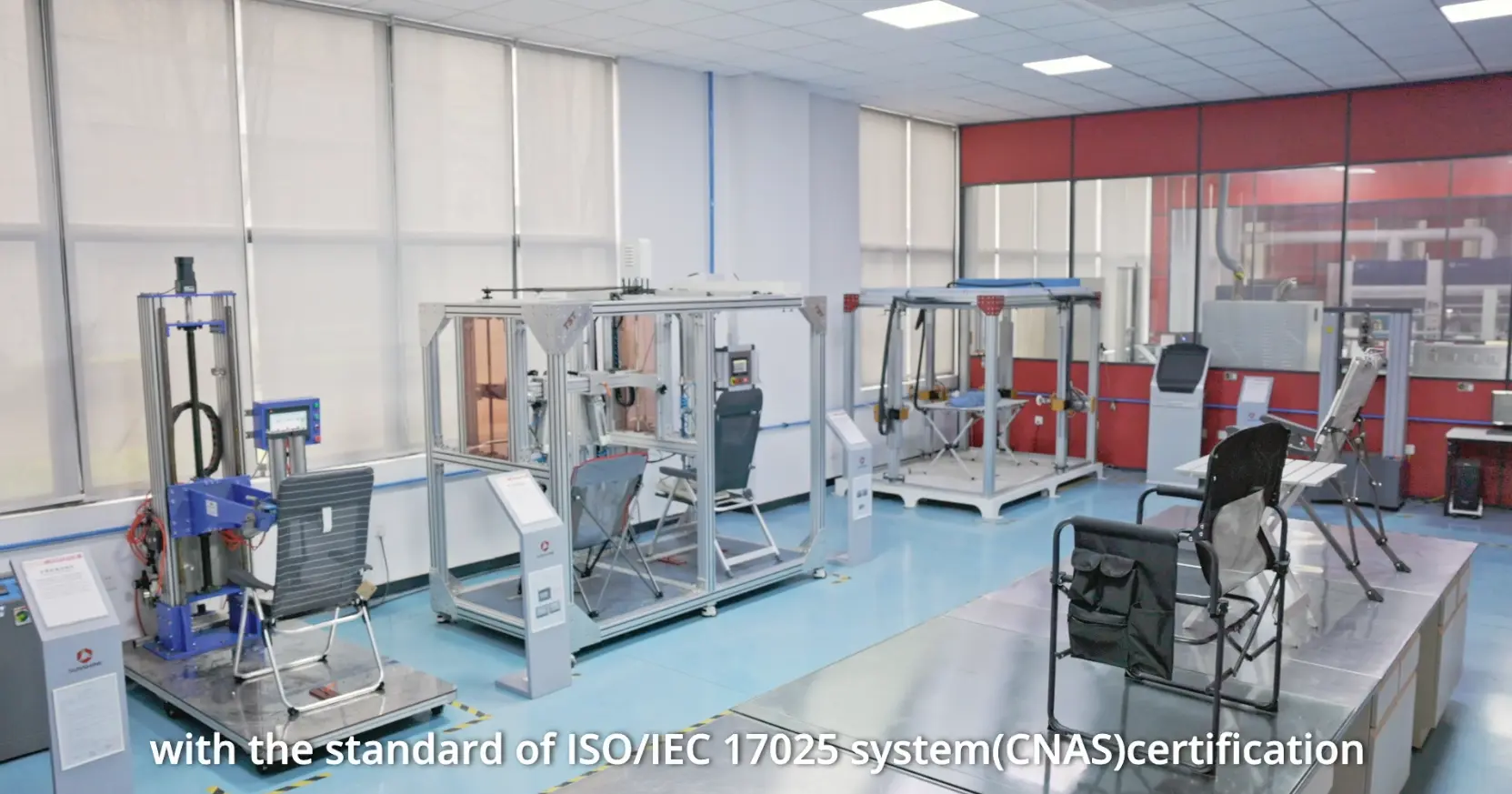
Quality control spans every stage from incoming material inspection to pre-shipment auditing. Factories operating under ISO 9001 and EN581 standards embed checkpoints at each critical transition rather than relying solely on end-of-line inspection.
Final product testing includes static and dynamic load testing per EN581, salt-spray testing for coating corrosion resistance (typically 200–500 hours depending on grade), UV accelerated aging tests on fabrics, dimensional tolerance verification, and drop-testing simulating shipping impacts. Pre-shipment inspection follows AQL sampling standards—typically AQL 2.5 for major defects and AQL 4.0 for minor defects—covering appearance, function, packaging integrity, and labeling accuracy.
How Is Outdoor Furniture Packed and Prepared for International Shipping?
Outdoor furniture is packed in either knock-down (KD) flat-pack or fully assembled format, with corrugated cartons, foam inserts, and corner protectors engineered to maximize container loading efficiency. KD packaging reduces carton volume by 40–60% compared to assembled packing, lowering freight costs—but it transfers assembly labor to the destination. Fully assembled packaging is preferred for hospitality and campground projects where end clients expect ready-to-use delivery. Packaging engineers optimize carton dimensions and stacking configurations through crush-resistance testing to determine safe stacking height during transit.
What Are the Advantages and Disadvantages of OEM and ODM Outdoor Furniture Production?
OEM (Original Equipment Manufacturing) is a production model that manufactures outdoor furniture according to the buyer’s proprietary designs and specifications. ODM (Original Design Manufacturing) is a production model that uses the factory’s in-house design and engineering resources to develop products that buyers then brand and sell under their own labels.
OEM production gives buyers complete control over product identity and intellectual property, enabling strong brand differentiation—but it requires an in-house design team and longer development timelines. ODM production reduces time-to-market and development cost by leveraging the factory’s existing design library—but it limits exclusivity since similar base designs may be available to other buyers.
When to choose OEM: The buyer has a mature design team, needs strict IP protection, and is building a differentiated product line. When to choose ODM: The buyer is entering a new market, needs rapid launches, or operates with a limited design budget. Many OEM/ODM programs offer a hybrid approach—starting with an ODM base and customizing materials, colors, and dimensions for a semi-exclusive product.
What Questions Should Buyers Ask When Touring an Outdoor Furniture Factory?
Buyers visiting an outdoor furniture factory should focus evaluation on production capacity verification, process control evidence, certification documentation, and sustainability practices rather than facility appearance alone.
Key areas to probe include monthly output capacity and peak-season management, welding and coating process control records, certification scope (ISO 9001, EN581, REACH, BSCI, FSC), and in-house testing lab capabilities. Asking for defect-rate trend data over the previous 12 months reveals more about quality culture than any showroom display. Sustainability assessment should cover scrap metal recycling rates, powder coating VOC emission controls, wastewater treatment systems, and active FSC/GRS audit reports—not just certificates displayed on walls.
Want to Know More About Our Products?
View All Products NowAbout Author
Spring Nee
Spring Nee is the Sales & Marketing Director at Zhejiang Sunshine Leisure Products Co., Ltd. With nearly 20 years of experience in the outdoor leisure furniture industry, she specializes in camping chairs, beach chairs, folding outdoor seating, and OEM/ODM project communication. Spring also leads the company’s marketing content direction. Most of the articles published on this website are either written by Spring herself or reviewed by her before publication, ensuring that the content is practical, accurate, and based on real industry experience.