How to Close a Beach Chair: The Complete Guide for Every Chair Type


Jump to section
The beach vacation is over, the cooler is packed, and the sunscreen is stowed — but the beach chair just will not fold. It sits there, half-open and stubborn, while everyone else is already heading to the car. This is a surprisingly common frustration, because different types and brands of beach chairs use different folding mechanisms. Forcing a chair shut without understanding how it locks and unlocks can jam the hinges or even bend the frame permanently.
This guide walks through how to close a beach chair for every popular style — including backpack chairs, reclining chairs, and standard folding chairs — along with troubleshooting tips and storage advice to keep the chair in great shape for years. Whether the reader is a beachgoer tired of wrestling with a stubborn seat or a hospitality buyer evaluating chair designs for a resort, the steps below apply across the board.
Why Beach Chairs Can Be Tricky to Close

From a manufacturing standpoint, the folding mechanism of a beach chair is more complex than most people assume. Most beach chairs use a multi-position locking system that lets the user recline at several angles. That system relies on a precise sequence of latches, pins, or slide locks working together. When a chair also features a low seat, a tall backrest, or an attached canopy, the hinges and latch points sit in different locations — and the correct folding order changes with them.
Material choice adds another layer of complexity. Chairs built with aluminum alloy tubing tend to have lighter, spring-loaded joints, while steel-frame models often use friction-based locks that feel stiffer. Both work well when operated correctly, but each responds differently to force.
The single most common cause of beach chair damage is trying to fold the frame without first returning the backrest to the fully upright position. When the chair is still partially reclined, the locking mechanism sits in an intermediate position and physically blocks the frame from collapsing. Pushing harder at that point bends the latch rather than releasing it.
As a beach furniture manufacturer with over 20 years of production experience, Sunshine designs its chairs with intuitive folding in mind — but many chairs on the market do require a specific sequence of steps to close safely.
How to Close a Tommy Bahama Beach Chair: A Step-by-Step Guide
Tommy Bahama is one of the most widely recognized beach chair brands in North America, and many of its models share a similar folding logic. The following four steps apply to most Tommy Bahama chairs, including models equipped with pillows and storage pouches. Because exact latch placement can vary between models, readers should check the label or instruction card on their specific chair if any step feels unclear.
Step 1 — Recline to Upright Position
If the chair is in a reclined or flat position, the first step is always to adjust the backrest to the fully upright position. The easiest method is to sit in the chair, lean the body forward, and pull the backrest up by hand until it clicks into the highest position. That click confirms the lock has engaged. Skipping this step is the number-one reason beach chairs jam during folding, because the latch cannot release while it is still in a mid-recline position.
Step 2 — Locate and Release the Locking Mechanism
Tommy Bahama chairs generally feature a slide latch or spring-loaded button located either underneath the seat or at the armrest connection point. To release it, stand behind the chair, grip both sides of the backrest’s crossbar, find the latch, and press or slide it open. Latch placement may differ slightly between models: wooden-armrest versions often have a side toggle, while aluminum-tube versions typically use an under-seat clip.
Step 3 — Fold the Chair Frame Together
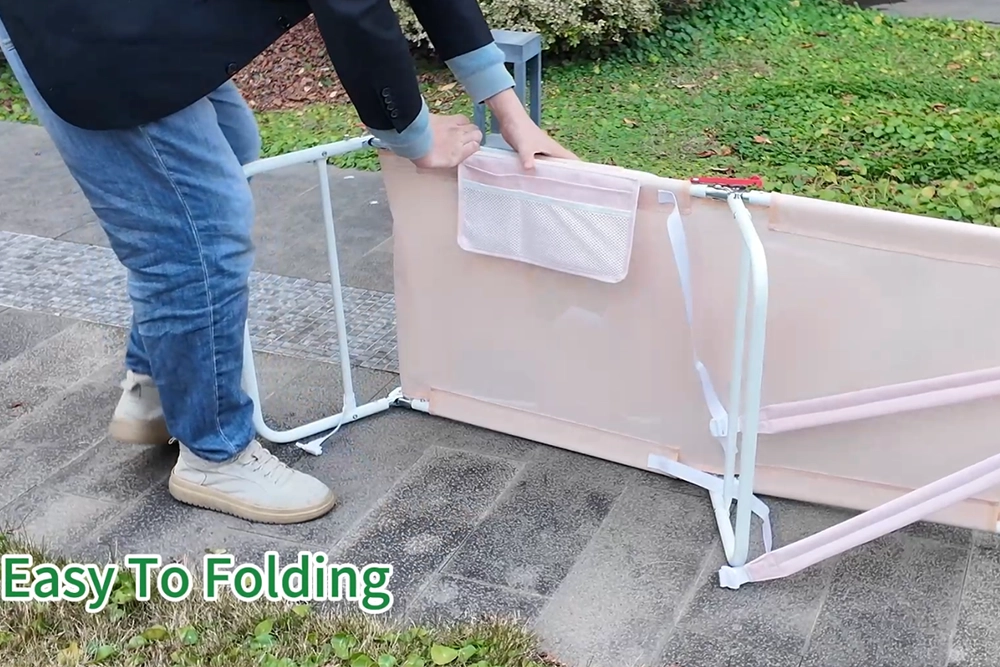
Once the latch is released, use both hands to bring the backrest and seat together in a smooth, even motion — like closing a book. Do not force the frame shut, as pinching the fabric or catching a finger in the hinge is a real risk. On models equipped with a canopy or sunshade, fold the canopy fabric down against the frame first, then fold the main structure.
Step 4 — Secure with Strap or Clip
Most Tommy Bahama chairs include a nylon strap or elastic band designed to hold the chair in its folded position. Loop it around the frame and fasten it. If the original strap is missing, a rubber band, bungee cord, or Velcro cable tie works well as a substitute. Before walking away, check that the chair sits fully flat with no protruding parts — this makes it much easier to carry and store.
How to Close a Backpack Beach Chair
Backpack beach chairs differ from standard models in one important way: they have a built-in shoulder-strap system attached to the frame. That means the folding process includes an extra consideration — keeping the straps clear of the hinges.
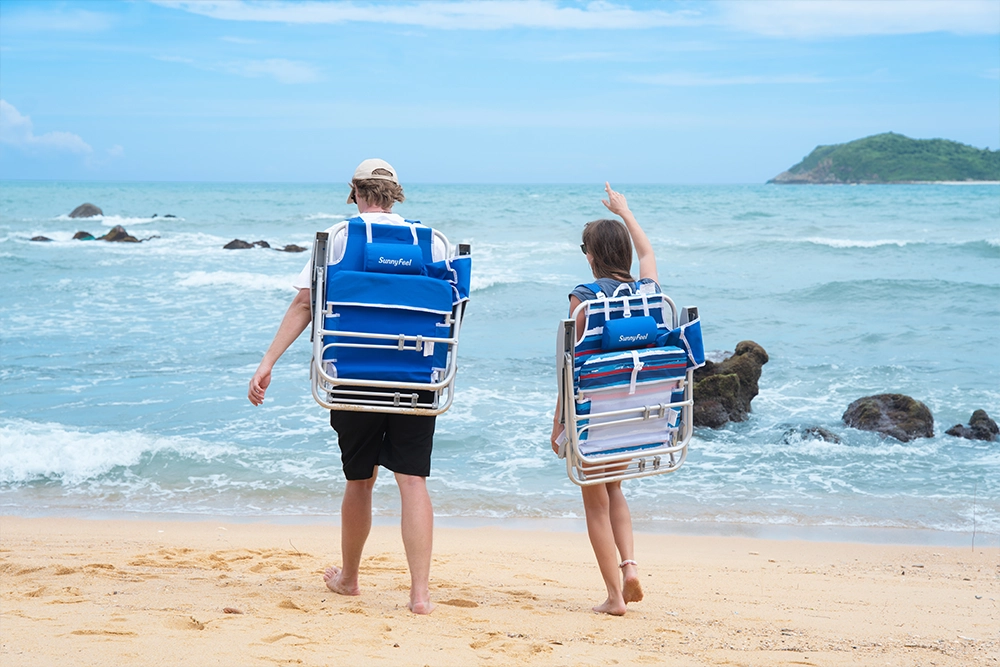
The folding sequence has three main steps. First, return the backrest to the fully upright position and stow any detachable accessories such as cup holders, headrests, or phone pouches. Second, release the latch and fold the chair in half. Most backpack chairs use a center-fold design where the legs collapse inward toward the seat. Third, arrange the shoulder straps so they lie flat against the outside of the backrest. Tangled straps are the most common annoyance with this chair type — laying them flat now prevents a knotted mess the next time the chair comes out of the trunk.
Some backpack models also include a zippered storage pouch that wraps around the folded frame. If the chair has one, simply zip it closed after folding to keep everything compact and protected.
How to Close a Reclining Beach Chair
The essential rule for reclining beach chairs is simple: return to upright first, then fold. Reclining chairs typically offer three to five locking positions, and the frame cannot collapse until the backrest has passed through every one of those positions back to the most upright setting.
To do this, lift the backrest steadily and feel each position lock click and release as the backrest moves forward. Once the chair is fully upright, the remaining steps are the same as any standard folding chair: release the latch, fold the frame in half, and secure it with a strap.
One special note applies to reclining chairs with a separate leg rest or footrest extension. Always retract the leg rest before attempting to fold the main frame. Trying to fold with the leg rest extended puts lateral stress on the hinge pins and can warp the frame over time.
How to Close a Standard Folding Beach Chair
This is the simplest type of beach chair to close, and it usually takes just two steps. Stand behind the chair, grip both sides of the backrest, and lift upward. The chair will fold along its center axis, with the legs collapsing inward automatically.
There is no latch to hunt for on most standard folding chairs, because they rely on gravity locking — the chair stays open under its own weight when set on the ground, and lifting it allows the frame to fold freely. If a chair has no buttons, toggles, or slide locks anywhere on the frame, it is almost certainly this basic gravity-lock type.
How to Close Other Popular Beach Chairs

Not every beach chair fits neatly into the categories above. Here are some quick notes on other widely sold styles, along with a general tip that works for nearly all of them.
Rio Gear Beach Chair: Rio’s classic models typically use a branded locking arm — a small lever on the inside of the armrest that flips up to unlock. Once the lock is released, the chair folds the same way as a standard folding chair.
Ostrich Beach Chair: Ostrich is well known for its face-down lounger with a face-opening pad. To fold this style, first flip the face pad up onto the seat surface, then retract any adjustable leg support, and finally fold the entire frame in half.
Chairs Sold Through Large Retailers: Big-box retailers carry beach chairs from many different manufacturers, so there is no single folding method that covers them all. The most reliable approach is to check the label or sticker on the side rail or underside of the seat — most brands print a simple folding diagram there.
General tip: Regardless of brand or model, always return the backrest to the upright position before attempting to fold. If the latch location is unclear, check the connection point between the seat and the legs — that is where the locking mechanism sits on the vast majority of beach furniture designs.
Troubleshooting: What to Do When a Beach Chair Will Not Close
Chair Feels Stuck or Will Not Fold
The most common cause is that the backrest has not been fully returned to the upright position, leaving the lock caught between two recline settings. The fix is to pull the backrest all the way back to the fully reclined position, then slowly push it forward again, making sure it clicks through each position completely. If it still will not budge, check whether a piece of fabric, a thread, or a grain of sand is caught in the hinge.
Rusty or Stiff Joints
Salt spray and moisture are the primary culprits behind stiff or rusted hinges. For a quick field fix, spray a small amount of silicone-based lubricant or WD-40 on the joints, wait one to two minutes, and then gently work the joint back and forth. For a long-term solution, rinse all metal parts with fresh water after every beach trip and let the chair air-dry completely before storing it.
Chair Will Not Stay Folded
This usually means the securing strap is missing or worn out. A luggage strap, thick rubber band, or Velcro cable tie makes a solid temporary fix. For a permanent solution, contact the chair manufacturer’s customer service for a replacement strap, or pick up a universal nylon strap from any hardware store.
Tips for Storing a Beach Chair After Folding
Proper storage extends the life of any beach chair significantly. A few simple habits make a big difference.
Rinse after every use. Fresh water removes sand, salt, and sunscreen residue. For fabric seats, a gentle scrub with mild detergent helps prevent staining and odor buildup.
Dry completely before storing. Putting a damp chair into a closet or garage is a fast path to mold growth and metal corrosion. Let the chair air-dry in a shaded spot with good airflow before folding it up for storage.
Avoid prolonged direct sunlight during storage. While beach chairs are built to handle sun exposure during use, weeks of direct UV light in storage accelerates fabric fading and weakens the material over time. A cool, ventilated space is ideal.
Use a storage bag when available. Chairs that come with a storage bag or carry case should be stored inside it to prevent dust accumulation and reduce scratching between parts.
Lubricate hinges regularly. A few drops of silicone lubricant on the hinges and latch points every few months keeps everything moving smoothly and prevents corrosion from gaining a foothold.
Sunshine’s beach chairs feature corrosion-resistant aluminum alloy frames and quick-dry fabric, which significantly reduces the maintenance effort required during storage — a detail that matters to both individual buyers and hospitality operators managing large chair inventories.
FAQs
How Do You Transport a Folded Beach Chair?
By car, the best practice is to lay the folded chair flat on the trunk floor with the metal frame facing down. This prevents the chair from sliding around and scratching the interior. When stacking multiple chairs, place a towel or cloth between them to avoid frame-on-frame scratching.
For walking or public transit, use the chair’s built-in shoulder strap or a separately purchased carry bag to keep both hands free. For air travel, most airlines accept a folded beach chair as regular checked baggage. Wrapping the chair in luggage film or a padded bag adds an extra layer of protection against rough handling.
What Is the Difference Between Folding and Closing a Beach Chair?
In everyday conversation, the two terms are interchangeable — there is no need to overthink the wording. That said, a subtle distinction does exist. “Closing” a beach chair refers to the entire process of going from an in-use state to a storage-ready state, which includes adjusting the recline angle, unlocking the latch, collapsing the frame, and securing it with a strap. “Folding” focuses more narrowly on the single physical action of collapsing the frame itself.
A simple analogy: shutting down a computer means saving files, quitting programs, and closing the lid. Closing the lid is just one step in that process. Similarly, folding a beach chair is one step within the broader process of closing it.
Conclusion
No matter what type of beach chair is involved, the same four-step method applies: return the backrest to upright, release the lock, fold the frame, and secure it for transport. Bookmark this guide for a quick refresher before the next trip to the shore.For B2B buyers, hospitality managers, and retailers looking for beach chairs that are both durable and easy for end users to operate, Sunshine offers full OEM and ODM customization services backed by over two decades of manufacturing expertise and facilities in both China and Vietnam. Explore Sunshine’s complete beach furniture collection or reach out directly to discuss a custom project.
Want to Know More About Our Products?
View All Products NowAbout Author
Spring Nee
Spring Nee is the Sales & Marketing Director at Zhejiang Sunshine Leisure Products Co., Ltd. With nearly 20 years of experience in the outdoor leisure furniture industry, she specializes in camping chairs, beach chairs, folding outdoor seating, and OEM/ODM project communication. Spring also leads the company’s marketing content direction. Most of the articles published on this website are either written by Spring herself or reviewed by her before publication, ensuring that the content is practical, accurate, and based on real industry experience.