Best Materials for Outdoor Furniture: Frames, Woods, Fabrics & Coatings

Jump to section
Choosing the right outdoor furniture material is one of the most consequential decisions a buyer or project specifier can make. A complete guide to outdoor furniture materials — comparing aluminum, steel, FSC hardwood, PE rattan, sling fabric, and recycled HDPE for buyers and project specifiers.
What Are the Core Materials Used to Make Outdoor Furniture?
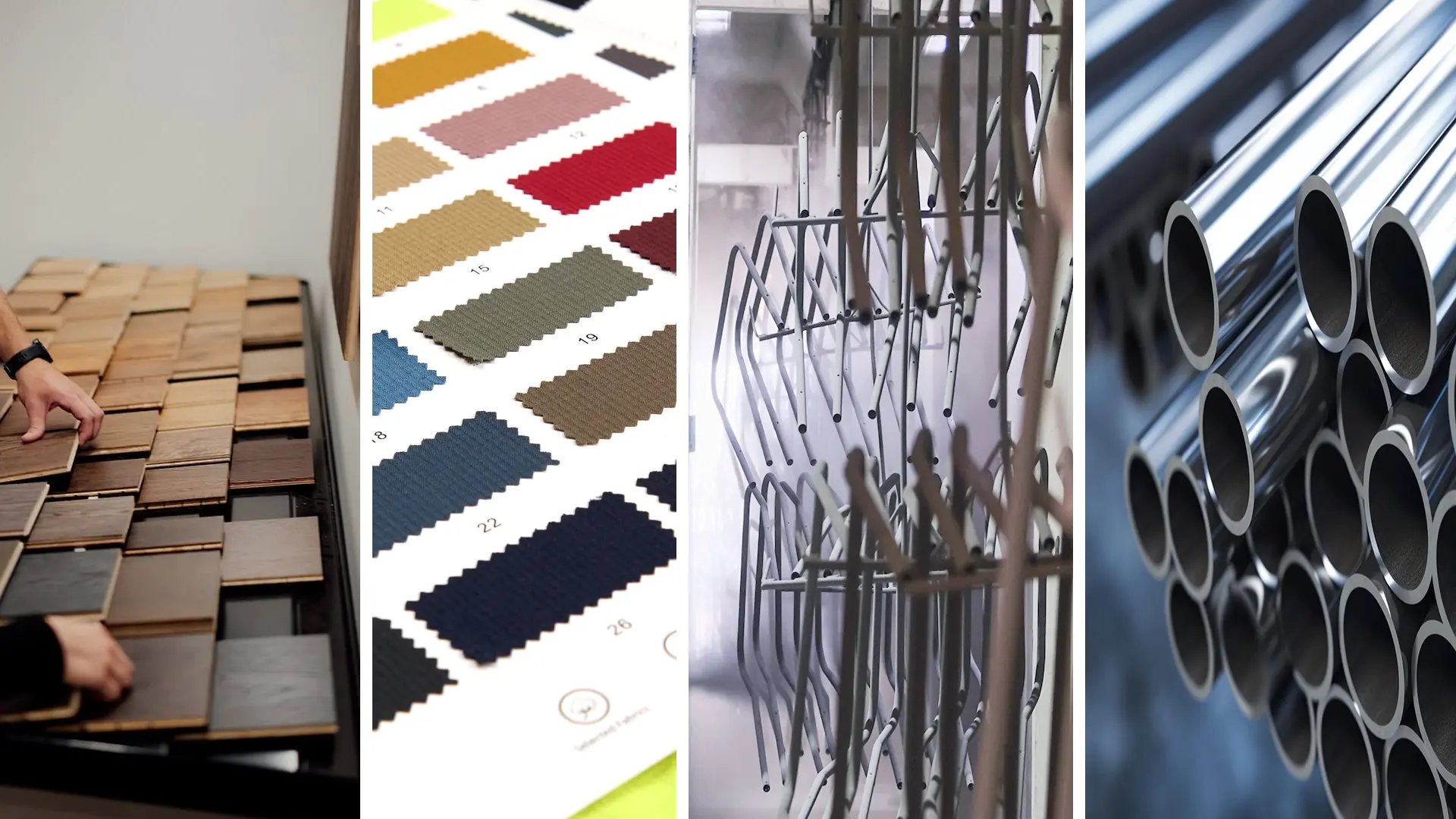
Outdoor furniture is built from five core material categories: metal frames, treated woods, synthetic weaving fibers, weather-resistant fabrics, and protective coatings. Each category contributes its own set of properties — load capacity, UV resistance, moisture tolerance, color stability — and most finished products combine two or more of them into a single engineered system. Very few outdoor chairs are made from just one material; the real engineering happens at the intersections.
Why Does Material Selection Determine Outdoor Furniture Lifespan?
Material selection determines outdoor furniture lifespan because outdoor environments simultaneously expose products to UV radiation, rainfall, salt air, and temperature swings. The right material combination resists all four stressors at once, which is why low-grade plastic typically lasts one to two seasons, powder-coated aluminum runs eight to twelve years, and FSC-certified hardwood can exceed fifteen years with basic care.
What Metal Frame Materials Are Used in Outdoor Furniture?
Metal frames in outdoor furniture fall into two main categories: aluminum and steel. Both are typically powder-coated for corrosion protection, but each delivers a different balance of weight, load capacity, and best-fit application. The choice between them is rarely a matter of which is “better” — it is a matter of which is right for the use case.
What Is an Aluminum Frame in Outdoor Furniture?
An aluminum frame is a lightweight metal structure that is made from extruded or cast aluminum alloy and naturally resists corrosion in humid and coastal environments. A folding camping chair built on aluminum tubing can weigh as little as three to five kilograms, making it easy to carry, stack, and ship — qualities that matter to retail buyers managing freight costs and end users managing trunk space.
What Is a Steel Frame in Outdoor Furniture?
A steel frame is a high-strength metal structure that is constructed from carbon steel tubing and provides superior load capacity for heavy-duty seating, modular sectionals, and folding camping furniture. Where aluminum optimizes for weight, steel optimizes for strength, and powder coating neutralizes its main weakness — rust. The result is a frame format that can carry significantly more weight than its aluminum equivalent without thickening the tubing — a property that becomes critical the moment a folding chair needs to support a 300-pound user without compromising its fold-flat geometry. The engineering trade-off shows up most clearly in heavy-duty director chairs that fold flat for transport, where the tubing has to stay slim enough to collapse yet strong enough to handle the full rated load.
How to Choose Between Aluminum and Steel Frames for Outdoor Furniture?
Aluminum suits projects where weight, portability, and corrosion resistance dominate the brief — beach clubs, poolside lounges, and portable camping lines that must travel light. Steel suits projects where load capacity and structural rigidity matter more, particularly camping director chairs, restaurant outdoor seating, and public-space furniture that absorbs constant heavy use.
What Wood Materials Are Best Suited for Outdoor Furniture?
Outdoor furniture wood is a naturally weather-resistant hardwood that is harvested from sustainably managed forests and selected for its resistance to rot, insects, and dimensional instability. The right species, paired with FSC certification, delivers a premium aesthetic, a long lifespan, and the environmental credentials international retailers increasingly demand for shelf placement.
Which Wood Species Are Most Commonly Used in Outdoor Furniture?
Three hardwood species dominate the premium outdoor wood category. Teak contains natural oils that repel water and insects, giving it the longest unprotected lifespan of any commercial hardwood. Eucalyptus offers a similar density profile at a more accessible price point but benefits from periodic oiling. Acacia provides distinctive grain patterns and good dimensional stability, making it the workhorse of mid-tier collections. All three are available in FSC-certified form.
What Are the Advantages and Disadvantages of Wood in Outdoor Furniture?
Wood delivers natural warmth, comfortable surface temperatures in summer, and a refinishable surface that can be restored after years of use — qualities no metal can replicate. The trade-offs are real: higher unit cost, the need for annual oiling, sensitivity to standing water, and supply constraints tied to certified forestry quotas.
When Should Project Specifiers Choose Wood Over Metal?
Wood is the right call for high-end resorts, nature-themed venues, and brands building a sustainability narrative — provided the maintenance budget supports annual care. Metal is the better call for high-turnover commercial spaces and corrosive coastal environments where low-touch operation outweighs tactile warmth.
What Synthetic Weaving Materials Are Used in Outdoor Wicker Furniture?
Synthetic weaving material is a UV-stabilized polyethylene fiber that is hand-woven onto a metal frame to replicate the texture of natural rattan while resisting cracking and color fading. PE rattan has effectively replaced natural rattan outdoors because natural fibers split and discolor within a single UV season. The synthetic version washes clean with water, holds complex curved shapes, and pairs naturally with aluminum or steel substructures. Its only meaningful limitation is repair complexity, since a single broken strand requires skilled rework.
What Fabric Materials Are Used for Outdoor Cushions and Slings?
Outdoor furniture fabrics include sling textiles, breathable mesh, and padded cushion systems — three families engineered for very different combinations of comfort, ventilation, and weather resistance. The right fabric choice depends on climate, intended sitting duration, and whether the product targets commercial high-turnover use or residential leisure.
What Is PVC-Coated Polyester Sling Fabric in Outdoor Furniture?
PVC-coated polyester sling fabric is a tightly woven synthetic mesh that is stretched across a frame to create a breathable, quick-drying seating surface ideal for sun loungers and beach chairs. It supports body weight without cushions and dries within minutes after rain, which is why it dominates poolside and high-humidity applications.
What Is 3D Breathable Mesh Fabric in Outdoor Furniture?
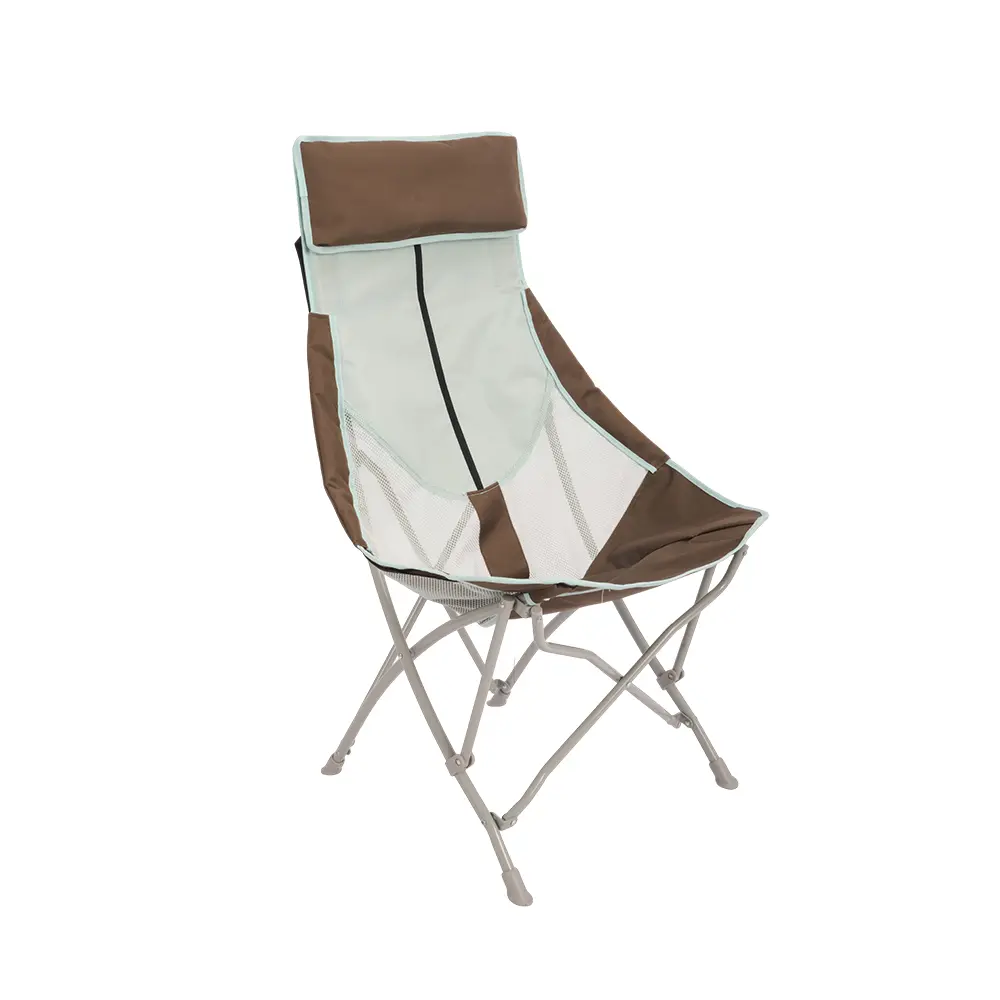
3D breathable mesh fabric is a three-layer spacer textile that is engineered with an open middle layer to actively release heat and moisture during prolonged sitting. Where flat sling fabric ventilates passively, 3D mesh ventilates structurally. The most refined camping designs go one step further: they pair the mesh seating surface with a small padded headrest, so the user gets airflow through the back and torso while the head and neck remain supported during multi-hour reclining. That hybrid logic — ventilation where the body generates heat, padding where the body needs support — is exactly what defines a lightweight aluminum-framed high-back camping chair built around 3D mesh and a padded pillow.
What Is an Outdoor Padded Cushion in Indoor-Outdoor Versatile Furniture?
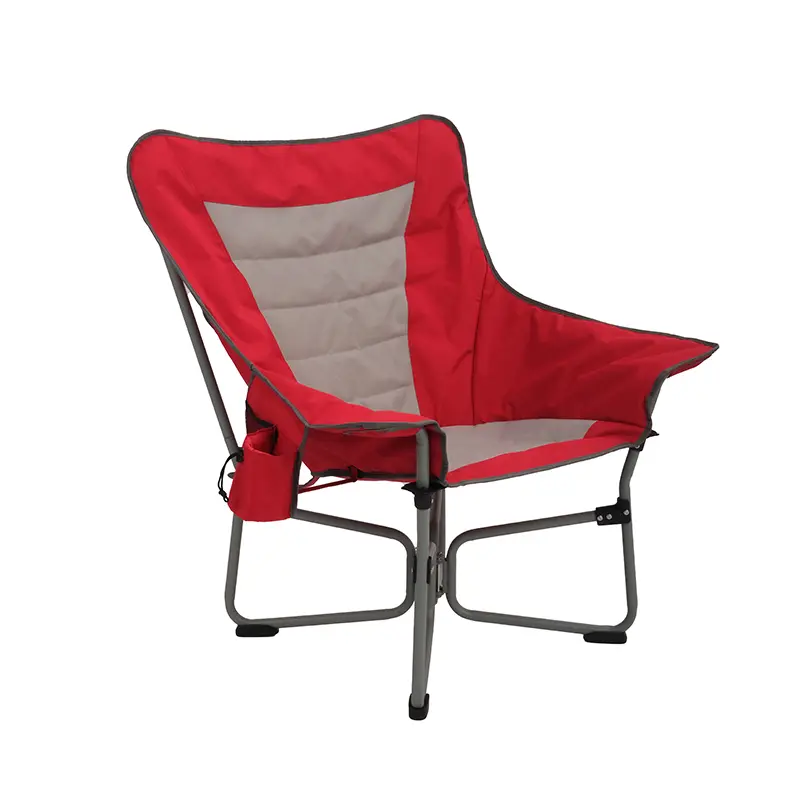
An outdoor padded cushion is a foam or cotton-filled seating component that is wrapped in mold-resistant Oxford cloth or polyester covers and engineered to deliver indoor-style comfort in outdoor environments. The category exists because of a single buyer behavior: people increasingly want furniture that can rotate between a covered patio and a sunroom without looking out of place in either. Meeting that brief requires two things working together — a frame that survives outdoor exposure, and a cover that can be unzipped and laundered between seasons. The clearest expression of that thinking is the butterfly chair with a steel frame and a removable sofa-like cotton-padded cover, a format that has quietly become a staple of the indoor-outdoor crossover category.
How to Choose Between Sling Fabrics and Padded Cushions?
Sling and mesh fabrics suit high-humidity zones, frequent rain exposure, and high-turnover commercial use where rapid drying is non-negotiable. Padded cushions suit residential patios, hotel balconies, and indoor-outdoor crossover spaces where comfort outweighs drying speed.
What Plastic and Recycled Materials Are Used in Sustainable Outdoor Furniture?
Recycled outdoor furniture plastic is a GRS-certified polymer that is reprocessed from post-consumer waste and molded into UV-stable seating components, table surfaces, and structural connectors. Recycled HDPE is fully waterproof, requires no maintenance, and supports the circular-economy commitments expected by major European and North American retail chains. The trade-offs: a more industrial aesthetic and higher tooling costs at the development stage.
How Do Powder Coatings Protect Outdoor Furniture Frames from Corrosion?
Powder coating is a dry finishing process that is electrostatically applied to metal frames and cured under heat to form a hard protective layer resistant to chipping, scratching, and rust. It outperforms liquid paint on adhesion, abrasion resistance, and corrosion resistance, which is why it dominates frame finishing for products certified to EN581 outdoor furniture standards. Powder-coated frames are commonly paired with tempered glass tabletops in dining and side-table collections, adding a low-maintenance, easy-clean surface without compromising frame protection.
How Do Outdoor Furniture Materials Compare Across Durability, Maintenance, and Cost?
Outdoor furniture materials differ across five practical dimensions buyers weigh during specification: weather resistance, structural durability, comfort, maintenance frequency, and cost. Powder-coated aluminum wins on low maintenance, powder-coated steel wins on load capacity per dollar, FSC hardwood wins on aesthetic and lifespan, hand-woven PE rattan wins on design flexibility, and recycled HDPE wins on lifetime waterproofing — and no single material wins on every dimension at once.
Which Outdoor Furniture Materials Should Buyers Avoid for Long-Term Use?
The materials buyers should avoid for long-term outdoor use share one trait: they look acceptable on a price sheet but fail within one or two seasons of real exposure. Sourcing teams working on retail or hospitality projects should specifically watch for the following five categories:
- Thin uncoated steel tubing, which rusts within a single rainy season
- Low-grade injection-molded polypropylene without UV stabilizers, which becomes brittle and cracks
- Untreated softwood such as pine or spruce, which warps and rots quickly outdoors
- Surface-painted frames rather than powder-coated frames, where the paint chips and peels
- Standard piece-dyed polyester fabric, which fades dramatically after one summer of UV exposure
None of these materials reliably pass EN581 structural and weathering tests, which is exactly why they rarely appear in collections supplied to certified international retailers.
Which Outdoor Furniture Materials Perform Best in Different Climate Conditions?
The best-performing material varies sharply by climate. Coastal and saltwater environments call for aluminum frames combined with PE rattan or sling fabric, since salt air corrodes untreated metal within months. Hot, high-UV regions favor UV-stabilized PE rattan, breathable mesh seating, and powder-coated frames in light colors that reflect surface heat. Cold and wet climates favor FSC hardwood, recycled HDPE, and powder-coated steel — materials that handle freeze-thaw cycles without cracking or absorbing water.
How Should Different Outdoor Furniture Materials Be Maintained to Maximize Lifespan?
Maintenance requirements vary sharply by material, and following basic routines typically doubles the functional lifespan of any outdoor furniture system. Aluminum needs only an occasional rinse with mild soap. Powder-coated steel benefits from a yearly coating inspection and quick touch-up of any chips. Hardwood requires annual oiling. PE rattan can be cleaned with a soft brush and water. Padded cushions with removable covers should be brushed regularly and laundered between seasons.
What Certifications Confirm the Quality of Outdoor Furniture Materials?
Material certifications give buyers an objective basis for comparing suppliers and verifying compliance. EN581 verifies structural and weathering performance. FSC confirms wood comes from responsibly managed forests. GRS verifies recycled material content. REACH ensures chemical compliance for the European market. BSCI together with the ISO 9001, 14001, and 45001 series certify factory-level quality, environmental, and safety systems. Together, these certifications determine whether a manufacturer can supply major international retail chains and hospitality groups.
FAQs
Which Material Is the Most Weather-Resistant for Outdoor Furniture?
Powder-coated aluminum and recycled HDPE rank highest for weather resistance. Both shrug off rain, UV exposure, and salt air without surface degradation, making them the default choice for coastal hospitality projects and high-exposure public spaces where minimal maintenance is essential.
How Many Years Does Quality Outdoor Furniture Typically Last?
Quality outdoor furniture lasts eight to fifteen years depending on material. Powder-coated aluminum typically runs eight to twelve years, FSC-certified teak can exceed fifteen, and recycled HDPE often outlasts the project itself. Low-grade injection-molded plastic, by contrast, generally fails within one to two seasons.
What Is the Difference Between PE Rattan and Natural Rattan in Outdoor Furniture?
PE rattan is a UV-stabilized polyethylene fiber engineered for outdoor use, while natural rattan is a plant-based material that splits and discolors within a single season of sun exposure. PE rattan delivers the same woven aesthetic with multi-year durability and easy washability.
Want to Know More About Our Products?
View All Products NowAbout Author
Spring Nee
Spring Nee is the Sales & Marketing Director at Zhejiang Sunshine Leisure Products Co., Ltd. With nearly 20 years of experience in the outdoor leisure furniture industry, she specializes in camping chairs, beach chairs, folding outdoor seating, and OEM/ODM project communication. Spring also leads the company’s marketing content direction. Most of the articles published on this website are either written by Spring herself or reviewed by her before publication, ensuring that the content is practical, accurate, and based on real industry experience.