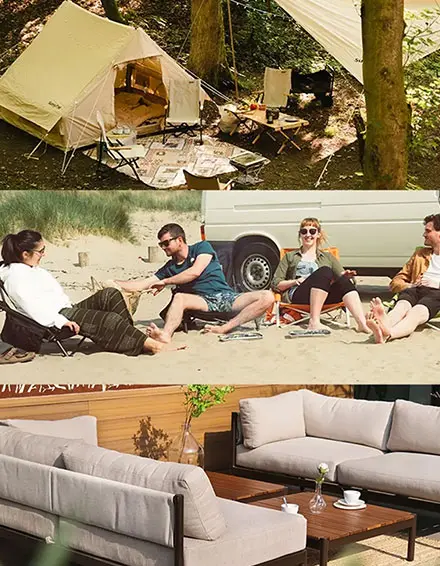
Rust-Proof Outdoor Furniture: Types and How to Choose

Jump to section
What Is Rust-Proof Outdoor Furniture and Why Does It Matter?
Rust-proof outdoor furniture is outdoor seating, tables, and loungers built with corrosion-resistant materials or protective coatings that prevent oxidation from rain, humidity, and salt air. It matters because rust degrades structural integrity, shortens product lifespan, and increases replacement costs for both residential and commercial buyers. Rust specifically refers to iron oxidation, but in outdoor furniture contexts, rust-proof generally means resistant to all forms of weather-related metal degradation.
Rust forms when iron-based metals react with water and oxygen through electrochemical oxidation. Coastal salt spray, acid rain, high humidity, and standing water all accelerate this reaction. Over time, rust weakens joints, loosens fasteners, creates sharp edges, and stains cushions. For commercial settings such as hotels, restaurants, and campgrounds, rusted furniture directly harms guest experience and brand reputation. Choosing the right rust-proof material from the start eliminates these problems at the source.
What Is the Difference Between Rust-Proof by Material and Rust-Resistant by Coating?
Rust-proof by material means the furniture frame contains no iron and cannot rust under any condition. Rust-resistant by coating means a steel frame is protected by a powder-coated or galvanized layer that blocks moisture but can fail if scratched or chipped.
Material-based rust prevention is unconditional. Aluminum and PE rattan contain no iron, so iron-oxide rust cannot occur. While aluminum may develop a thin, stable oxide layer over time, this natural oxidation actually protects the metal further rather than degrading it — unlike iron rust, which is progressive and destructive. Even if the surface finish is scratched, no corrosion will start beneath it.
Coating-based rust prevention is conditional. Powder coating creates a physical barrier between steel and the environment. It performs well for years, but once chipped at stress points like joints and welds, moisture reaches the iron underneath and corrosion begins spreading beneath the surface. Understanding this distinction helps buyers set realistic maintenance expectations for each material type.
What Are the Main Types of Rust-Proof Outdoor Furniture Materials?
The main types include powder-coated aluminum, powder-coated steel, PE rattan woven over aluminum frames, and several non-metal alternatives. Each offers different levels of corrosion resistance, weight, strength, and cost suited to different outdoor environments.
Powder-Coated Aluminum Outdoor Furniture
Powder-coated aluminum outdoor furniture is a lightweight, inherently rust-proof furniture type that combines an iron-free aluminum alloy frame with an electrostatically applied powder finish, providing dual-layer protection against moisture, UV rays, and oxidation.
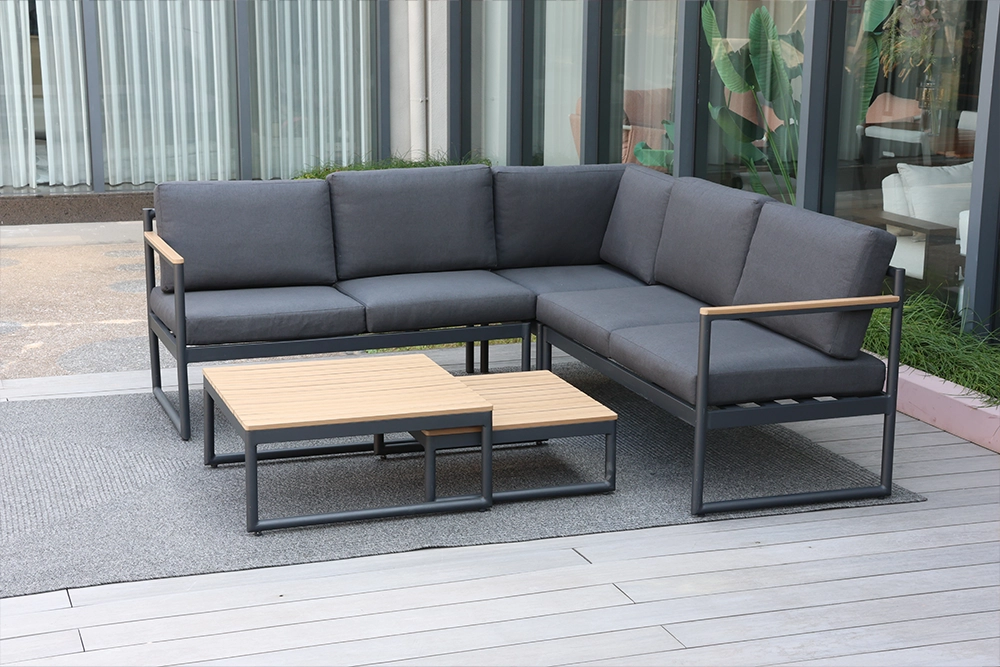
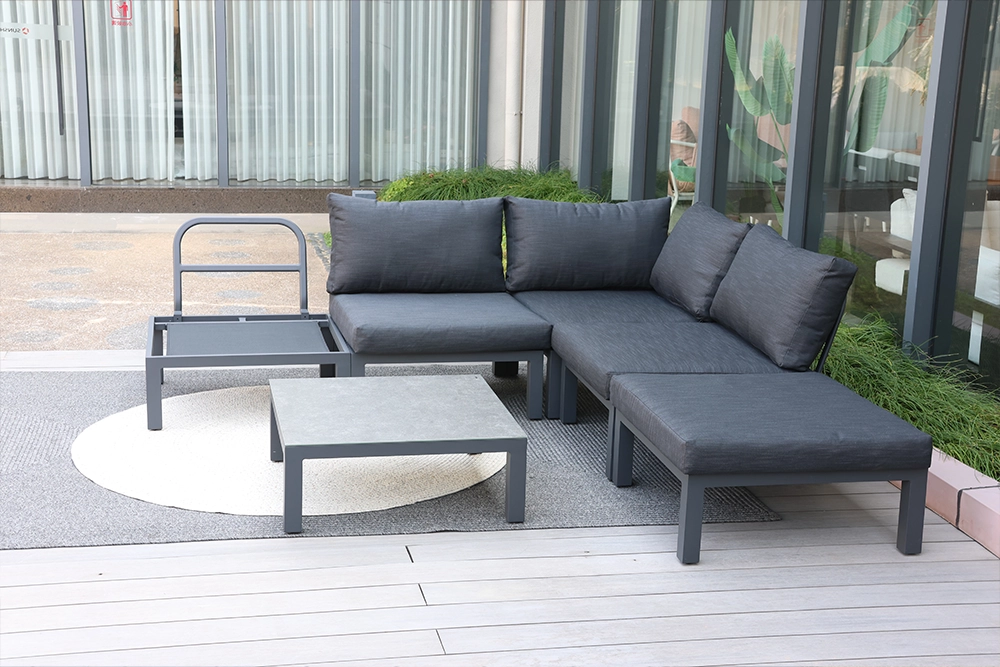
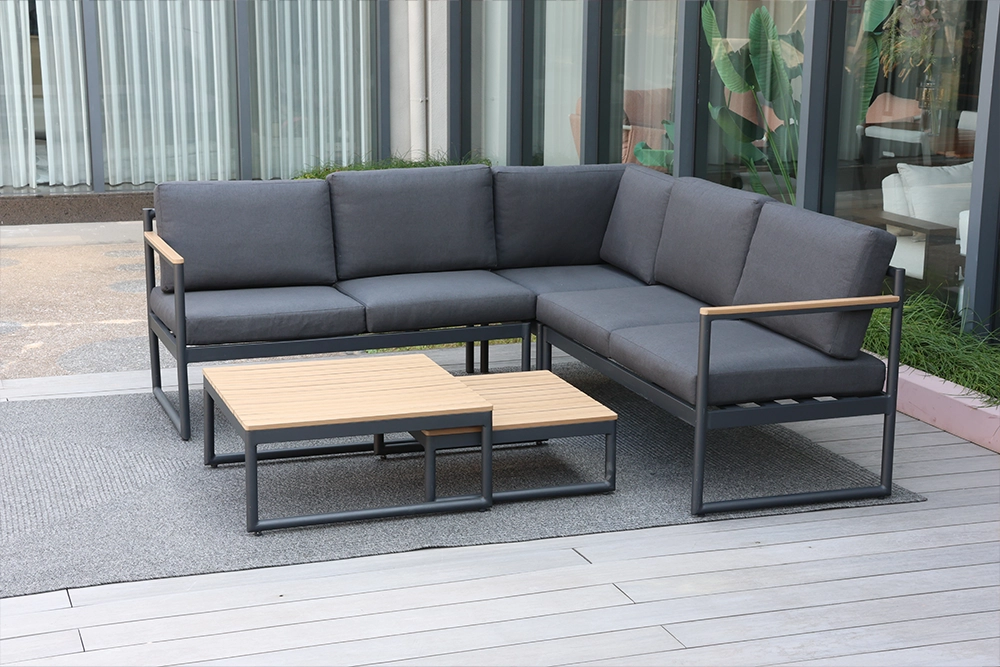
Because aluminum contains no iron, it cannot rust by composition. The powder coating serves primarily as UV and scratch protection while expanding color and finish options. This category also includes knock-down (KD) designs that allow flat-pack shipping and easy on-site assembly, reducing logistics costs for large-scale commercial projects. Modular aluminum sectional sofa sets use powder-coated frames that resist corrosion across all climate zones, while aluminum KD sofa sets offer the same rust-proof performance with flat-pack convenience.
Powder-Coated Steel Outdoor Furniture
Powder-coated steel outdoor furniture is a heavy-duty, structurally robust furniture type that applies a thermal-bonded polymer coating to a steel frame, creating a protective barrier against rust, chipping, and weather damage.
Steel provides superior load-bearing strength and structural rigidity, making it well suited for folding chairs, portable tables, and camping furniture. However, steel contains iron, so its rust resistance depends entirely on the coating’s integrity. If the powder coating chips at joints or weld points, the exposed steel will corrode. Regular inspection and prompt touch-up of any coating damage are essential.
Synthetic Wicker and PE Rattan Outdoor Furniture
Synthetic wicker outdoor furniture is a weather-resistant furniture type that weaves high-density polyethylene (PE) rattan strands over a rust-proof aluminum frame, combining the classic woven aesthetic with complete immunity to rust, moisture, and UV degradation.
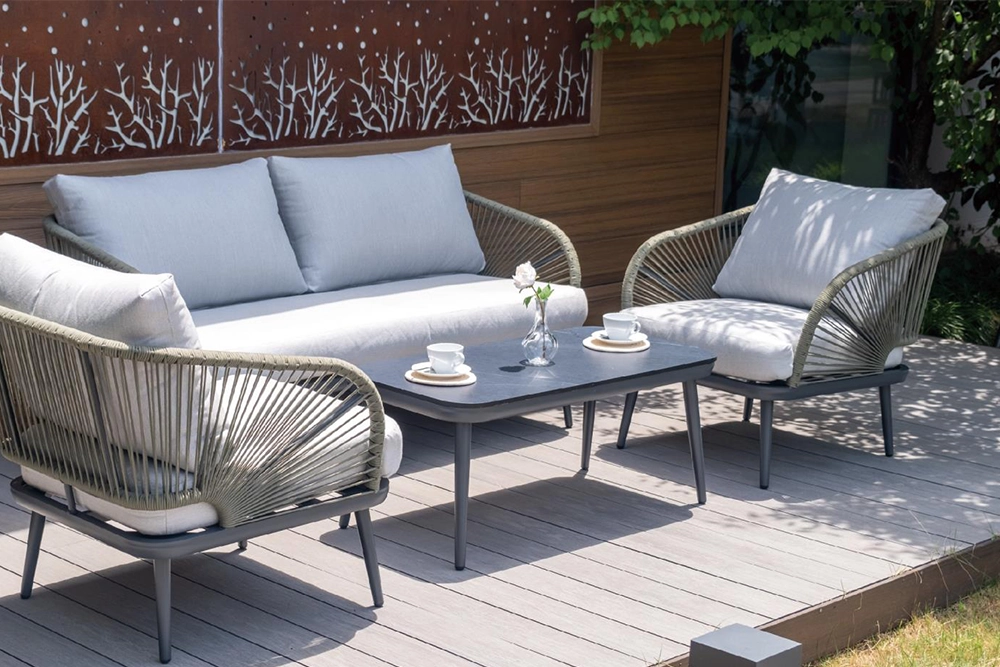
This construction delivers dual-layer rust prevention. The aluminum frame cannot rust, and the PE rattan sheath adds an additional moisture barrier while providing a warm, natural appearance that metal alone cannot achieve. A great example of this combination is the 4 Piece Aluminum PE Rattan Sofa Set with Cushions, which pairs a rust-proof aluminum frame with beautifully woven synthetic rattan for comfort and aesthetic appeal.
Other Rust-Proof Material Options
Other rust-proof material options are alternative outdoor furniture materials that achieve corrosion resistance through either alloy composition, natural wood chemistry, or fully metal-free plastic construction, each suited to specific budget and aesthetic requirements.
Stainless steel contains chromium alloy that forms a self-healing oxide layer, providing excellent corrosion resistance in coastal environments, though at a higher cost and heavier weight. Teak hardwood contains natural oils and silica that resist moisture and decay without any metal components, but requires periodic oiling to maintain its original color. Recycled HDPE plastic is completely metal-free and maintenance-free, though its solid profiles tend to be bulkier than metal-framed designs.
What Are the Advantages and Disadvantages of Each Material Type?
The following table summarizes the key trade-offs across the primary rust-proof materials to help buyers compare performance at a glance:
| Material | Rust Type | Weight | Strength | Maintenance | Cost |
| Powder-Coated Aluminum | Inherent | Light | Moderate | Low | Medium |
| Powder-Coated Steel | Coating-dependent | Heavy | High | Medium | Low–Medium |
| PE Rattan + Aluminum Frame | Inherent | Light | Moderate | Low | Medium |
| Stainless Steel | Inherent | Heavy | Very High | Very Low | High |
| Teak Hardwood | No metal | Medium | Moderate | Medium | High |
| Recycled Plastic / HDPE | No metal | Heavy | Moderate | Very Low | Medium |
For most residential patios and commercial hospitality projects, powder-coated aluminum and PE rattan over aluminum frames offer a strong balance of rust immunity, design flexibility, and long-term cost efficiency. Powder-coated steel remains a reliable choice for portable and folding furniture where structural strength and budget matter most.
How Does Powder Coating Protect Outdoor Furniture from Rust?
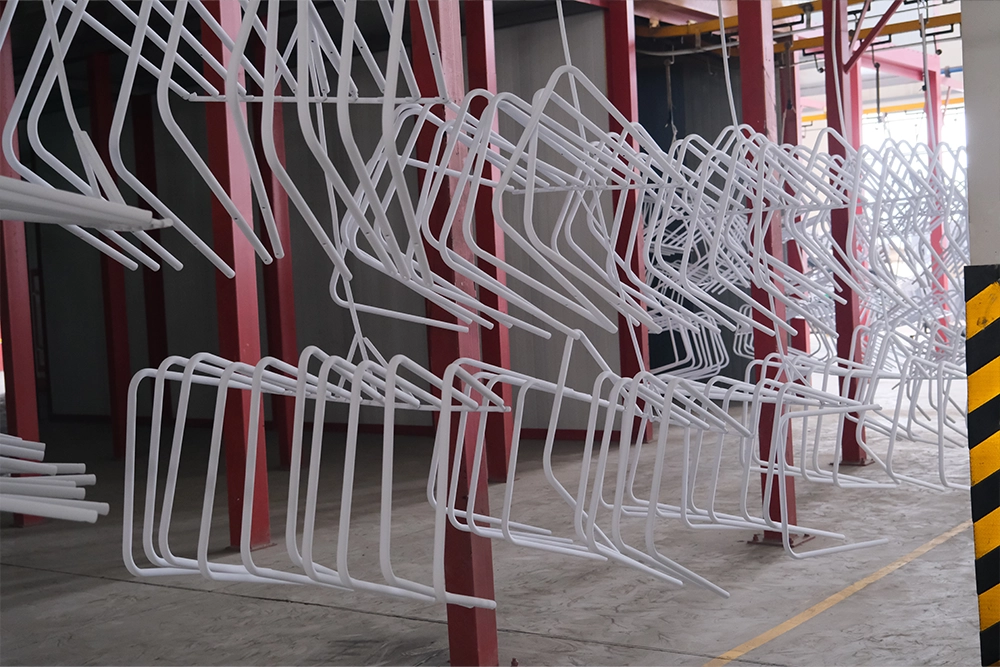
Powder coating protects outdoor furniture by electrostatically applying a dry polymer powder to the metal surface and curing it under heat, creating a bonded finish thicker and more uniform than liquid paint.
The process involves three stages: surface pretreatment (degreasing, derusting, and phosphating), electrostatic application, and high-temperature curing. On aluminum frames, this coating primarily provides UV resistance and color variety since the base metal already cannot rust. Steel frames depend on this coating as their critical rust barrier. In dry inland climates, a quality powder coat maintains its protective performance significantly longer than in coastal or high-humidity regions, where salt exposure and constant moisture accelerate surface wear. Actual longevity depends on coating thickness, pretreatment quality, and maintenance frequency. Regular cleaning with mild soap, prompt scratch repair, and off-season protective covers all extend coating performance significantly.
Which Rust-Proof Materials Work Best for Different Outdoor Scenes?
The best material depends on the specific outdoor environment, usage frequency, and aesthetic requirements of each application.
What Is the Best Rust-Proof Furniture for Beach and Coastal Environments?
Beach and coastal settings demand maximum salt-air resistance. Aluminum and stainless steel perform best in these conditions, paired with UV-resistant woven fabrics that handle moisture and sun exposure.
What Is the Best Rust-Proof Furniture for Garden and Patio Settings?
Garden and patio projects benefit from materials that balance aesthetics with weather endurance. Aluminum sectional sets with modular configurations suit patio layouts that need flexible arrangement. For a more textured look, aluminum-framed PE rattan sofa sets deliver the woven aesthetic without any rust risk.
What Is the Best Rust-Proof Furniture for Commercial Hospitality Projects?
Commercial hospitality and restaurant projects require furniture that withstands heavy daily use with minimal upkeep. KD aluminum sofa sets allow flat-pack shipping and easy on-site assembly while maintaining full rust-proof performance across seasons.
What Is the Best Rust-Proof Furniture for Poolside and Chlorine-Exposed Areas?
Poolside areas present unique challenges because chlorine chemically attacks metal coatings. Aluminum resists chlorine damage best among metals, while PE rattan and HDPE are completely unaffected by pool chemicals. Coated steel furniture should be rinsed thoroughly after chlorine exposure.
Which Climate Conditions Create the Highest Risk for Outdoor Furniture Rust?
Coastal salt air, tropical humidity, poolside chlorine, and freeze-thaw winter cycles create the four highest-risk conditions for outdoor furniture corrosion, each demanding materials with inherent rust immunity rather than coating-dependent protection.
The following list outlines each high-risk condition and the recommended material response:
- Coastal and salt-air climates: Salt spray forms a conductive film on metal that accelerates electrochemical corrosion. Aluminum is the safest mainstream choice.
- Tropical and high-humidity climates: Metal surfaces rarely dry completely, keeping them in constant wet oxidation. Aluminum, PE rattan, and HDPE all perform reliably.
- Poolside and chlorine-exposed areas: Chlorine attacks protective coatings chemically. Aluminum handles chlorine well; coated steel furniture should be rinsed after exposure.
- Cold winter climates: Repeated freeze-thaw cycles cause metal expansion and contraction that can crack coatings. Powder-coated aluminum and HDPE withstand temperature swings best.
How to Choose the Right Rust-Proof Outdoor Furniture?
Choosing the right rust-proof outdoor furniture requires evaluating four factors: the environment’s corrosion risk, intended use frequency, portability requirements, and total budget including long-term maintenance.
When Should Buyers Choose Powder-Coated Aluminum?
Powder-coated aluminum suits projects that need lightweight, low-maintenance, modular furniture for patios, hospitality venues, or poolside areas. It offers a strong overall balance of rust immunity, design flexibility, and cost efficiency.
When Should Buyers Choose Powder-Coated Steel?
Powder-coated steel fits applications where high load-bearing capacity and budget efficiency are priorities, such as portable camping furniture and event rental equipment. Ongoing coating maintenance is part of the ownership commitment.
When Should Buyers Choose PE Rattan with Aluminum Frames?
PE rattan with aluminum frames works best when the project calls for a warm, woven aesthetic without sacrificing rust-proof performance — ideal for gardens, covered patios, and boutique hotel outdoor lounges.
What Metal Types Should Be Avoided for Outdoor Use?
Wrought iron and untreated carbon steel generally require significantly more maintenance effort to prevent rust, including frequent repainting and sealing, making them less practical for most outdoor projects. Untreated carbon steel can show visible rust within weeks of outdoor exposure in humid conditions.
Beyond material type, certification is another key factor in evaluating rust-proof outdoor furniture quality. Standards such as EN581 verify structural durability under repeated use, REACH ensures coating chemicals meet safety requirements, and ISO 9001 confirms consistent manufacturing quality control. These certifications provide objective benchmarks that help buyers compare products beyond surface-level material claims.
How to Maintain Rust-Proof Outdoor Furniture and Maximize Its Lifespan?
Regular cleaning, prompt coating repair, proper storage, and periodic joint inspection are the four pillars of maintaining rust-proof outdoor furniture across all material types.
Aluminum and PE rattan furniture require only occasional wiping with mild soapy water. Powder-coated steel demands the most attention — any chip or scratch should be sanded and touched up before moisture penetrates. During the off-season, furniture covers help maintain cleanliness and slow surface aging, although inherently rust-proof materials like aluminum do not technically need covers for corrosion protection. KD furniture offers an additional storage advantage: disassembled frames stack flat and occupy far less space during winter months.
FAQs
Does aluminum outdoor furniture rust?
No. Aluminum contains no iron and cannot undergo iron oxidation. Powder coating adds UV and scratch protection but is not required for rust prevention.
How long does powder-coated outdoor furniture last?
In dry climates, powder-coated furniture maintains its performance for many years. In coastal or high-humidity environments, more frequent maintenance is needed, and actual lifespan depends on coating quality and care routine.
Can rust-proof furniture stay outside year-round without covers?
Aluminum, PE rattan, and HDPE can all remain outdoors year-round. Covers are optional for cleanliness rather than rust prevention.
Does chlorine from pools damage rust-proof outdoor furniture?
Aluminum handles chlorine exposure well. Coated steel should be rinsed regularly. PE rattan and HDPE are completely unaffected by pool chemicals.
What is the most cost-effective rust-proof material?
Powder-coated aluminum offers a strong combination of inherent rust immunity, low maintenance, design variety, and reasonable price, making it one of the most practical choices for both residential and commercial applications.
Want to Know More About Our Products?
View All Products NowAbout Author
Spring Nee
Spring Nee is the Sales & Marketing Director at Zhejiang Sunshine Leisure Products Co., Ltd. With nearly 20 years of experience in the outdoor leisure furniture industry, she specializes in camping chairs, beach chairs, folding outdoor seating, and OEM/ODM project communication. Spring also leads the company’s marketing content direction. Most of the articles published on this website are either written by Spring herself or reviewed by her before publication, ensuring that the content is practical, accurate, and based on real industry experience.